

Stop planning your ERG one month at a time
Most ERGs run on a familiar loop.
- A heritage month sneaks up.
- Someone scrambles to book a speaker two weeks out.
- The same three volunteers do everything.
- Attendance dips in the summer, spikes in the fall, and by December the leadership team is exhausted and wondering where the year went.
The problem isn't effort. ERG leaders care deeply and work hard. The problem is that most ERGs plan reactively, one event at a time, with no view of the whole year.
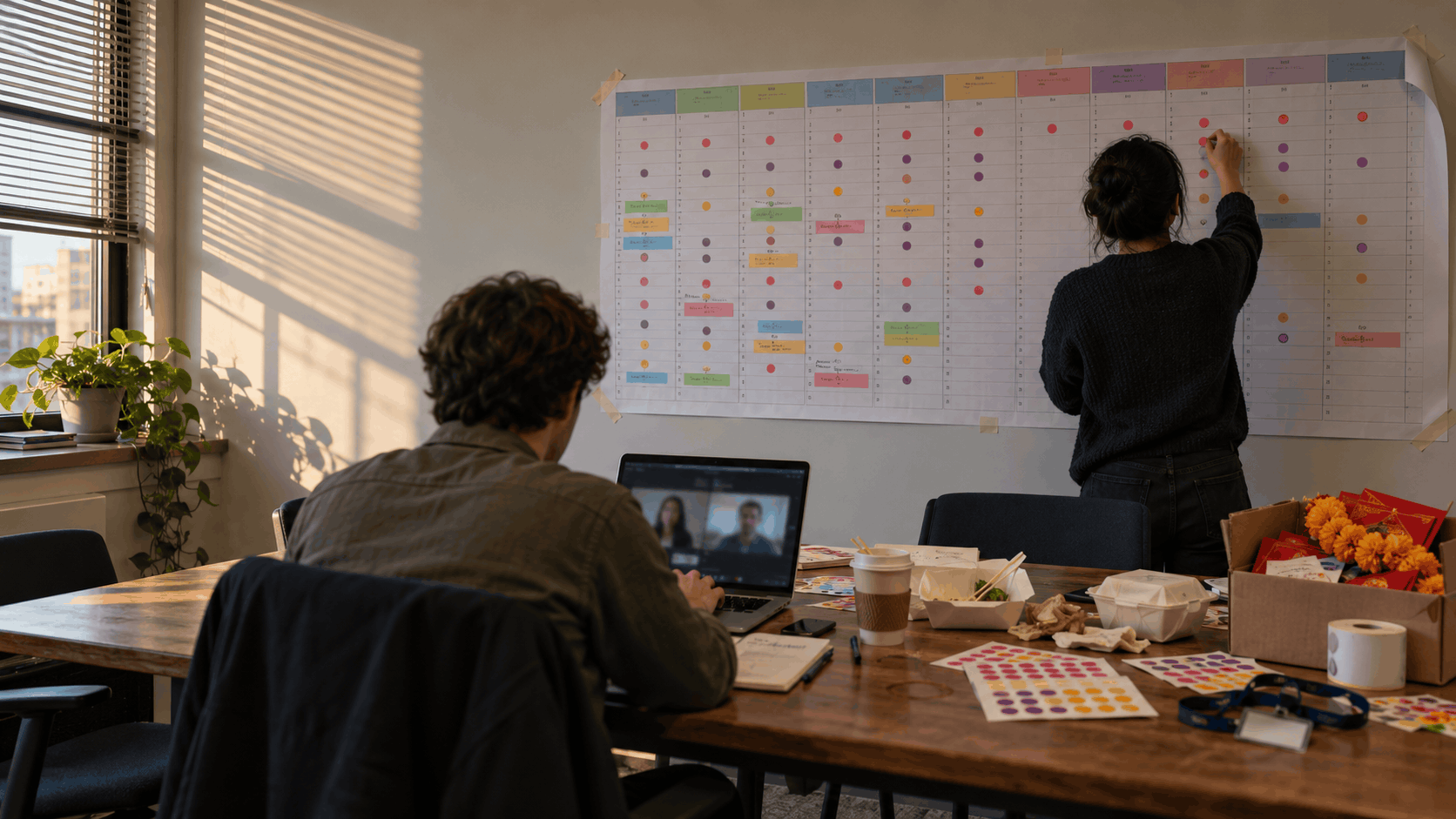
An annual ERG planning calendar fixes that. It gives your ERG a year-at-a-glance view of every major moment, plus a steady rhythm of recurring programming that keeps members engaged between the big events.
The formula is simple: anchor moments + recurring rhythms + one planning session a year.
This guide gives you everything you need to build one: the four core rhythms every ERG should run, a month-by-month calendar with suggested programming, a quarterly focus breakdown, a step-by-step planning session, budget guidance, and copy-paste templates to share the plan with members and sponsors.
Why Every ERG Needs an Annual Calendar
A calendar sounds administrative. In practice, it's one of the most strategic tools an ERG leader has.
Here's what a year-at-a-glance plan does for your ERG:
Ends the last-minute scramble. When Black History Month or Pride is on the calendar in January, you book speakers in December, not the week before.
Protects your volunteers. A visible plan spreads the work across the year and across people, so the same few leaders don't burn out.
Makes budget requests easier. Executive sponsors approve plans, not wish lists. A calendar shows exactly what the money buys and when.
Builds member habits. A predictable rhythm ("the second Tuesday is always our meetup") drives repeat attendance far better than one-off events.
Keeps allies in the loop. A shared calendar tells the whole company when and how to show up.
Proves impact. At year-end, your calendar becomes your report: here's what we planned, here's what we delivered, here's who came.
The big shift: stop thinking of your ERG as a series of events. Think of it as a year-long program with a rhythm.
The Four Core Rhythms of a Strong ERG
The best ERG calendars aren't packed with events. They balance four types of programming, each with its own job and its own cadence.
| Rhythm | Its job | Suggested cadence | Time per session |
|---|---|---|---|
| Meetups | Community and belonging | Monthly | 30–60 minutes |
| Cultural celebrations | Visibility, education, and pride | 4–6 anchor moments per year | 1–2 hours, or a month-long campaign |
| Mentorship circles | Growth and career development | Every 6 weeks, in 6-month cohorts | 45–60 minutes |
| Leadership forums | Influence, strategy, and access | Quarterly | 60–90 minutes |
How they work together: meetups keep the community warm, celebrations bring in the whole company, mentorship circles build careers, and leadership forums connect your ERG to the business. Drop one, and the others start to wobble.
1. Meetups: the heartbeat
Meetups are your ERG's most frequent touchpoint. They're where members get to know each other, newcomers find their footing, and the community actually feels like a community.
Rhythm tips:
- Pick a fixed slot. "Second Tuesday at noon" beats a new date every month. Predictability drives attendance.
- Rotate formats. Alternate social meetups (games, coffee chats, trivia) with content meetups (a member spotlight, a guest speaker, a book club).
- Rotate time zones. For global ERGs, alternate meeting times quarterly so no region always gets the 7 a.m. slot.
- Keep some light. Not every meetup needs an agenda. A 30-minute social is often the one people remember.
Ideas to fill your meetup slots: Get to Know Your Team games, the Virtual Networking Water Cooler, or a member-led session like creating a team recipe book.
2. Cultural celebrations: the anchor moments
Cultural celebrations are your ERG's biggest, most visible moments: heritage months, awareness days, and holidays that matter to your members.
Rhythm tips:
- Choose 4–6 anchors, not 20. Go deep on the moments that matter most to your members instead of posting about everything.
- Start planning six weeks out. Storytellers, speakers, and hosted experiences all need lead time.
- Think campaign, not event. A month-long series of stories and posts reaches far more people than a single lunch-and-learn.
- Partner across ERGs. Many observances are intersectional. Co-host when it makes sense.
For a full campaign playbook, see our guide to heritage month awareness campaigns. For hosted options, browse Confetti's Cultural Impact Classes.
3. Mentorship circles: the growth engine
Mentorship circles are small groups (usually 4–8 members plus one or two experienced guides) that meet regularly around career growth. They're often the most valuable thing an ERG offers, and the easiest to let slide.
Rhythm tips:
- Run cohorts, not open-ended groups. Six-month cohorts with a clear start and finish keep energy high.
- Launch twice a year. A winter cohort (January) and a fall cohort (September) align with natural planning cycles.
- Give every session a theme. Negotiation, visibility, managing up, building a network, career pivots.
- End with a celebration. Close each cohort with a recognition moment so members feel the progress.
If you want a peer-led version, our guide to peer coaching partnerships pairs perfectly with circles. Confetti's Learning and Development collection can supply expert-led sessions to kick off a cohort.
4. Leadership forums: the bridge to the business
Leadership forums connect your ERG to the people who shape the company: executive sponsors, senior leaders, and decision-makers. They're where members get access, leaders get honest input, and your ERG builds influence.
Rhythm tips:
- Go quarterly. Often enough to build relationships, rare enough to feel special.
- Rotate formats. Fireside chat, listening session, "ask me anything," and a strategy review.
- Collect questions in advance. Anonymous submissions surface the topics members actually care about.
- Close the loop. Share what leadership heard and what they committed to within a week.
To help sponsors prepare, Employee Listening for Leaders is a strong pre-forum session. And invest in the people running these forums: our guide to ERG leadership training covers the skills that matter most.
The Year-at-a-Glance ERG Calendar
Here's a full year of ERG programming you can adapt. Each month includes the widely observed US moments ERGs often plan around, a suggested mix of rhythms, and what to start planning now so you're always about six weeks ahead.
| Month | Anchor moments | Suggested rhythm mix | Start planning now for… |
|---|---|---|---|
| January | Martin Luther King Jr. Day (3rd Monday); New Year goal-setting | Kickoff meetup to share the year's plan; launch winter mentorship cohort; Q1 leadership forum | Black History Month (Feb) and Women's History Month (Mar) |
| February | Black History Month; Lunar New Year (date varies) | Heritage campaign with member stories; social meetup; mentorship session | Women's History Month and International Women's Day (Mar 8) |
| March | Women's History Month; International Women's Day (Mar 8) | Cross-ERG panel; meetup; mentorship session; Q1 wrap-up | Arab American Heritage Month and AANHPI Heritage Month |
| April | Arab American Heritage Month; Autism Acceptance Month; Earth Day (Apr 22) | Q2 leadership forum; learning meetup; mentorship session | AANHPI, Jewish American Heritage, and Mental Health Awareness Months (May) |
| May | AANHPI Heritage Month; Jewish American Heritage Month; Mental Health Awareness Month | Coordinated campaigns across ERGs; wellness-focused meetup | Pride Month and Juneteenth (Jun) |
| June | Pride Month; Juneteenth (Jun 19); Caribbean American Heritage Month | Pride celebration; Juneteenth learning moment; winter cohort graduation | Disability Pride Month (Jul) and midyear review |
| July | Disability Pride Month; ADA anniversary (Jul 26) | Midyear member survey; lighter social meetup; Q3 leadership forum | Fall mentorship cohort recruiting; fall budget check |
| August | Women's Equality Day (Aug 26); summer slowdown | Low-lift social meetup; leadership team retro; recruit fall mentors | Hispanic Heritage Month (Sep 15 start) |
| September | National Hispanic Heritage Month (Sep 15–Oct 15) | Launch fall mentorship cohort; heritage campaign; back-to-routine meetup | LGBTQ+ History Month, Disability Employment Awareness Month (Oct) |
| October | LGBTQ+ History Month; Filipino American History Month; National Disability Employment Awareness Month; Indigenous Peoples' Day (2nd Monday) | Q4 leadership forum; storytelling meetup; mentorship session | Native American Heritage Month and Veterans Day (Nov) |
| November | Native American Heritage Month; Veterans Day (Nov 11); Transgender Day of Remembrance (Nov 20); Diwali (date varies) | Heritage campaign; gratitude-themed meetup; mentorship session | Year-end celebration and next year's planning session |
| December | International Day of Persons with Disabilities (Dec 3); Human Rights Day (Dec 10) | Year-end celebration and recognition; impact report; annual planning session | The entire next year |
Heads up on moving dates: Lunar New Year, Ramadan, Eid, Passover, Diwali, and Rosh Hashanah shift every year. Check dates when you build your calendar, and flag observances that may affect members' availability (like Ramadan fasting during lunch meetups).
Global teams: observances differ by country. The UK, for example, observes Black History Month in October. If your ERG spans regions, add a column for local dates.
Want every observance in one place? Bookmark Confetti's free DEI calendar and employee engagement calendar, then layer your ERG's rhythms on top.
Plan in Quarters, Not Just Months
A month-by-month view tells you what's happening. A quarterly view tells you why. Give each quarter one clear focus so your programming builds on itself.
Q1 (Jan–Mar): Launch and recruit
Set the tone for the year. Share the calendar, welcome new members, and start your first mentorship cohort.
- Host a kickoff meetup that walks members through the year's plan
- Launch the winter mentorship cohort
- Recruit volunteers for spring and summer anchor moments
- Hold a leadership forum focused on the ERG's goals for the year
Q2 (Apr–Jun): Peak visibility
Q2 is often the busiest stretch, with several heritage months back to back. This is when your ERG is most visible to the whole company.
- Coordinate campaigns with other ERGs so observances don't crowd each other out
- Bring allies in with company-wide events
- Graduate the winter mentorship cohort with a recognition moment
- Use the leadership forum to share early impact
Q3 (Jul–Sep): Reflect and reset
Summer energy dips. Lean into it. Use the slower months to listen, regroup, and prepare for fall.
- Run a midyear member survey
- Keep meetups light and social
- Hold a leadership team retro: what's working, what isn't, who needs a break
- Launch the fall mentorship cohort in September
Q4 (Oct–Dec): Celebrate and plan ahead
Close the year strong, thank the people who made it happen, and set up next year before January arrives.
- Deliver fall anchor moments
- Host a year-end celebration and recognize volunteers
- Build an impact report for your executive sponsor
- Run your annual planning session for next year
How to Build Your ERG Calendar in One Planning Session
You don't need a dozen meetings to plan a year. One focused 2–3 hour session with your ERG leadership team can get you 80% of the way there.
Step 1: Look back before you look ahead
Start with what happened last year. Which events drew the biggest crowds? Which ones fizzled? Where did volunteers burn out?
Pull attendance numbers, survey results, and any feedback from members or sponsors. If your ERG ran an annual audit, bring the findings.
Step 2: Set two or three goals for the year
Goals shape the calendar. Without them, you'll fill every slot with whatever comes up.
Strong ERG goals sound like:
- Grow active membership by 25%
- Run two full mentorship cohorts with at least 80% completion
- Hold four leadership forums with executive attendance
- Increase ally participation at anchor events
Step 3: Drop in the anchor moments
Mark every cultural celebration your ERG will lead or co-lead. Be selective. Four to six well-run anchor moments beat 15 rushed ones.
Step 4: Layer in the recurring rhythms
Add your fixed meetup slot, mentorship cohort dates, and quarterly leadership forums. Then check for collisions: avoid stacking a forum, a meetup, and an anchor event in the same week.
Step 5: Assign an owner to every line
Every event, campaign, and cohort needs one named owner. Not a committee. One person.
Spread ownership evenly. If one name shows up more than three or four times, redistribute.
Step 6: Attach a budget to every line
Estimate the cost of each item, even if it's $0. This makes your sponsor conversation dramatically easier (more on budgeting below).
Step 7: Build in breathing room
Leave at least one month with no anchor moment, usually August or December. Your volunteers have day jobs.
Rest is part of the plan.
Step 8: Share it widely
Publish the calendar where members, allies, and leaders can see it: your intranet, a pinned Slack or Teams post, and a shared calendar people can subscribe to.
Step 9: Review it every quarter
A calendar is a living document. Hold a 30-minute check-in at the start of each quarter to confirm owners, adjust dates, and add anything new.
Coordinate Across ERGs (and Avoid Calendar Collisions)
If your company has multiple ERGs, your calendar doesn't live in isolation. Five ERGs each hosting a big event in the same week splits attendance and exhausts allies.
A little coordination goes a long way:
- Build a shared master calendar. One view across every ERG, owned by HR, a DEI lead, or an ERG council.
- Hold a joint planning session. Once a year, bring ERG leads together to map anchor moments side by side before each group finalizes its plan.
- Watch the crowded months. May and October each carry several observances. Agree on which week each ERG leads, and spread campaigns so channels don't get flooded.
- Co-host intersectional moments. A Women's History Month panel co-hosted by your women's, Black, and LGBTQ+ ERGs reaches more people and shares the work.
- Share resources. Speakers, vendors, templates, and even budget can stretch further when ERGs plan together.
For co-hosting ideas, Confetti's Diversity, Equity, and Inclusion collection includes experiences designed for cross-ERG audiences.
Budgeting Your ERG Year
A calendar is the best budget tool an ERG leader has. Once every line has an estimated cost, your annual request practically writes itself.
Here's one common way ERGs split an annual budget across the four rhythms:
| Rhythm | Typical share of budget | Where the money goes |
|---|---|---|
| Cultural celebrations | 40–50% | Speakers, hosted experiences, food, swag |
| Meetups | 15–20% | Snacks, games, small hosted sessions |
| Mentorship circles | 15–20% | Kickoff workshops, learning resources, graduation recognition |
| Leadership forums | 5–10% | Facilitation, pre-forum prep sessions |
| Year-end celebration and recognition | 10–15% | Volunteer thank-yous, rewards, celebration event |
Treat these as a starting point, not a rule. A newer ERG might spend more on meetups to build community. A mature ERG might invest more in mentorship.
Ways to stretch your budget:
- Mix free and paid. Not every meetup needs a host. Save the budget for anchor moments.
- Book anchors early. Popular speakers and hosted experiences fill up fast during heritage months.
- Co-fund with other ERGs. Split the cost of a shared speaker or co-hosted event.
- Ask for in-kind support. Executive sponsors can often unlock budget from other departments for events that serve their teams.
- Use free tools first. Confetti's free toolkit samples give you ready-made activities for low-lift meetups.
Copy-Paste Templates
1. Annual planning session agenda (2.5 hours)
- 0:00–0:15 | Welcome and purpose. Why we're planning the full year today.
- 0:15–0:40 | Look back. Last year's wins, misses, attendance, and member feedback.
- 0:40–1:00 | Set goals. Agree on two or three goals for the year.
- 1:00–1:30 | Map anchor moments. Choose 4–6 cultural celebrations to lead or co-lead.
- 1:30–1:45 | Break.
- 1:45–2:10 | Layer in rhythms. Lock meetup slots, mentorship cohort dates, and leadership forums.
- 2:10–2:25 | Owners and budget. Assign one owner and a cost estimate to every line.
- 2:25–2:30 | Next steps. Who shares the calendar, with whom, and by when.
2. Calendar row template
Use one row per event, campaign, or cohort:
| Date | Event | Rhythm | Goal it supports | Owner | Budget | Planning starts | Status |
|---|---|---|---|---|---|---|---|
| Feb 1–28 | Black History Month story series | Cultural celebration | Ally participation | [Name] | $[amount] | Dec 15 | [Not started / In progress / Done] |
| 2nd Tue monthly | Member meetup | Meetup | Active membership | [Name] | $[amount] | Ongoing | [Status] |
3. Calendar launch announcement (email, Slack, or Teams)
Subject: Your [ERG Name] calendar for [Year] is here
Hi everyone,
We've planned our full year, and we can't wait to share it.
Here's what you can count on:
- Monthly meetups every [day and time] to connect with fellow members
- [Number] cultural celebrations, including [anchor moment 1], [anchor moment 2], and [anchor moment 3]
- Mentorship circles launching in [month] and [month]. Sign-ups open [date].
- Quarterly leadership forums with [executive sponsor name] and other leaders
The full calendar is here: [link]. Subscribe to add every event to your own calendar.
Want to help bring an event to life? Reply to this message or reach out to [contact]. Allies are always welcome.
See you at the first meetup on [date]!
[Your name], on behalf of the [ERG Name] leadership team
4. Quarterly update to your executive sponsor
Subject: [ERG Name] Q[#] update and what's next
Hi [Sponsor name],
Here's a quick look at last quarter and what's coming up.
What we delivered: [Number] meetups, [anchor moment], and [mentorship or forum milestone].
Who showed up: [Total attendance], including [number] first-time attendees and [number] allies.
What we heard: [One or two themes from member feedback].
Coming next quarter: [Key events with dates].
Where we need you: [A specific ask: attend the forum on (date), share our campaign with your team, approve (budget item)].
Thank you for championing our work.
[Your name]
Common Mistakes to Avoid
Mistake 1: Trying to celebrate everything
A calendar with 20 observances looks impressive and delivers little. Pick the moments that matter most to your members and do them well.
Mistake 2: Only planning the big moments
Anchor events get the attention, but recurring meetups and mentorship circles are what keep members coming back. Without the rhythm, your ERG goes quiet between celebrations.
Mistake 3: Planning in a silo
If you don't check other ERGs' calendars, you'll compete for the same audience in the same week.
Mistake 4: One person owns everything
If your ERG chair's name is on every line, the calendar is a burnout plan. Spread ownership.
Mistake 5: Forgetting global and remote members
A calendar built around one office's lunch hour leaves people out. Rotate times, offer async options, and note local observance dates.
Mistake 6: Setting it and forgetting it
Plans change. Leaders move roles, budgets shift, and new moments emerge. A quarterly review keeps the calendar honest.
How to Measure Success
Your calendar is also your scorecard.
Track a few simple signals:
- Delivery rate How many planned events actually happened?
- Attendance trends Are meetups growing, holding steady, or slipping?
- Repeat participation What share of attendees came to more than one event?
- Ally reach How many non-members joined anchor moments?
- Mentorship completion What percentage of each cohort finished?
- Leadership engagement Did executives attend every forum? Did they follow through on commitments?
- Volunteer health Did leaders finish the year energized or exhausted?
- Member sentiment Run a short pulse survey midyear and at year-end.
Bring these numbers to your December planning session. Last year's results become next year's starting point.
How Confetti Can Help
A year of programming is a lot to deliver on top of your day job. You don't have to build every moment from scratch.
Cultural celebrations Confetti's Cultural Impact Classes and Diversity, Equity, and Inclusion collections bring expert hosts to heritage months and awareness days.
Meetups Get to Know Your Team, Virtual Team Building, and custom trivia make monthly meetups easy to fill.
Mentorship circles The Learning and Development collection offers workshops to kick off or close out a cohort.
Leadership forums Employee Listening for Leaders helps sponsors prepare to hear member feedback well.
Recurring rituals The Rhythms and Rituals collection and Confetti's Toolkits Library help you keep a steady cadence without extra planning.
Snacks and meals Snackmagic lets in-person and remote members pick what they want to eat.
Swag Swagmagic ships ERG merch and welcome kits wherever members are.
Recognition Stadium makes it easy to reward volunteers, mentors, and speakers across locations.
Planning a flagship event for the year? Our guide to planning an annual ERG conference walks through it step by step.
Final Thought
An ERG calendar isn't about filling every week with an event.
It's about giving your community a rhythm people can count on: a place to connect every month, moments to celebrate together, circles to grow in, and a seat at the table with leadership.
Plan it once. Share it widely. Review it every quarter.
Then watch what happens when your ERG stops scrambling and starts building momentum.