




Somewhere around the third year of hybrid work, a lot of people in charge of culture and engagement noticed the same thing at the same time: the December party wasn't landing the way it used to.
Same venue budget. Same effort. Same DJ trying to get finance and engineering on the same dance floor. But the room felt thinner. People left early. The Monday Slack channel had three messages instead of thirty.
Nothing about the party had gotten worse. The thing it was built for had disappeared.
🎉 The Party Era Worked, Until It Didn't
The old format made sense for a workplace where everyone already knew each other. You saw your team five days a week.
You knew whose coffee order was an oat milk cortado and whose kid just started travel soccer. The party wasn't where the connection happened, it was where the connection got celebrated. A toast on top of a foundation that was already there.
Take that foundation away, and the toast is just a toast.
That's the whole story of why these events feel different now, stripped of the jargon.
Companies kept running the celebration format after the daily proximity that made it meaningful had stopped existing for half the workforce.
🔄 What Actually Changed
Hybrid work didn't sneak up on anyone. It's been the default operating mode for millions of employees for years now, not a pandemic-era exception that was supposed to fade. What snuck up on people was what that shift did to how teams actually relate to each other.
Nick LeRoy, Owner of PPCJobs.com, runs a platform focused on connecting employers with specialized digital marketing talent.
He shares, "One thing we've seen consistently is that employees don't judge culture by what's written on a careers page. They judge it by whether they feel connected to the people they're working with.
As teams become more distributed, companies have to be more intentional about creating those moments of connection. The organizations that treat community-building as an ongoing investment rather than a once-a-year event tend to have a much easier time retaining talent."
The Hallway effect disappeared
Microsoft's Work Trend Index research found something specific and a little unsettling: networks inside organizations became more siloed once remote work took hold, and that siloing makes collaborative problem-solving harder over time.
The kind of hard that doesn't show up on a dashboard until a launch slips because two teams that used to grab coffee together never actually talked.
You don't replace a hallway conversation with a calendar invite. You just don't.
Loneliness stopped being a side issue
Buffer's State of Remote Work research keeps surfacing the same tension year after year: people genuinely value the flexibility and focus that comes with remote work, and loneliness keeps showing up as a real cost of that same arrangement.
Both things are true at once.
That's an uncomfortable finding for anyone whose job is to design culture, because there's no clean fix. You can't just add more flexibility to solve a problem that flexibility helped create.
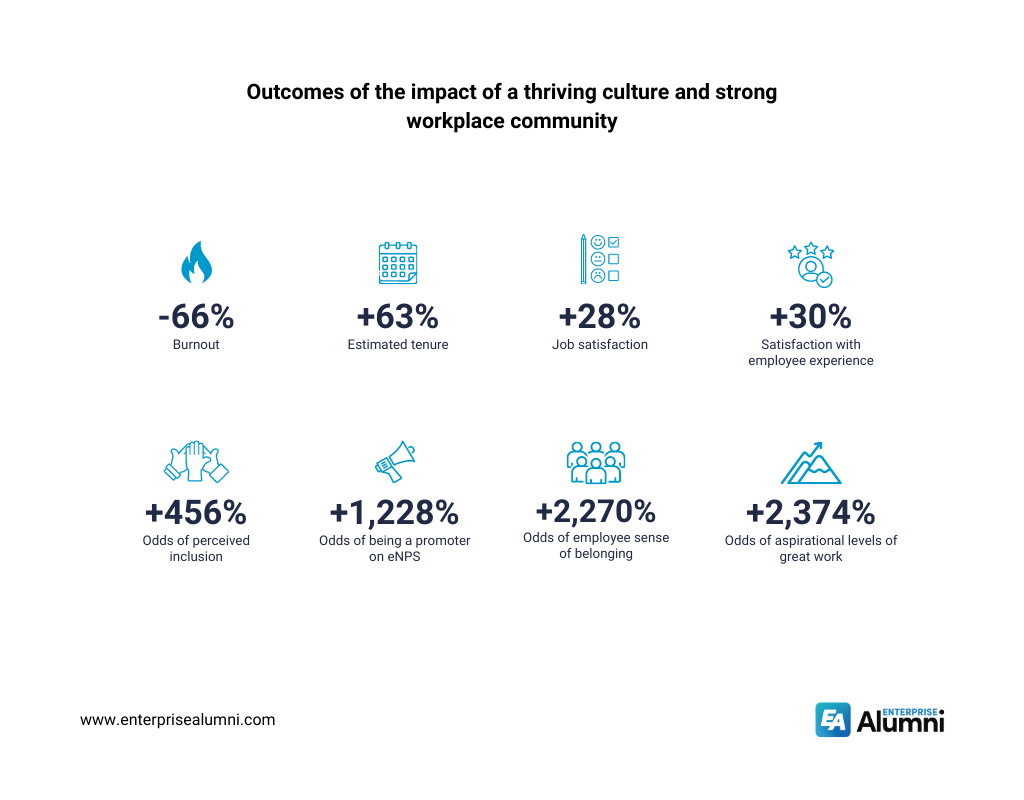
The American Psychological Association's 2023 Work in America survey put a finer point on it: organizational support and social connection are directly tied to well-being, motivation, and whether people stay.
Belonging isn't a soft metric sitting next to the real ones anymore. It's load-bearing.
A one-night party in December was never built to carry that weight. It wasn't supposed to.
🤝 Community Is a Mechanism
Here's where the language gets mushy in most articles on this topic, so it's worth being precise.
Community building at work isn't vibes. It's the deliberate construction of conditions where people feel connected, supported, and part of something that has continuity past a single event.
Vladyslav Sokol, CEO of Academy Smart, runs a software development company that works with distributed teams across multiple markets.
He shares, "In distributed organizations, belonging doesn't happen automatically. Teams need opportunities to learn from each other, solve problems together, and interact outside of project deadlines. The strongest year-end events are usually the ones that create shared experiences rather than passive entertainment, because those experiences continue influencing how people collaborate long after the event is over."
The shift is small to describe and hard to execute: stop asking how we entertain everyone and start asking how we include everyone. Those are different design problems.
Entertainment is a stage and an audience.
Inclusion means thinking through time zones before you pick a date, thinking through alcohol before you pick a venue, and building in more than one way to participate so the loudest extrovert in the room isn't the only one who has a good night.
Year-end is one of the rare windows where the whole organization is paying attention at once. Waste it on spectacle, and you get applause. Use it on belonging, and you get something that outlasts the night.
Story-driven formats do a lot of the heavy lifting here.
A round where people share a small win they're proud of, or something a teammate taught them this year, turns individual achievement into shared memory, which is a different and more durable thing.
Mixed-group problem-solving exercises build trust fast precisely because the stakes are low; nobody's job depends on guessing the right answer in a fifteen-minute icebreaker.
Gratitude walls and shout-out boards work for the same reason department potlucks used to work: they’re low effort, high signal, and everyone gets to contribute something.
Some organizations extend that recognition by creating small keepsakes, ranging from digital awards to custom t-shirts, that give employees a tangible reminder of shared accomplishments during the year.
None of this needs to be expensive. It needs to be considered.
🛠️ What This Looks Like on the Ground
Theory is easy. The actual planning is where most of these events revert to the old playbook, because the old playbook is familiar, and the new one requires more thought per dollar spent.
Workshops that aren't filler
A thirty-minute session on visual thinking, negotiation basics, or storytelling, run by someone internal who's genuinely good at it, not an outside speaker reading slides, gives people something to walk away with besides a hangover.
Teach the team your favorite productivity trick, which sounds almost too simple to work. It works because it puts everyone, regardless of title, in the position of having something valuable to offer the group.
Remote doesn't mean secondary
This is the section most companies get wrong, and it's worth dwelling on.
If half your team is watching a livestream of people opening kits while the in-person half eats catered food and laughs at inside jokes, you haven't built one event.
You've built two, and you've made the remote one worse on purpose without meaning to. Ship the same materials. Run sessions twice across time zones if you have to.
The core activity should be identical regardless of where someone is sitting. A cooking class kit that arrives at someone's apartment in Manila needs to be the same experience as the one happening in the home office down the street from headquarters.
Formats with teeth:
- Escape rooms force cross-functional groups to actually problem-solve under a clock, which produces a different kind of trust than small talk does.
- Talent showcases, someone's photography, someone's weirdly good karaoke, someone's sourdough starter that's older than their job tenure, humanize people in ways org charts never will.
- Custom trivia rounds about company lore celebrate the inside jokes without making outsiders feel like outsiders, as long as you don't let the whole event drown in them.
The instinct to grab a generic template is strong, especially in December when everyone's already stretched thin.
Samantha St Amour, Partnerships Manager at TechnoMEOW, says: “The strongest year-end events are the ones that feel intentional rather than templated. When companies design experiences around how their teams actually work and communicate, participation feels more natural and people stay engaged long after the event ends.”
Resist it. A five-minute poll asking what people actually want will outperform a polished, expensive event that nobody asked for.
💎 Values Aren't Decoration
A theme isn't the same as a value. Plenty of year-end events have a color scheme and a hashtag and absolutely nothing underneath them.
If the year was about customer empathy, bring customer-facing teams into the room to tell stories from the front line, not as a panel, as a real part of the program.
If innovation was the rallying word, talk about the experiments that didn't work, not just the ones that did. People remember honesty longer than they remember confetti cannons.
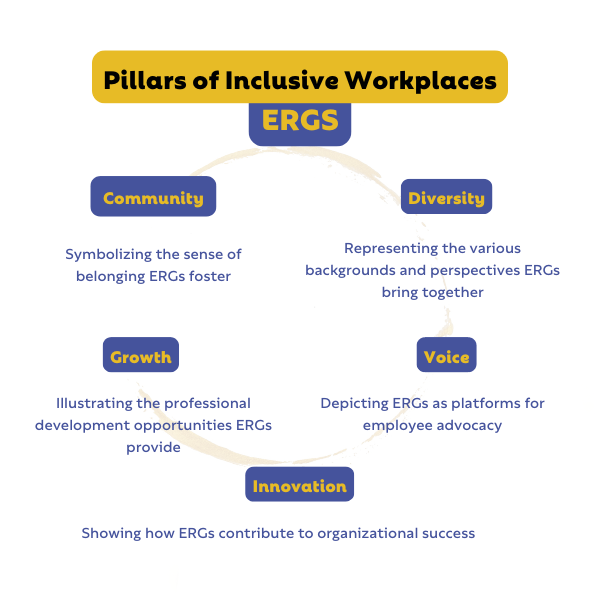
Bring ERGs and cross-functional voices into the planning itself, not just the guest list. It changes the food. It changes the accessibility considerations. It changes who feels like the event was built with them in mind versus built for them to attend.
Leave room for a short, well-run conversation about what belonging actually looked like this year and what people want more of going forward. Keep it brief. Keep it honest. Don't let it turn into a performance review disguised as a feelings exercise.
Harvard Business Review's research on belonging found measurable links to performance and retention, not just goodwill, actual business outcomes.
That reframes the whole conversation about whether values-driven planning is worth the extra effort. It is. The data says so, and so does every manager who's watched a values-aligned team outlast a values-decorated one.
📊 How You Know It Worked
Most companies measure the wrong thing after these events.
Attendance numbers and a satisfaction survey tell you whether people showed up and whether the food was good. They tell you almost nothing about whether anyone actually connected.
Run a short pulse check before and after with three to five questions, anonymous, focused on belonging, cross-team connection, and psychological safety. Keep the same questions year over year so the trend line actually means something instead of resetting every December.
Look at who participated and who led.
Did remote employees get an experience that was equally engaging, or just equally present? Those aren't the same thing, and the gap between them is where a lot of well-intentioned events fail.
The qualitative stuff matters more than people give it credit for. A short, open-ended prompt, what surprised you, who did you meet, what's one moment that stuck, surfaces texture no number ever will.
And then watch what happens in January.
Confetti builds exactly this kind of programming for distributed teams with escape rooms, cooking classes, game shows, and workshops, all customizable to the team running them.