






Companies with strong onboarding improve new-hire retention by 82% and productivity by more than 70%. Gallup also links higher engagement to up to 23% higher profitability.
Most teams do the visible parts well, access, introductions, and training sessions. The new hire stays busy, attends every meeting, and completes the checklist.
Then, a few weeks in, the gaps show up.
Work gets done, but misses context. Questions get asked late instead of early. The person relies on the manager for things they should already be handling.
That’s what a 90-day plan is supposed to fix, by focusing on direction, not volume of activity.
🗓️ Understanding the First 90 Days
Most new hires aren’t trying to learn tools first. They’re trying to answer questions nobody wrote down:
- What does good work actually look like here?
- Who really makes decisions?
- When do I figure things out myself, and when do I escalate?
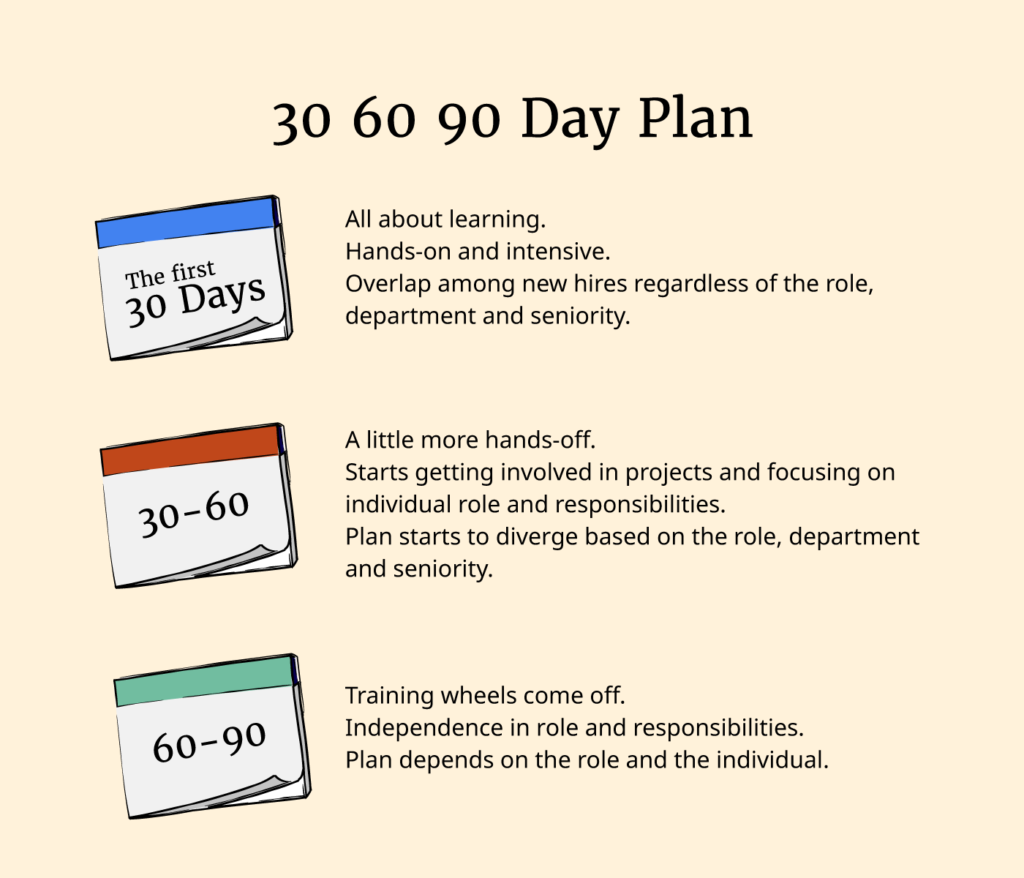
But what happens instead: tools get provisioned, a welcome doc is sent, and a few intros are booked. You see the issues later in a missed context, and work that technically gets done but doesn’t land.
Remote teams make this worse. The in-office informal learning, like overhearing how someone handles a situation, catching why a project exists, is mostly gone. Microsoft’s Work Trend Index showed professional networks shrink in remote setups.
So now the new hire is doing three things at once: learning the role, building relationships, and reading the culture.
📋 The 90-Day Engagement Plan
A real 90-day plan has four phases, and they don’t get equal weight. The first two weeks matter more than the last two months. Here’s how to think about it.
🌱Days 1–7: Get them functional, not fluent
The mistake almost everyone makes in week one is trying to teach everything. Compliance training, product deep-dives, security policies, the org chart, every tool, the company history, all stacked into five days. The new hire nods through it and remembers maybe a quarter.
Cut that down hard. Week one should answer four questions:
- Who’s on my team?
- What does the team actually do?
- What tools do I need today?
- What am I supposed to produce by Friday?
Give them one small first deliverable. A doc to read and summarize. A tool to set up. A meeting to attend and write up. Something that ends with “I did this,” not “I attended that.”
Schedule the manager 1:1 for the end of week one. Not as a check-in. As a way to surface what didn’t make sense.
👥 Days 8–30: Shadow, then assist
This is where role-specific work starts. The pattern is roughly the same across roles: watch someone do it, then do it with them, then do a small piece on your own with review.
- For an engineer, that means pair programming around day 10, a tiny bug fix by day 14, and a reviewed pull request by day 21.
- For a sales rep, shadowing five calls in week two, role-playing objections in week three, and sitting in on a discovery call as the second voice by day 30.
- For ops, watching a workflow run end-to-end, then running a piece of it with someone watching.
The 30-day milestone should be one concrete thing they own. Something a teammate could point to.
Ryan Beattie, Director of Business Development at UK SARMs, works with a lean team where new hires move into execution quickly, especially across e-commerce operations and customer handling.
He says, “Early on, people think they understand the workflow because they’ve seen it once or twice. Then they try to run it themselves and realize what they missed. We started making sure new hires own a small piece within the first few weeks. That’s usually where the real questions show up, not during shadowing.”
This is also when the buddy earns their keep. Most of the questions a new hire is too uncertain to ask their manager show up here, like the basic ones about how the team actually works.

Make the buddy meeting recurring. Twice a week, fifteen minutes.
🔑 Days 31–60: Real ownership starts
By day 30, they should be doing supervised work. By day 60, they should be handling the easier cases solo.
Less about whether they’re finding things, more about what they’re stuck on (if the answer is nothing, they're either being polite or not trying yet) and how they’d approach it.
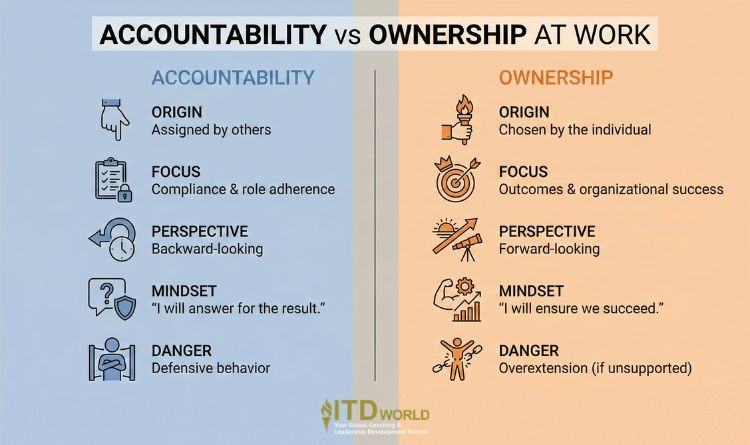
Sixin Zhou, Marketing Manager at LDShop, runs fast-moving digital campaigns where delays usually come from hesitation rather than lack of effort.
He explains, “In the first few weeks, people are focused on understanding the work. That’s expected. By the second month, the issue changes. We’ve had cases where someone flagged the same type of issue multiple times but never suggested a solution. That’s the point where you realize they’re still in receive mode. The shift we look for is when they start saying, ‘Here’s what I think we should do,’ even if it’s not perfect.”
Cross-functional intros happen now, not in week one. By month two, they have enough context to know what to ask other teams. In week one, those intros are forgotten by Friday.
🧭 Days 61–90: Independence, with judgment showing up
This is when you find out whether the ramp actually worked. Not from how confident the person sounds (most people sound fine by day 60), but from what they’re catching.
- Are they flagging risks before you ask?
- Pushing back when something doesn’t make sense?
- Telling you their priorities for the week instead of asking what they should be?
- Bringing up a customer detail or a code review note you didn’t know about?
Those are the signals. The 90-day milestone should be something visible to people outside the immediate team, like a shipped feature, closed deals, or a workflow they own without supervision.
If you can’t point to something like that, the plan probably needs another month.
🏗️ The structure underneath all of it
Three things run through every phase.
- A weekly manager 1:1, on the calendar before day one and never quietly skipped. The week this disappears is the week the plan starts unraveling.
- Buddy touchpoints, twice a week early, dropping to once a week by month two, optional after that.
- Pulse checks at weeks 2, 4, 8, and 12. Five minutes to fill out, ten minutes to read. The ones that surface real problems are worth more than any onboarding survey. Four short questions:
- What’s clearer than it was?
- What’s still fuzzy?
- Who do you need more time with?
- What’s slowing you down?
💡What Actually Matters Once the Plan Is in Place
A plan on paper is straightforward. Following it isn’t.
The difference shows up in a few places, the ones below tend to decide whether the ramp holds up or starts slipping.
🎯Clear expectations and goals
This is where onboarding breaks, even when everything else looks structured. Most plans have goals. The problem is that they don’t carry enough context to act on.
A milestone on its own pushes the new hire into guesswork. They spend time figuring out who to ask, where to look, and how this piece fits into the team’s priorities. That delay isn’t visible, but it compounds.
Andrew Bates, COO of Bates Electric, deals with work where unclear expectations show up immediately in delays and callbacks.
He says, “We used to assign tasks like ‘handle this service request’ and assume people would figure out the rest. What actually happened was they’d complete the job, but miss something small that mattered to the customer or the schedule. Not because they didn’t try, but because they didn’t know what mattered most in that situation.
Once we started being explicit about who owns the decision, what the priority is, and what a good outcome looks like, those mistakes dropped. The work didn’t change. The clarity did.”
Every goal needs three things:
- An owner: Who they go to when something isn’t clear
- A resource: Where the right information actually lives
- A reason: Why this matters now
Miss one, and the work still moves. Direction gets weaker.
🔄 Regular check-ins and feedback
The plan sets the structure. Check-ins show whether it’s holding up. The signals are indirect.
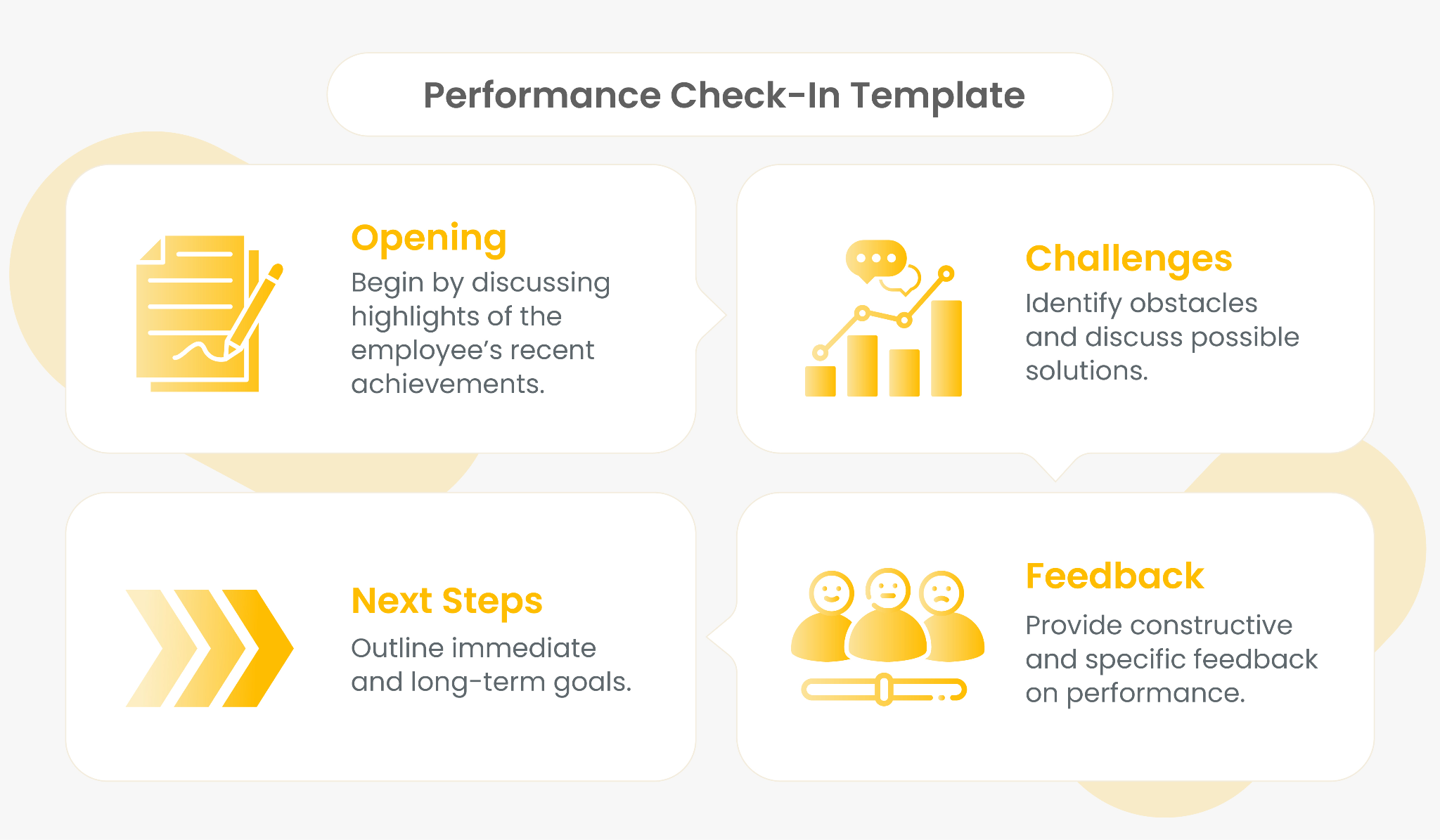
New hires say they’re still getting context. They repeat questions in slightly different ways. It's the polite version of nobody has actually answered this yet.
Feedback is where most of the correction should happen, but it often stays too broad to be useful. “Good job ramping” gets ignored. “Your summary caught the objection the AE missed”.
📚 Onboarding materials
The plan only works if the materials don’t get in the way. Nobody reopens a 40-page handbook. Here’s what actually gets used:
- Short “how we work” page
- Clean org chart with faces
- Glossary of acronyms
- Short videos that show real workflows
If it doesn’t help after day one, it won’t get used.
🤝 Culture and connection
Culture is learned by watching how decisions actually get made, what happens when someone disagrees, whether people raise risks early, and how mistakes are handled.
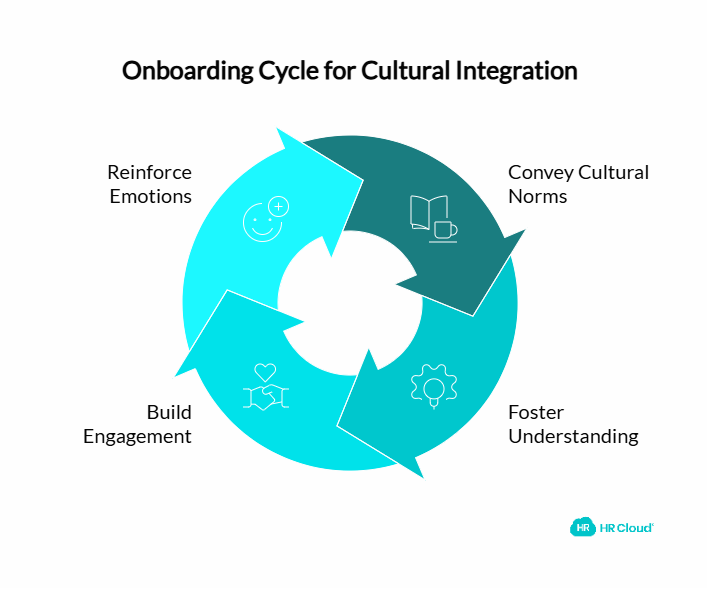
So let new hires see that. Put them in sprint reviews, planning sessions, retrospectives, and customer debriefs. Early on, they don’t need to contribute. Observation is the work.
Adrian Iorga, Founder and President of Stairhopper Movers, operates in a high-volume service environment where new hires learn by watching experienced crews handle real jobs.
He says, “You can explain the process in a training session, but that’s not what people remember. What sticks is seeing how someone handles a difficult move, a tight schedule, or a customer who’s stressed. New hires pick up what matters by watching those decisions in real situations. That’s where they start to understand how the team actually works, not just what the steps are.”
Belonging matters as much as exposure. BetterUp found that it can increase performance by 56% and cut turnover risk significantly. That shows up in small ways, like whether someone asks for help, speaks up, or quietly disengages.
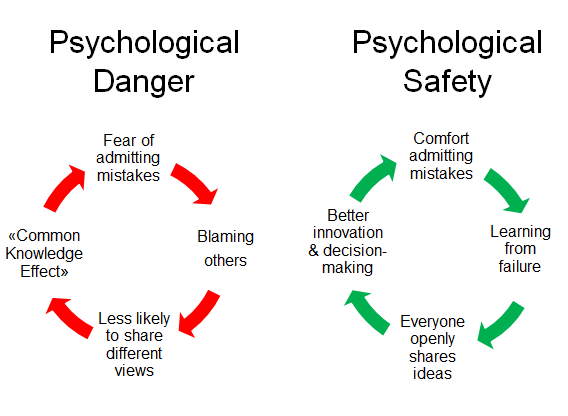
But you can’t force it. Heavily scheduled fun doesn’t work. Trust falls and pizza Fridays don't build belonging. They just delay lunch.
What works is lighter and more structured: a buddy with a real rhythm, short intro calls, a coffee chat, a five-minute personal check-in during a real meeting.
The questions people hesitate to ask are usually the ones that matter. Make it normal to ask them.
📊 Measuring What Actually Matters
Asking “Are you happy?” in month one is useless. Most people will say yes. It’s the safest answer in month one.
You need signals tied to real progress:
- Are 30-60-90 goals being hit?
- Are check-ins actually happening (not just scheduled)?
- Is buddy support still active after week two?
Then look at role-specific indicators:
- Engineers: PRs, QA feedback, tickets closed
- Sales: call progression, pipeline quality
- Ops: workflows handled with less supervision
Relationships matter too. If someone has only interacted with their manager after six weeks, they’re missing context. That shows up later. Pulse surveys help if they’re short and timed well (weeks 2, 4, 8, 12). But they only matter if something changes afterward.
Gregor Emmian, Deputy Chief Digital Growth Officer at Rise, works with growth and product teams where early performance is tied to decision-making under uncertainty rather than output alone.
He notes, “In the first few weeks, output can look similar across people. What differs is how they handle ambiguity. Some will wait for direction when something isn’t clear. Others will move things forward, make a call, and adjust if needed.
Those patterns show up early. How someone prioritizes, how they respond to blockers, how they communicate progress, those are more reliable indicators of long-term performance than volume of work at that stage.”
🚀 What the First 90 Days Need to Deliver
Most onboarding plans don’t fail, they lose intensity.
Week one is structured. By week three, attention drops. That’s when the harder parts show up: judgment, ownership, and how the team actually works. That’s where most plans stop holding.
A few takeaways from that:
- Early clarity matters more than early volume. Too much upfront slows the ramp.
- Most gaps show up as small signals first, such as repeated questions, hesitation, and missed context. That’s when to act.
- Support needs to stay steady after the first two weeks. That’s when the real ramp starts.
- If the person can’t explain what good looks like by the end of it, the plan didn’t do its job.
When it works, you don’t need to measure it in detail. The new hire is moving with direction, not waiting for it.
If you’re trying to build real connection early, not forced interaction, explore team experiences at Confetti. Their sessions are structured, light, and designed to actually get people talking.