


.png)



Keeping people engaged isn't a once-a-year offsite thing anymore. With blended schedules and distributed teams, engagement has become the daily work of keeping culture intact.
When you plan for it year-round and balance fun with well-being, you set your team up for stronger relationships and more consistent results.
The balance matters because fun creates energy and connection. Meanwhile, well-being helps people recharge and stay healthy. Combining the two? Together, they boost staff morale and productivity in ways that last.
Fret not; This page shares with you our year-round employee engagement calendar. Read on to learn how to create one while striking a balance between fun and well-being!
The Components of an Engagement Calendar 🗓️
An engagement calendar is a shared plan that maps out activities intended to help people connect and feel supported at work. It's your roadmap for team culture across the year. A well-rounded engagement calendar strikes a balance between:
- Fun activities which spark joy and connection
- Well-being initiatives that support physical and mental health
Designing an engagement calendar for the whole year is one of the employee engagement trends. However, alignment is key: Your calendar should reflect your company's values and teamwork
Case in point: If creativity is core to your brand, add workshops that let people make things together. If you're proudly global, rotate event times so more time zones can join. What you plan should feel authentic to your culture, not lifted from a generic corporate playbook.
If you are unsure about what an engagement calendar looks like, here is an overview of Confetti’s year-round engagement calendar as an example:
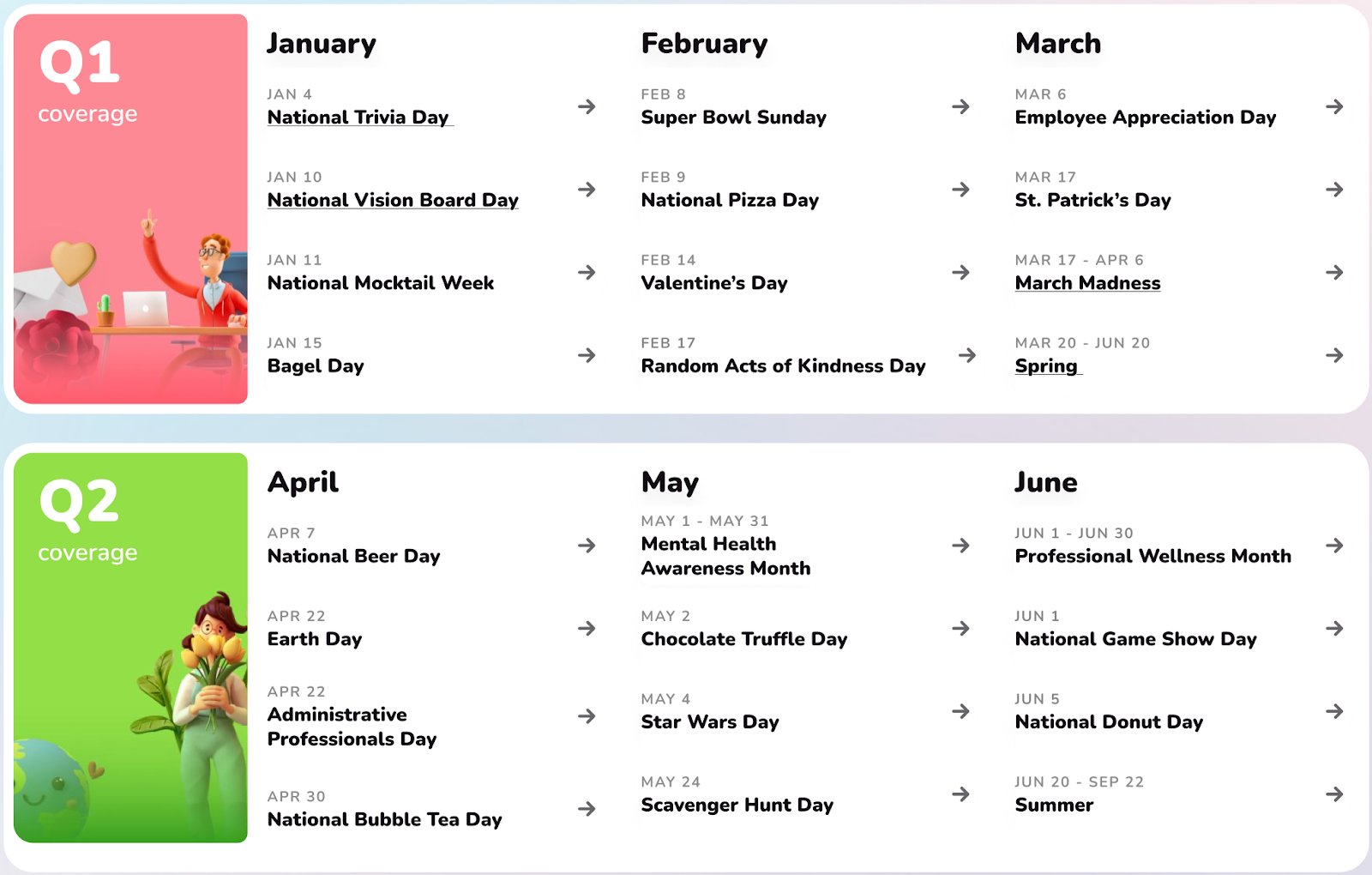
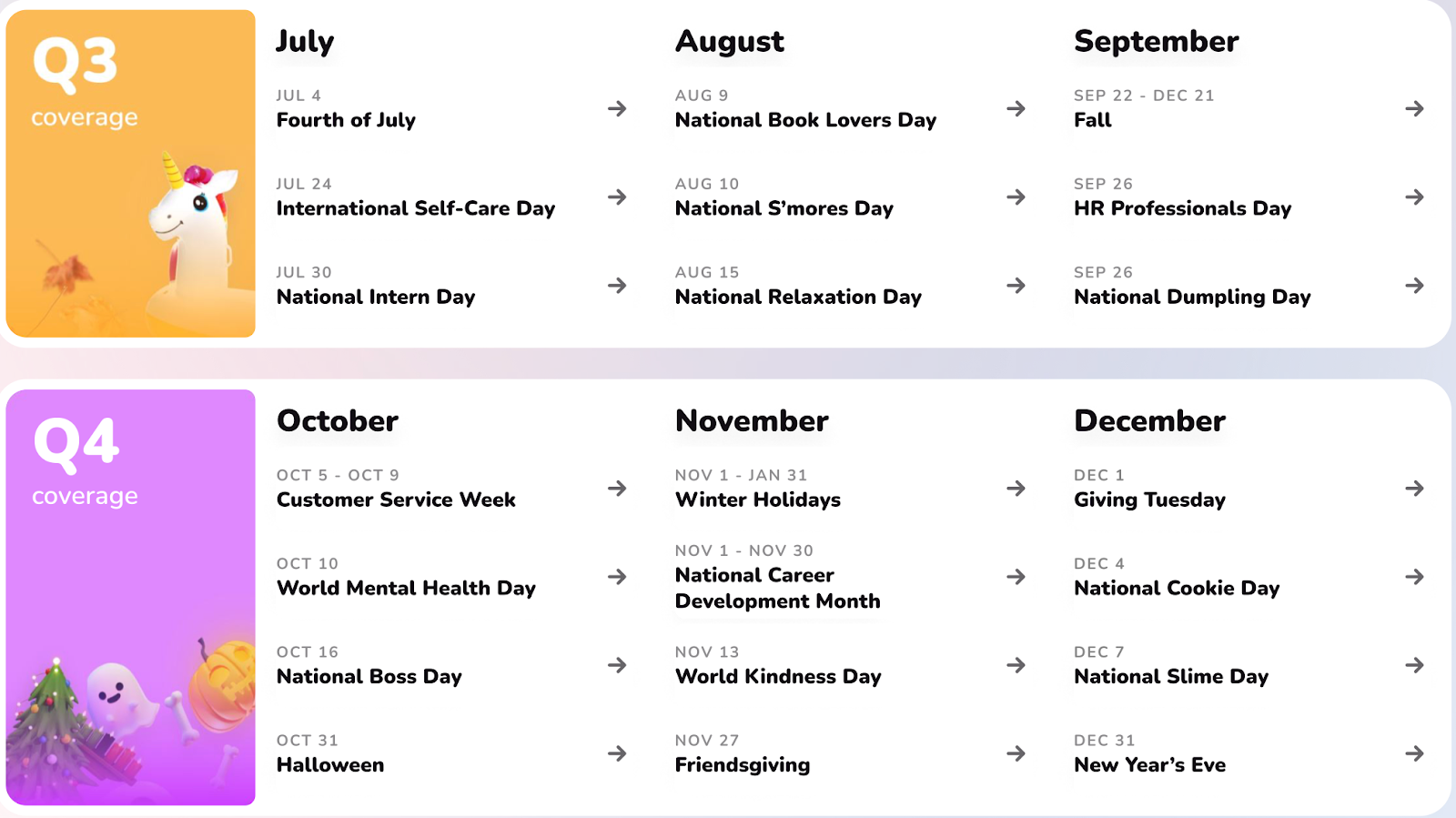
As you consider building your own calendar, heed our advice:
A well-designed engagement calendar acts as your cultural compass throughout the year. It promotes team connections and overall well-being stay priorities. When employees see regular opportunities for both fun and wellness on the horizon, they feel appreciated and stay motivated.
Why Balance Fun and Well-Being ⚖️
Celebrating major company milestones is a proven way to boost employee engagement. However, recognizing some of the lesser celebrated holidays at work, such as Valentine's Day, National Days, and St. Patrick's Day, can also spark real connections and active collaboration. Even simple, low-key moments of fun (without a formal celebration) can positively impact your workplace culture.
There’s one trick, though: Strike a balance between fun and well-being. Here’s why:
The role of fun in the workplace 🧙
Fun is more than a perk. When teams exchange laughs and low-stakes wins, they build the kind of goodwill that makes hard days easier. That’s why it’s best to hold fun activities in and out of the office while giving employees choice-based participation.
There's science behind this: It’s no secret how laughter can reduce stress responses and relax the body. Mayo Clinic research on stress relief ties humor to a better mood and a firmer outlook. Gallup also reports that having a best friend at work is key to employee engagement and job satisfaction.
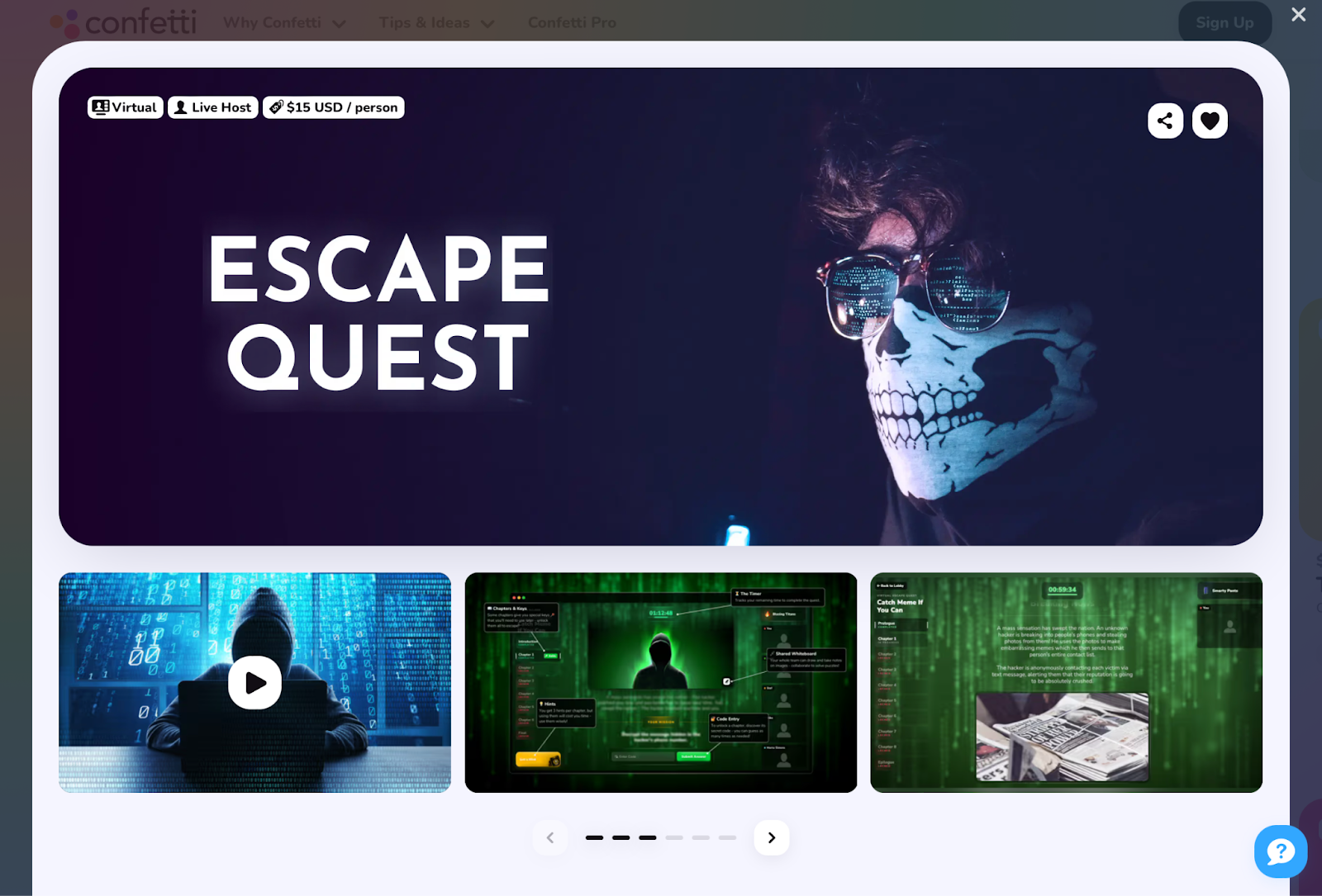
So, what team-building activities can you offer for your busy teams? The options are unlimited. In fact, Confetti offers a handful of choices (see below):
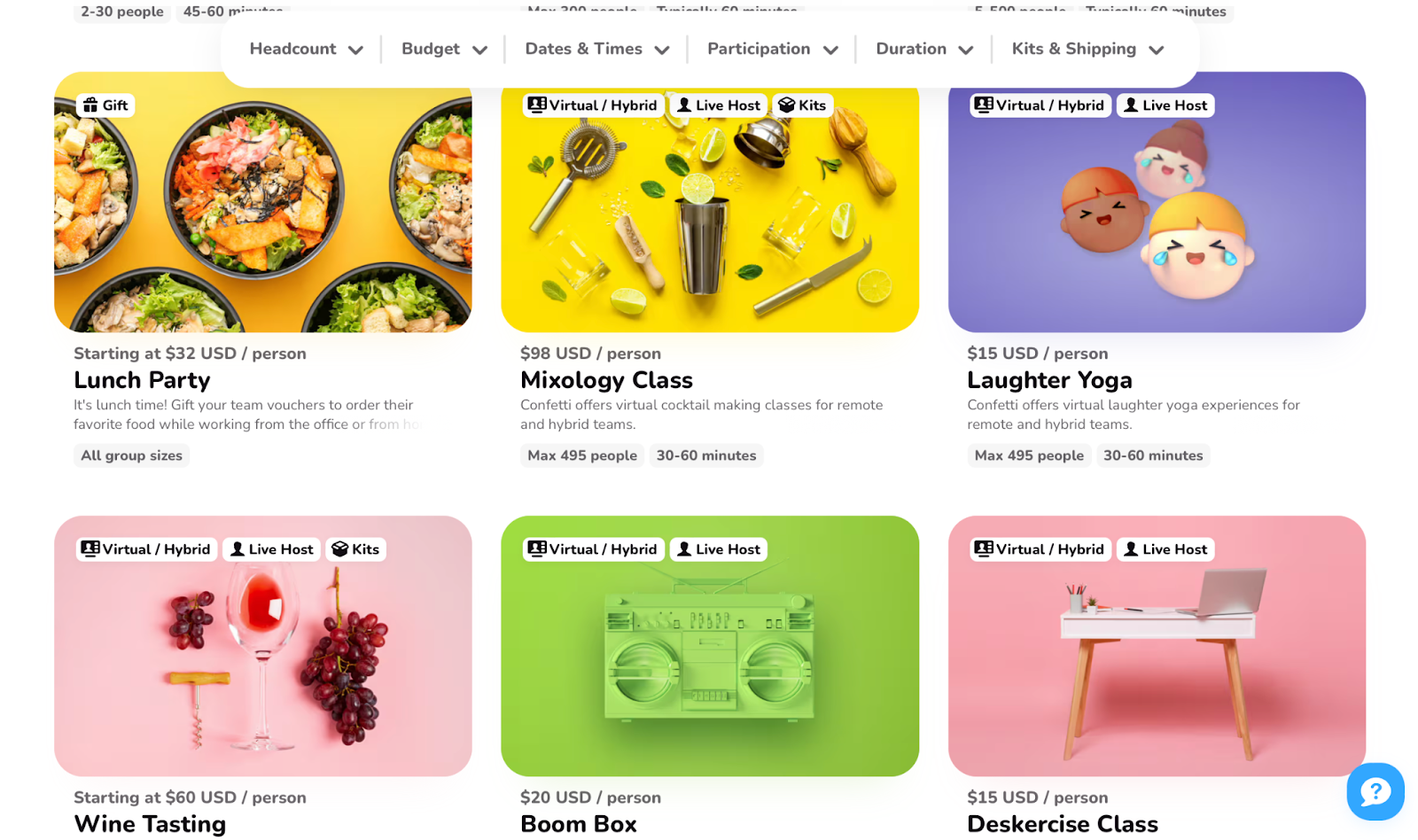
Virtual happy hours with conversation prompts work well. So do team game shows and escape rooms, not to mention creative mini-workshops that produce something shareable. The format matters less than the consistency and the space it creates for people to see each other as more than coworkers.
The perks of focusing on well-being🧑⚕
Well-being programs are the long game. They keep people healthier and stronger when things get tough. For example, you can line up stress awareness month activities to elevate employee well-being.
Guided mindfulness or breathwork sessions help. Fitness or step challenges encourage movement. Health webinars on sleep, nutrition, hydration, and burnout prevention provide practical tools people can use right away. Need more? Take Confetti’s recommendations for well-being initiatives below:
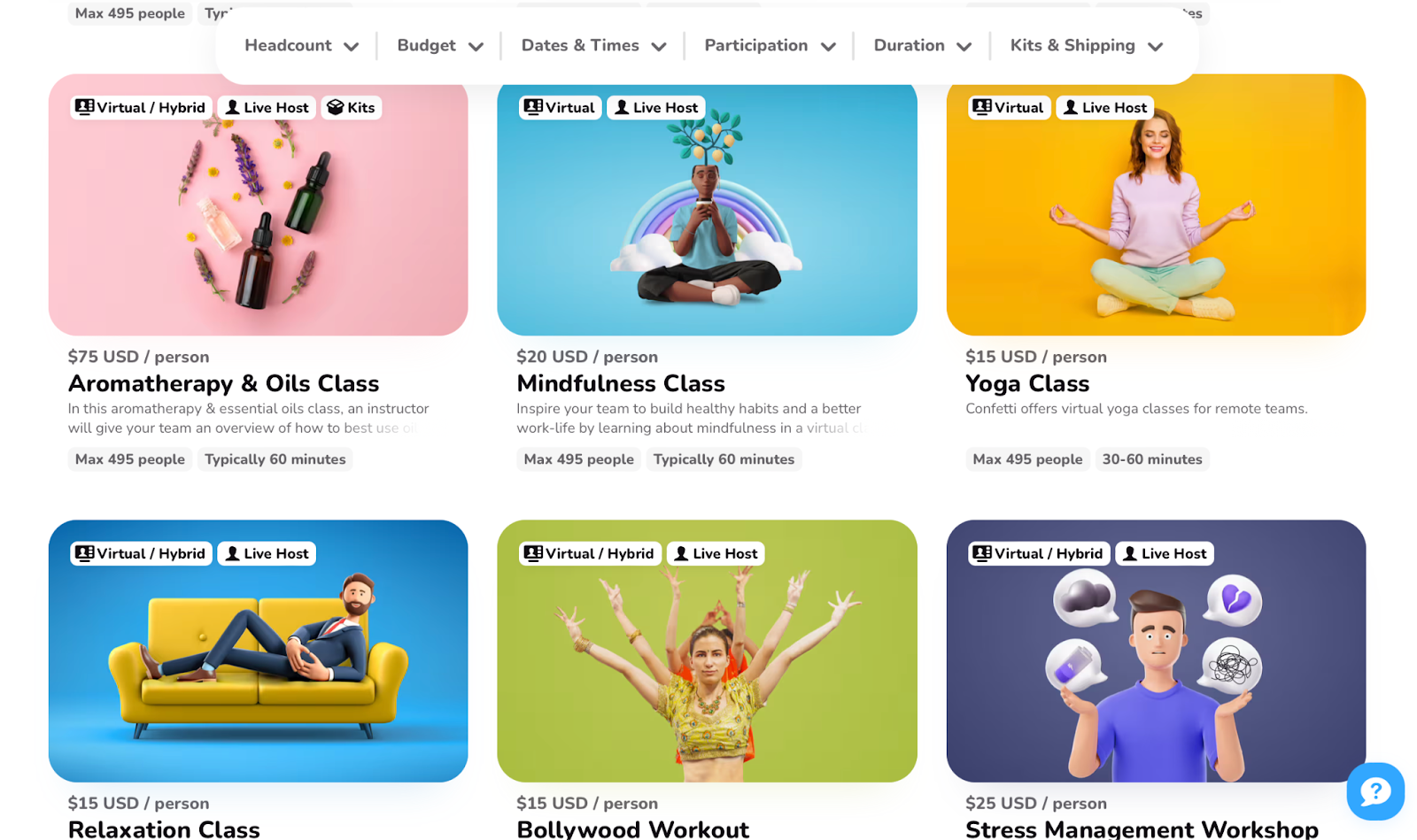
The most effective technique blends well-being into everyday routines. For example, rotate 10-minute mindful starts before larger meetings. Then, encourage walking meetings and add scheduled pause points. Ultimately, remember the significance of work-life balance.
How To Design an Effective Year-Round Engagement Calendar 📆
1. Assess team needs and choices 🤔
Start by listening to what employees really want from company events and activities. Ask what would genuinely help, not what you assume people want.
Quick pulse surveys, open suggestion forms, feedback notes, and small-group chats can expose patterns you'd miss otherwise. If your early feedback shows people want shorter, more frequent touchpoints instead of long events, you can design for that.
Conrad Wang, Managing Director of EnableU, also holds employee engagement events or activities. For instance, they celebrated the International Day of People with Disabilities in Sydney based on how their employees would want to help their communities.
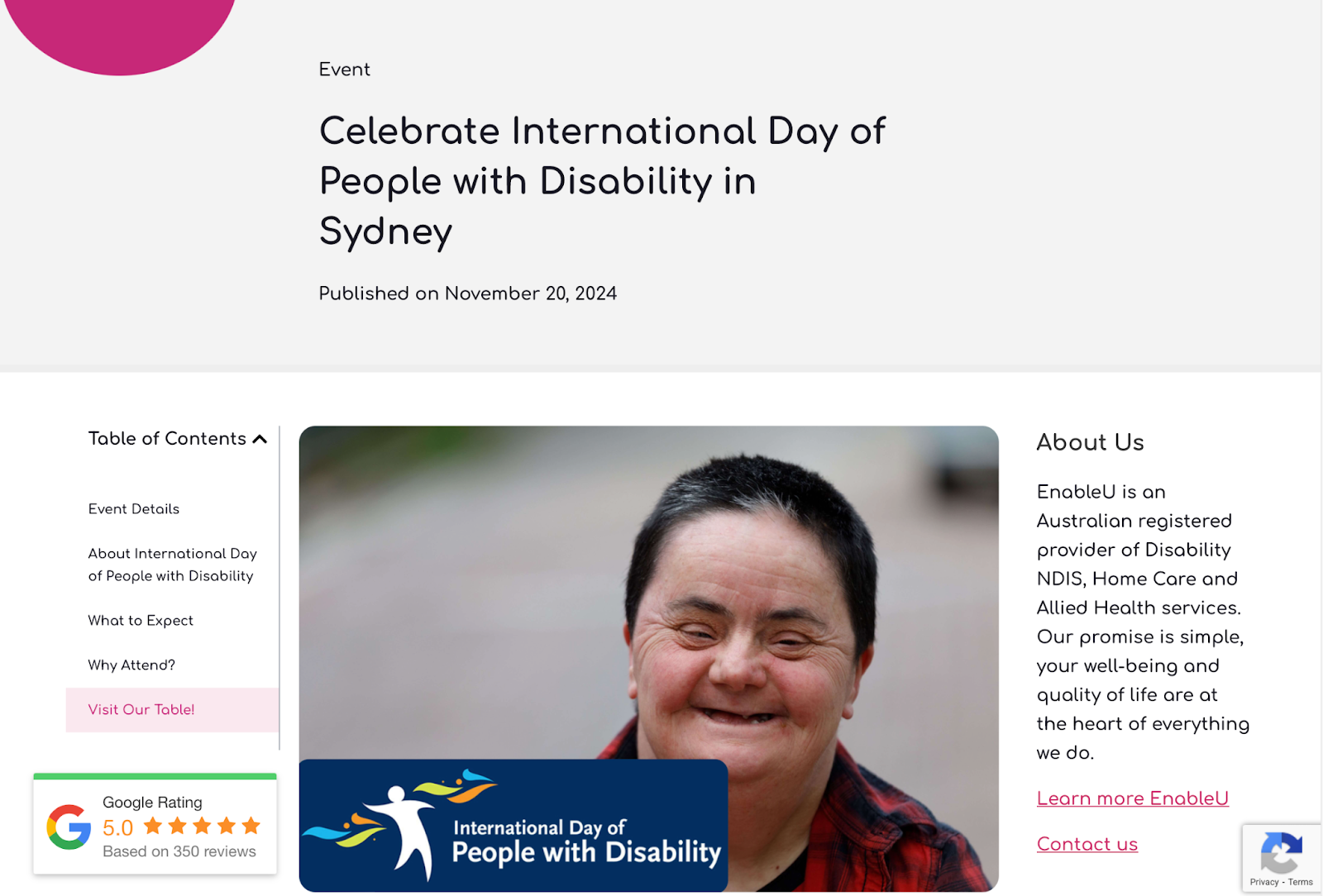
Wang recommends, "Start by listening to your people through multiple channels like anonymous surveys and team discussions, even one-on-one conversations. The best engagement calendar reflects what your specific team wants and needs, not what looks good in a corporate handbook."
He continues to suggest, “For one, keep surveys short and specific by asking about format and themes. Also, offer multiple ways to share feedback, both live and async. Lastly, look at your team's rhythms, busy periods, big deadlines, holidays, and plan accordingly.”
2. Set proper scheduling and planning 📜
Treat your calendar like a steady cadence, not a flood. For example, here’s a simple framework:
- One monthly anchor event (a signature team activity)
- Biweekly micro-moments (10–20 minute wellness or connection breaks)
- Quarterly deep dives (learning workshops or volunteer days).
From here, rotate time slots to include different regions. Also, alternate between high-energy events and quieter sessions to prevent burnout. Plus, tie activities to seasonal themes like spring step challenges, summer volunteer drives, fall creativity series, and winter reflection workshops.
Learn from Tom Rockwell, CEO of Concrete Tools Direct. He has his fair share of designing an engagement calendar for his team. He realizes, however, that this requires proper planning and scheduling, given the mass of their work.
Rockwell explains, “An engagement calendar only works when it respects the realities of the work itself. We plan events with intention, like reviewing schedules, spacing them out, rotating formats, and leaving room to breathe. That way, they energize the team instead of adding pressure.”
He caps it off by saying, “Remember, good scheduling turns engagement from a distraction into a genuine support system.”
3. Leverage tools and technology🧑💻
The planning side can eat up hours if you're juggling research, scheduling, invites, and follow-up. For instance, you have to consider the future of team building using new technologies, such as artificial intelligence (AI) and software automation.
Confetti can help you centralize all of that. It offers a curated catalog of activities across fun and well-being, like trivia, cooking classes, DEI workshops, and guided mindfulness. It offers the best tools to plan and run them smoothly throughout the year.
Brandy Hastings, SEO Strategist at SmartSites, recommends employing digital tools and technologies for event coordination.
Hastings says, "Modern engagement platforms eliminate the administrative burden of planning activities. Features like automatic alerts, RSVP tracking, and budget management free up HR teams to focus on creating meaningful experiences that bring people together."
She adds, “With modern tools or platforms, you can build a balanced calendar from a single place and standardize logistics and reminders. You can also track participation to learn what resonates, as well as modify plans quickly without starting from scratch.”
4. Measure and adjust engagement strategies 💹
Great calendars evolve (see employee experience examples). What does this imply? Measure what you can, learn quickly, keep iterating…and repeat!
Participation rates and short post-event polls are a solid baseline. Add one or two questions to assess value: Was this worth your time? How likely are you to join again? Then, leave space for open comments. Over a quarter or two, you'll see patterns which guide your choices.
Take it from Andrew Bates, COO at Bates Electric. He takes the lead in tracking and measuring their employee engagement approaches and activities. He wants to ensure that their programs make a difference in their employees’ lives.
Bates advises, "Track participation rates, gather post-event feedback, measure performance, and monitor engagement scores quarterly. These metrics reveal which activities authentically resonate and which need rethinking. Successful engagement calendars evolve based on real employee responses, not assumptions."
Bates continues, “Adjustments don't need to be dramatic. For one, swap event times to improve access across time zones. Also, shorten sessions if attention is flagging. Plus, pair high-energy events with calm follow-ups. Lastly, re-run popular experiences and retire what isn't landing. Over time, your calendar becomes something that actually fits how your team works.”
Final Note 📝
A year-round calendar can make a world of difference in your employee engagement efforts. Start small and keep tuning your mix as you learn. Likewise, build a steady cadence and mix joy with care to give people consistent reasons to connect. That's how engagement becomes more than a program; It becomes part of how you work!
Designing a year-round engagement calendar that balances fun and well-being? Check Confetti’s employee engagement calendar for practical examples and concrete steps as a way to guide your planning and designing process.