


.png)



Most managers have a specificity problem.
You watched someone stay on a call until nine on a Thursday untangling a billing dispute that wasn't theirs to fix. You know what that cost them. You know their kid's bedtime.
Then you open Slack the next morning and type "amazing work yesterday!!" and hit send, and the entire thing evaporates on contact.
That gap between what you noticed and what you managed to say is the whole problem.
What follows is twenty messages you can steal. But the messages are the least useful part of this. The useful part is the pattern underneath them.
What the Numbers Actually Say
Workhuman and Gallup have tied effective recognition to higher engagement, stronger connection to culture, and lower burnout.
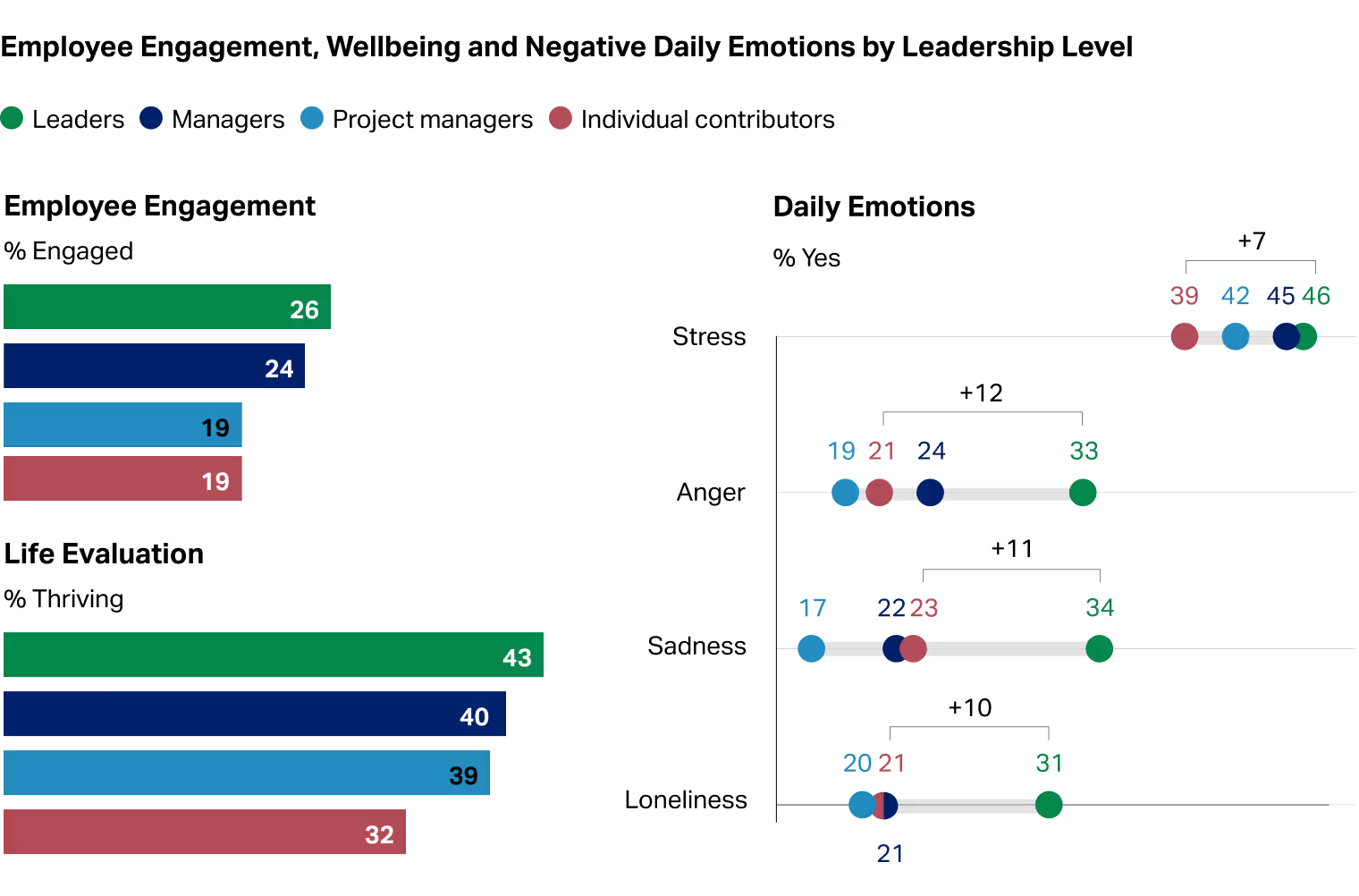
The number that should bother you is a different one: Gallup has found that only about one in three U.S. workers say they received praise for good work in the past week.
Sit with that for a second. Two out of three people went a full week. It's a workforce whose managers noticed things and didn't say them.
The Five Things a Message Needs, Weighted Honestly
Specificity is doing about seventy percent of the work here, and everything else is rounding.
"Great job on the launch" and "your QA pass caught the date bug on Tuesday, the one that would have shipped a broken checkout to every user in the EU" are not two versions of the same message.
The first is a mood. The second is evidence that you were paying attention. Nobody is starved for compliments. They're starved for proof that their work is visible.
Could you paste this to anyone else on the team without editing? If yes, you wrote a greeting card.
Impact is the second half of specificity and usually the part people skip. You named the behavior. Now say what it prevented, unlocked, saved, or protected. Days. Revenue. A customer. A weekend.
Personalization means the thing only they would recognize. The client they'd been chasing since March. The refactor they'd been quietly arguing for.
Timeliness. Say it within a week or don't bother pretending it was top of mind.
Sincerity mostly means resisting the urge to make it sound good.
Where This Goes Wrong
Generic praise is the obvious failure and the least interesting one.
The more expensive failure is inflation.
When every deliverable gets a public celebration, you have built a currency with no scarcity, and the person who genuinely saved the quarter gets the same three emojis as the person who submitted a form on time.
Your team notices this arithmetic long before you do. They stop reading the channel.
Performative recognition has a tell, and everyone can spot it. It's the message that's clearly for the room rather than for the person: too polished, slightly too long, structured like it's going in a deck. People forward those to each other. Not admiringly.
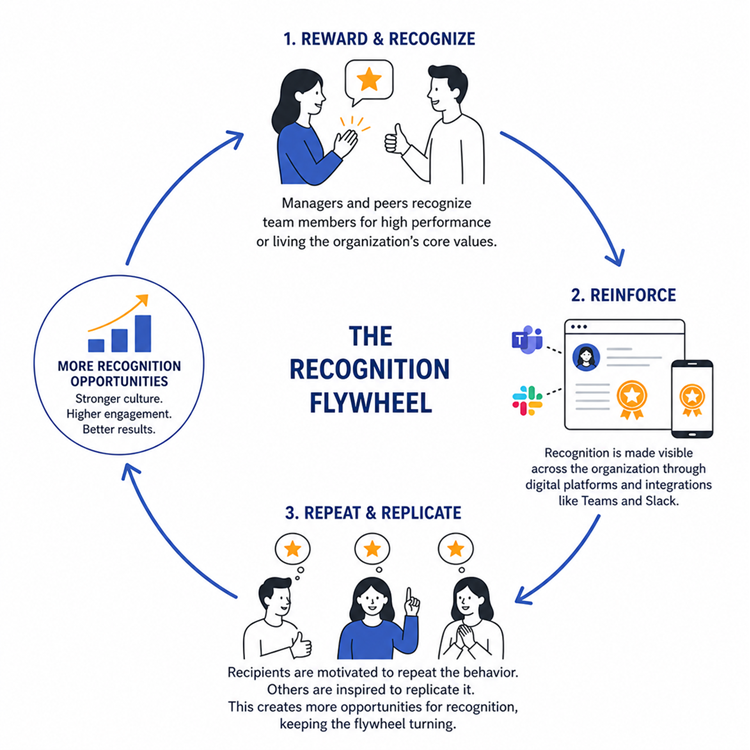
And then there's the reverse failure, which is hoarding recognition for formal moments.
The failure isn't confined to knowledge work either. A contractor handling bathroom remodeling in Tampa runs into the same problem in a different shape: the tile setter who caught a slope error before the waterproofing went down just prevented a callback worth several thousand dollars, and nobody above the crew will ever know unless the foreman says so that afternoon.
Physical work is loud while it's happening and silent the second it's finished.
Empty praise doesn't land at zero. It lands below zero. It teaches people to discount everything else you say, including the feedback you need them to take seriously.
20 Employee Appreciation Messages
Take these as raw material. Add a detail to each to make it your own.
- You aligned three teams around one plan in under a week, which kept us on schedule for the Q3 launch. That saved us days of back-and-forth.
- The way you handled the hotfix Friday night was calm and precise. Customers woke up to a stable product because of you.
- Your sprint demo told a clear story from problem to solution. Leadership said yes in the room instead of taking it away to think about.
Individual contributions
- Your audit of the billing flow surfaced the duplicate charge before it hit production. You protected revenue and trust in the same afternoon.
- The onboarding checklist you wrote cut ramp time for new reps by a week. That's real leverage on Q4.
- Thanks for jumping into support tickets during the surge. Your patience turned a few genuinely hostile threads into customers who are still here.
Problem-solving
- Your prototype cut data processing time in half. That opens the door to three features we've been deferring since spring.
- You reframed the client's no as a scope question. That's the only reason the deal is still alive.
- The color-coding you added to the dashboard turned noise into signal. Standups are eight minutes now.
Working across teams
- You translated design feedback into engineering tasks without losing the nuance. Both teams felt heard, and it shows in the build.
- Thanks for running office hours for sales. Your walk-throughs are showing up almost verbatim in cleaner proposals.
Growth
- You asked for hard feedback on your presentation and had it rebuilt by the next morning. That's rare.
- Earning your certification while leading the migration was not a small thing. You strengthened the stack and the bench at the same time.
Culture and care
- You noticed the team was stretched and set up a rotation to protect focus time. That kept us productive without burning anyone out.
- The first-week coffee chats you do with new hires are the reason people stop being nervous by day three.
Customer impact
- Your follow-up notes to the client were crisp and actionable. They cited the clarity as a reason to expand scope.
- You turned a furious user into someone who now recommends us. You owned it and closed the loop instead of routing it.
Leadership and initiative
- You raised the risk early and brought two workable paths. That's why we chose well instead of rebuilding in November.
- Leading the retro kept us honest without turning it into a blame session. The experiments we picked are already showing up in cycle time.
- You spotted the pattern in bug reports and organized a fix-it day. Ticket volume dropped forty percent this week.
Making One Yours in Under a Minute
Use the situation, behavior, impact framework here. You can run it in your head while walking to a meeting.
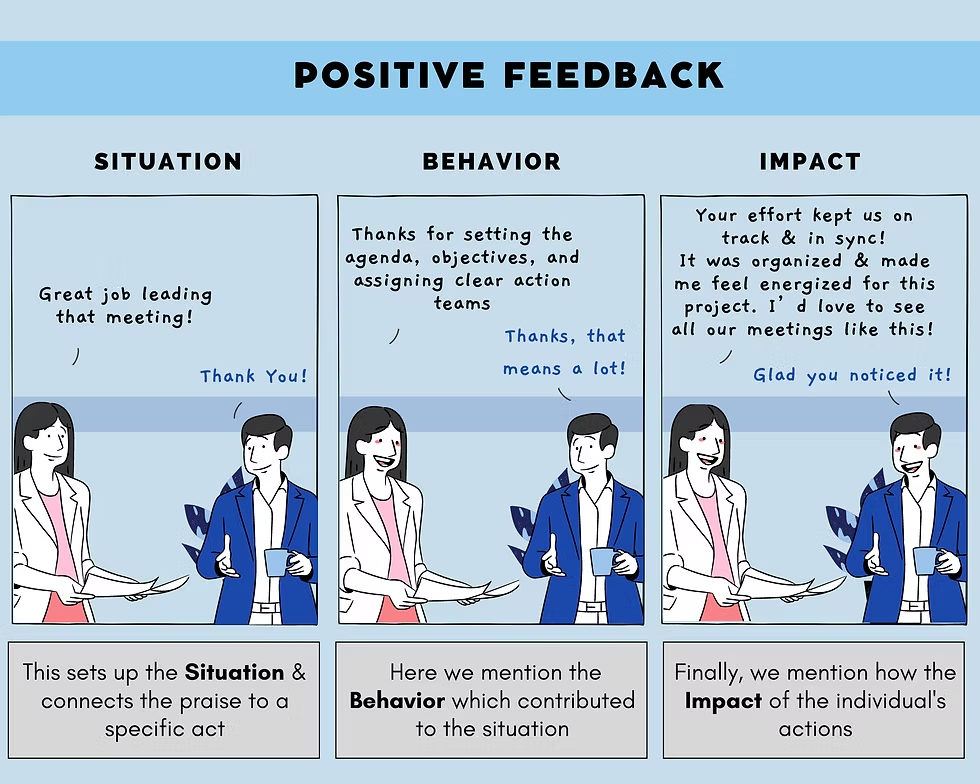
The situation gives context. Behavior is the observable thing, the part a camera would have caught, not your interpretation of their attitude. Impact is what changed because of it.
Here are a few examples:
- In [situation], you [behavior]. That [impact].
- When we were up against [challenge], your [specific action] got us [result].
- I noticed you [behavior] during [project]. It meant [impact].
Two things about delivery that matter more than the wording.
Match the channel to the human. Some people want the public post and will take a screenshot of it.
Others experience a public shout-out as a small hostage situation and would trade it in an instant for two lines in a DM. If you don't know which one someone is, you have a different problem, and it's a bigger one.
Mirror their register. If they write in clipped fragments, don't send them a paragraph. If they're warm and use too many exclamation marks, meet them there. Recognition written in your voice instead of theirs reads as an announcement rather than a message.
There's a third consideration once you're doing this at any scale, which is what carries the message.
A DM is fine for one person. Recognizing a whole team the same way turns into nine near-identical notes that everyone can tell were written in one sitting. Attaching something to it, through a rewards and gifting platform like Stadium, gives group recognition a bit of substance the words alone can't carry. It doesn't fix a generic message. It stops a good one from evaporating by Friday.
Cadence Beats Intensity
One extraordinary thank-you a year is worth less than a steady drip of ordinary ones.
The drip is what builds the belief that effort gets noticed by default, and that belief is what actually changes behavior when nobody's watching. A single great message is an event. A rhythm is a culture.
David Lamulle from Lamulle Construction, has spent decades leading crews on builds where retention comes down to how workers are treated day to day. He says, “On a jobsite, appreciation has to be immediate, and it has to be specific. That is the difference between a crew that shows up for the next marine construction project and a crew that takes the first call from another contractor.”
Easy ways to build the rhythm:
- Keep a running note in your 1:1 doc and add to it the moment you notice something, because you will not remember it on Thursday.
- Put sixty seconds of wins at the top of standup. Not five minutes. Sixty seconds, or it becomes a ceremony people dread.
- Set a recurring reminder to recognize two people a week. The output isn't.
- Rotate who gives the shout-outs. Peer recognition carries different weight than manager recognition, and both are necessary. Top-down only tells people that the hierarchy is watching. Peer-to-peer tells them the work is respected by the people who understand it best.
Tie it to a value when the fit is real and skip that step when it isn't. Forcing "this was a great example of Own The Outcome" onto a message about someone fixing a spreadsheet is how values statements become a joke.
Do the One You're Already Thinking Of
There's a person in your head right now. You thought of them somewhere around the third paragraph, and you've been carrying them through the rest of this.
Write that one. Name the thing they did, say what it prevented, send it before this tab closes.
Then find the second person, the one you didn't think of, the one who has been reliable for so long that reliability stopped registering as a contribution. That's the message that will land hardest, and it's the one that never gets sent.
Messages are the daily version of this. The occasional bigger moment still matters, and that's harder to improvise on a Tuesday.
Confetti handles the planning side of team experiences so the recognition you want to give at scale doesn't die in a scheduling thread. Browse experiences and book one for the team that has been carrying more than you've said out loud.