





If you're running a small team, you don't need a six-figure budget or a full HR team to make your people feel valued at work. Instead, what you actually need is a handful of good habits and the discipline to stick with them.
That includes making your employees feel seen and valued at every opportunity. The best part is that small teams have a real advantage here, since you know everyone by name and can make changes fast.
In this article, we’ll show you how to use that advantage without burning through your time or your budget.
What Does Employee Engagement Look Like in a Small Team?
Employee engagement is about how connected and committed your employees feel to their work and team.
It shows up like:
- A teammate helping someone before they have to ask
- Eagerness to own assigned processes
- Active participation in team building activities and during work tasks
Engagement on a small team is easier to measure because there's no anonymity, so everyone notices when someone checks out.
Why Engagement Matters Even More When You're Small
One disengaged person on a ten-person team is 10% of your output gone overnight. On a five-person team, it's 20%. That’s more than enough to disrupt your entire output. If even half your team becomes disengaged, it gets worse.
According to Gallup, high engagement leads to better productivity, profitability, and retention. When the opposite happens, your team’s productivity tanks by almost 18%, and your revenue gradually takes a hit.
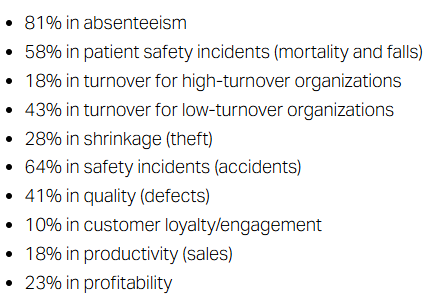
Gallup
Engagement also helps you retain your talents. For a small team, you can’t afford to constantly lose one, especially since the cost of talent acquisition is 50 to 200% higher than the cost it takes to retain an employee for a year.
How to Build Engagement Without a Big Budget
Here are five low-cost steps that actually work:
- Recognize People Every Week
Recognition is one of the simplest employee engagement strategies you can run on a small team, and it costs you nothing, Ryan Beattie, Director of Business Development at UK SARMs, a UK-based supplier of SARMs, says.
"We don't have the perks budget of a 500-person company, so we compete on the things money can't buy. The biggest one is making sure people feel their work actually matters, and that someone notices when it does. Create a peer shout-out channel in Slack or Teams, and start each week by posting one yourself to set the cadence.”
Make sure to tie each recognition to a specific behavior rather than a generic deliverable.
For instance, ‘Thanks for jumping into the client call on short notice and reframing the scope so we didn't lose the renewal’ lands much harder than ‘great job on the project this week.’
- Reduce Calendar Chunkiness
If your calendar is packed with internal meetings and back-to-back Slack threads all day, people leave the week feeling busy, but without anything they actually finished or feel proud of. That's where slow disengagement starts.
Block two to three mornings a week from internal meetings and protect those windows the same way you would protect a meeting with a paying client. Keep communication async whenever possible and ensure your employees have more focus time than meeting time.
Also, set weekly goals or targets. By Friday, every person on your team should have at least one thing they shipped and feel good about. That sense of progress keeps engagement alive.
- Make One-on-Ones Worth Showing Up For
Denys Hukov, Chief Growth Officer at Yalantis, a software development and IoT engineering company, believes that one-on-one meetings help you build stronger connections with your team and enhance engagement.
“They beat group meetings for engagement work because people are far more honest about what's stuck or frustrating when no one else is in the room. During a one-on-one, ask what's working, what's stuck, and what to try next week. Keep the notes in a shared doc so you can track response rates week to week.”
- Give Quieter Voices Room
Active communication and participation during team meetings and work build a sense of ownership and value, both of which positively impact engagement. But not every employee has the capacity to dominate a conversation or strike one up.
Solve that by ensuring everyone gets a turn to speak in meetings, even if you have to go around the room one at a time. Pair two teammates who don't usually work together for a 15-minute coffee chat each month.
And for hybrid or remote teams, you can explore team-building activities like virtual escape rooms to create shared experiences without the awkwardness of forced fun.
- Let the Team Help Shape It
Ryan Walton, Program Ambassador of The Anonymous Project, where he coordinates his team for effective outreach, says the fastest way to make engagement stick is to let your employees have a say.
“If you always impose your idea on your team, it might only do more harm than good. Instead, ask which two new habits, activities, or changes would help them focus and connect better right now, and then try those for a month.”
Wrapping Up
Keeping your employees engaged is a necessity. But if you’re running low on budget and can’t afford anything fancy, use simple, cost-effective approaches like recognizing your team individually at every opportunity.
Reduce your calendar chunkiness so employees can have their own focus time, prioritize one-on-one meetings to build strong manager- or employer-to-employee relationships, and help the introverts among you speak up when comfortable.
Lastly, ask your team what they want and include them when making decisions that affect them.