


.png)



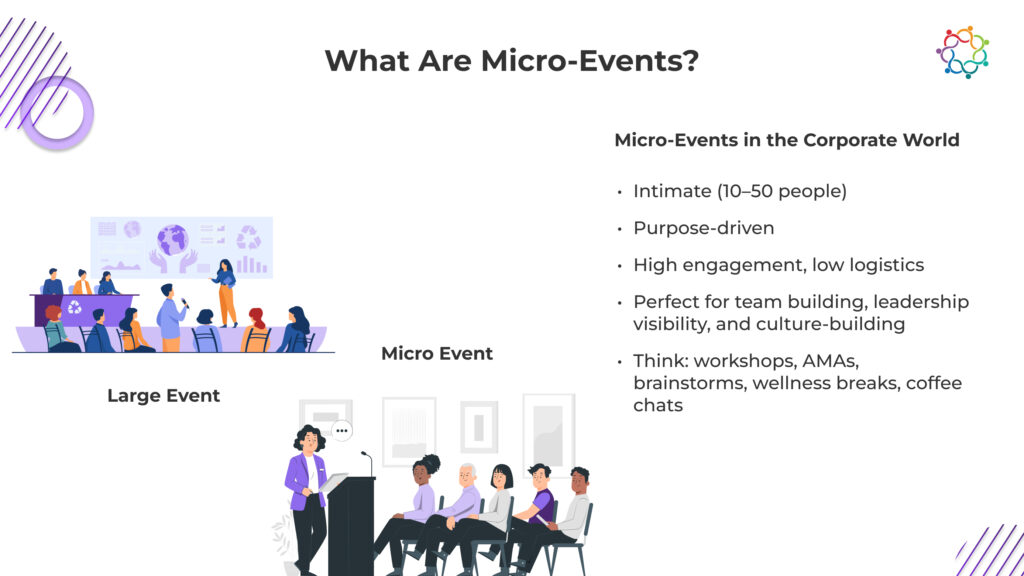
Micro holiday parties are exactly what they sound like: smaller celebrations that bring 6–15 colleagues together for focused, memorable moments throughout the season.
Instead of banquet halls, you get actual conversation. That matters more than it used to.
Teams are more distributed now. The old “everyone in one loud room” model starts breaking down fast when work itself no longer happens in one place.
And honestly, a lot of employees were never enjoying those giant holiday parties as much as companies assumed they were.
A two-hour dinner, coffee meetup, or virtual activity is easier to fit into real life than an all-night event with a commute, speeches, drinks, and social pressure attached to it.
✦ Benefits of Micro Holiday Parties
Smaller gatherings change the dynamic fast. Some of the benefits are obvious. Others only show up once you've actually run a few of these.
🤝 Increased employee engagement
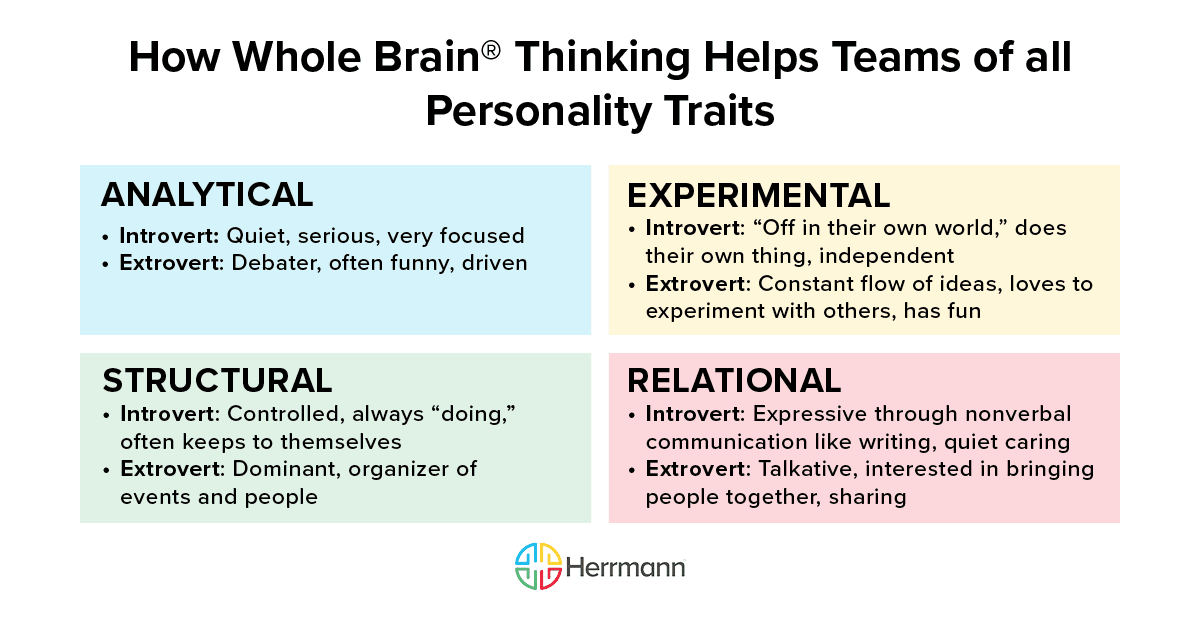
Large corporate parties tend to reward the same personalities every year. The loudest people work the room. Leadership stays clustered together. Newer employees drift toward whoever they already know.
Micro events flatten that a bit.
When there are 8–10 people at a table instead of 80 in a ballroom, conversations stop feeling performative.
Managers can actually spend time with employees without turning every interaction into networking theater. New hires participate without disappearing into the background.
Ryan Beattie, Director of Business Development at UK SARMs, works in a fast-moving performance and e-commerce environment where team culture can disappear quickly once communication becomes entirely transactional.
He notes, “Smaller team events work because people actually participate instead of hovering around whoever they already know. In larger corporate parties, you usually end up with the same social circles repeating themselves all night. Smaller settings break that pattern.”
You notice quieter employees speaking up more, too.
💰Cost-effectiveness
This is where companies usually hesitate at first because multiple events sound more expensive on paper.
In practice, many teams find the opposite.
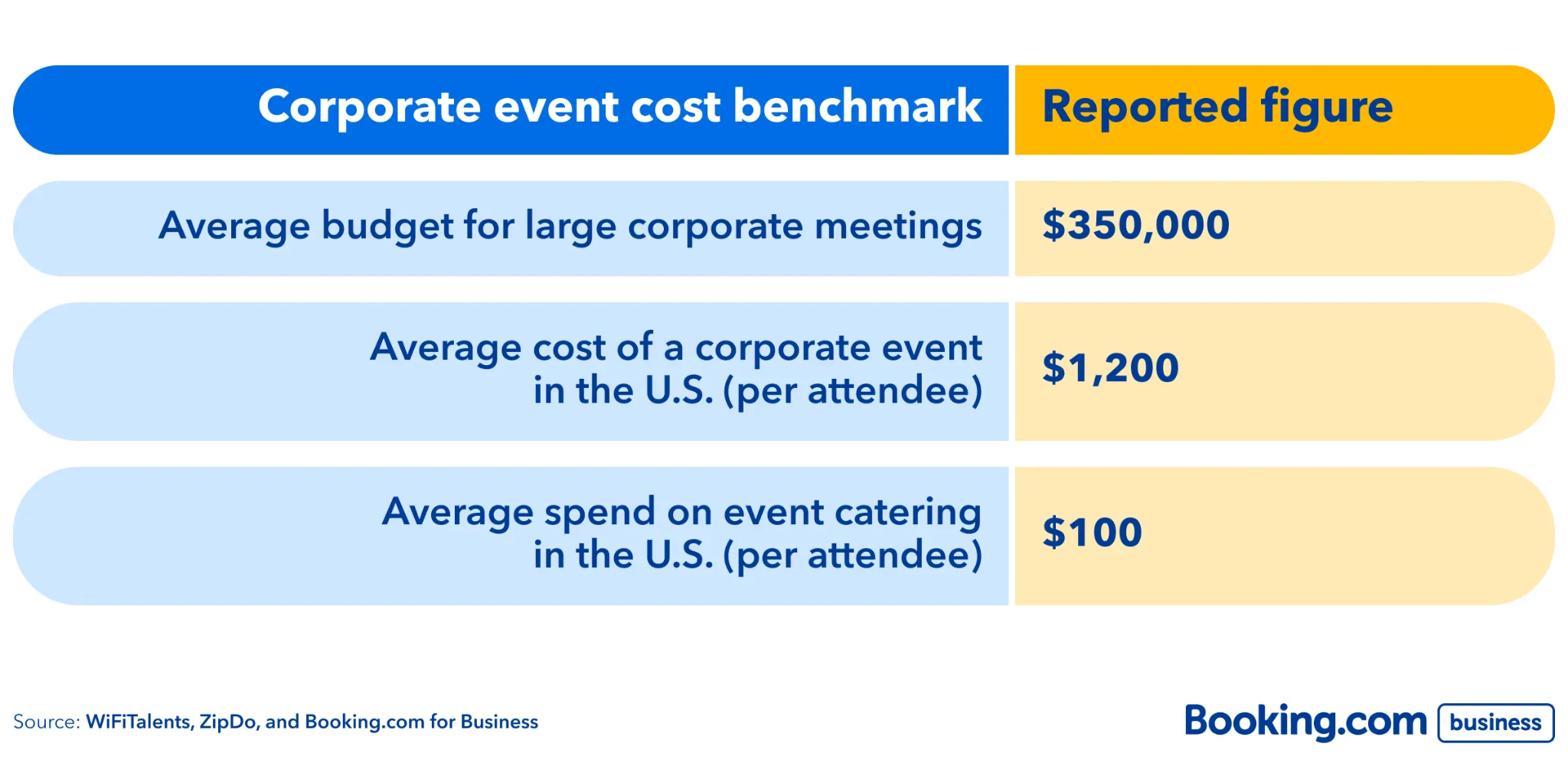
One large holiday event tends to accumulate hidden costs quickly: venue minimums, transportation, AV setup, catering packages, entertainment, last-minute additions, and extended hours.
And after all that, you still end up with employees saying the music was too loud or the location was inconvenient.
Micro events let companies spend more intentionally.
Christopher Skoropada, CEO of Appsvio, works with companies managing distributed operations and internal collaboration across growing teams.
He explains, “The operational problem with large holiday events is that they consume a huge amount of planning energy for something employees experience once and forget quickly. Smaller events are easier to organize, easier to adapt, and usually generate stronger participation because people feel like the event was built for actual humans instead of optics.”
Maybe one team does a private dinner. Another does a morning coffee tasting. Remote employees join a virtual cooking session with ingredient kits shipped ahead of time. The spend becomes tied to actual participation.
And because logistics stay simpler, you're usually spending less energy managing the event itself.
🌐Flexibility and inclusivity
This is probably the biggest operational advantage.
Traditional holiday parties assume everyone wants the same kind of celebration at the same time, in the same format. That rarely reflects reality anymore.
Zaheer Dodhia, CEO of Hummingbird International, works across globally distributed teams where cultural expectations around workplace socializing can vary significantly across regions.
He says, “The companies that struggle with holiday events are usually designing around tradition instead of participation. Smaller gatherings work better because people stop feeling like they have to perform socially in the same way.
You get better conversations, better attendance, and far fewer employees quietly opting out.”
Micro gatherings make it easier to accommodate dietary restrictions, caregiving schedules, religious observances, accessibility needs, alcohol preferences, and social comfort levels without turning accommodations into a separate project.
Employees can choose the format that fits them best.
That matters even more for distributed teams. Buffer's State of Remote Work reports continue to show how flexible schedules and asynchronous work shape how teams operate.
Celebrations work better when they reflect that without pretending everyone shares the same routine.
🧭 Implementing Micro Holiday Parties in Your Workplace
Start with a 4–6 week window. Then build several smaller gatherings around different preferences, schedules, and team structures.
Keep the group sizes manageable. Usually, 8–15 people is the sweet spot. Big enough for energy. Small enough that people still interact naturally. This might even apply to outside parties, in your actual workplace.
The best planning process is usually lightweight. A short anonymous survey works fine:
- Preferred event styles
- Ideal times
- Dietary restrictions
- Accessibility requests
- In-person vs virtual preferences
You do not need a giant committee to organize this.
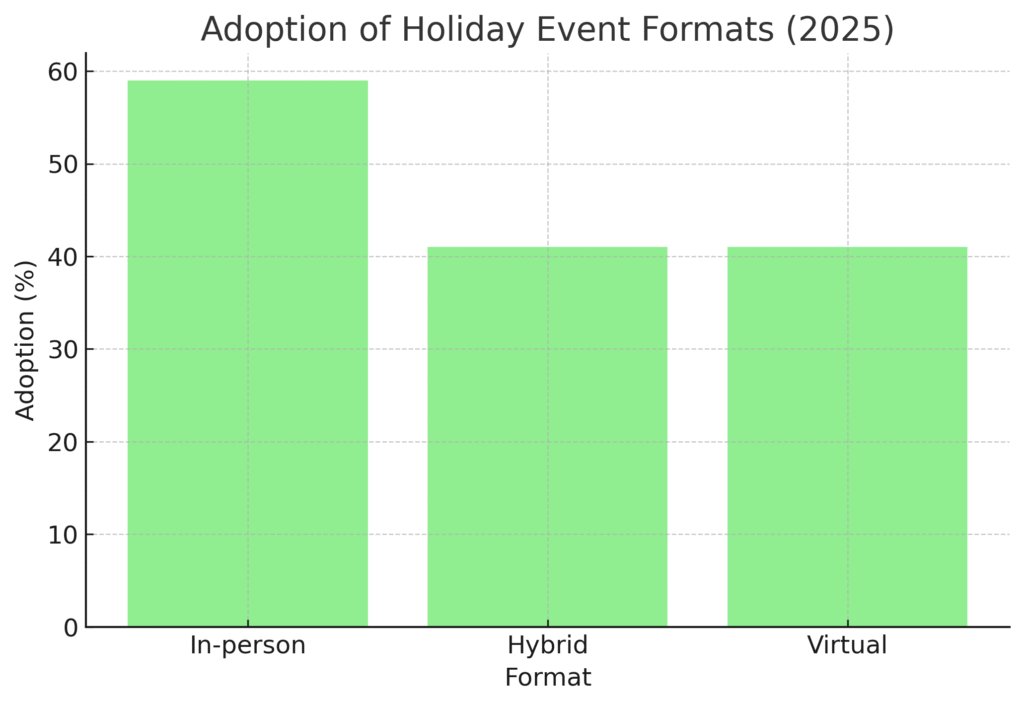
What matters more is variety. Maybe one event is a casual breakfast. Another is a virtual trivia night. Different formats pull in different people.
And spread the hosting around. Teams respond better when events feel locally owned, not centrally mandated.
🎁 Creative Ideas for Micro Holiday Celebrations
The strongest micro events usually revolve around shared activity.
Things like:
- Virtual cooking or baking classes with ingredient kits mailed ahead of time
- Small coffee or tea tastings for morning teams
- Craft workshops like candle pouring or wreath-making
- Trivia nights or collaborative games for distributed teams
- Local holiday market walks followed by hot chocolate
- Micro-volunteering sessions assembling care kits
- Cultural potlucks where employees share family traditions or seasonal dishes
Simple works surprisingly well here.
One company might spend thousands on a ballroom event that people forget within a week.
Another might run small neighborhood dinners that employees talk about for months because the conversations actually feel personal.
Venue selection matters too. Smaller, accessible spaces tend to work better than impressive ones. Private café rooms, heated patios, coworking lounges, or hybrid conference setups usually create a better atmosphere than oversized event halls.
📣 Assessing Success and Gathering Feedback
You do not need elaborate reporting for this.
Most teams can tell pretty quickly whether an event worked.
Andrew Bates, COO at Bates Electric, works closely with workplace operations and team coordination.
He shares, “A lot of workplace events get evaluated through attendance alone, which misses the experience employees had. Smaller gatherings make it easier to notice whether people genuinely interacted, stayed engaged, or simply showed up because they felt obligated to.”
Still, a few lightweight signals help:
- Participation rates across event types
- Repeat sign-ups
- Cross-team interaction
- Qualitative feedback
- Slack activity afterward
- Photos people voluntarily share
Short pulse surveys are usually enough. Three to five questions max.
Did people feel included? Did they meet someone new? Would they attend again?
Over time, patterns emerge. Some formats consistently outperform others. Some teams prefer activity-based gatherings while others just want dinner and conversation.
Pay attention to that. Adjust accordingly.
🌱Making the Shift
Micro holiday parties work because they fit the reality of modern teams better than oversized corporate events do.
They're easier to attend. Easier to personalize. Easier to adapt.
If you're planning this season's events now, it may be worth stepping away from the “one giant party” model entirely and testing smaller formats that people can genuinely opt into.
Need help planning a season of small-scale celebrations?
Explore curated team experiences through Confetti, from virtual tastings to workshops and collaborative holiday activities.