


.png)



What makes a remote team feel like a team?
It’s not just Slack channels or weekly Zoom calls. It’s the connection that is a primary performance driver.
According to Gallup’s State of the Global Workplace: 2025 Report, employees working fully remotely show the highest engagement levels (31%) compared to hybrid and on-site workers. But still, they are less likely to thrive overall. Remote teams thrive by 36%, but the hybrid ones are taking the lead with 42%. The reason behind this is that remote isolation can reduce emotional connection and belonging.
Here’s the good news. You can improve this connection in remote environments through shared experiences.
This article examines what shared experiences are, why they matter, and how you can build them with proper strategies.
What Are Shared Experiences in a Remote Workplace?
Shared experiences are moments employees participate in together and in real time or in intentionally structured settings. They create stories, inside jokes, and memories that last beyond a single meeting.
In an office, these moments happen naturally because there are events like hallway conversations, team lunches, or spontaneous brainstorms where this is possible.
But remote teams don’t get that by default.
Instead, connection often gets reduced to task updates and team communication threads. It seems like an efficient practice but it's not always energizing.
Shared experiences bridge that gap. They create emotional memory
For example, consider two new hires. One joins a company, attends onboarding calls, and starts completing tasks. The other joins, participates in a fun welcome event, answers lighthearted morning meeting questions with the team, and bonds over a shared activity.
Who feels more connected after week one?
Obviously, the second one. Shared experiences turn remote work from transactional into relational.Part of creating meaningful connection is eliminating unnecessary friction in everyday work. Clear, structured processes for recurring tasks, like annual checklists or milestone workflows, help teams avoid confusion and focus on shared goals without constant clarification.
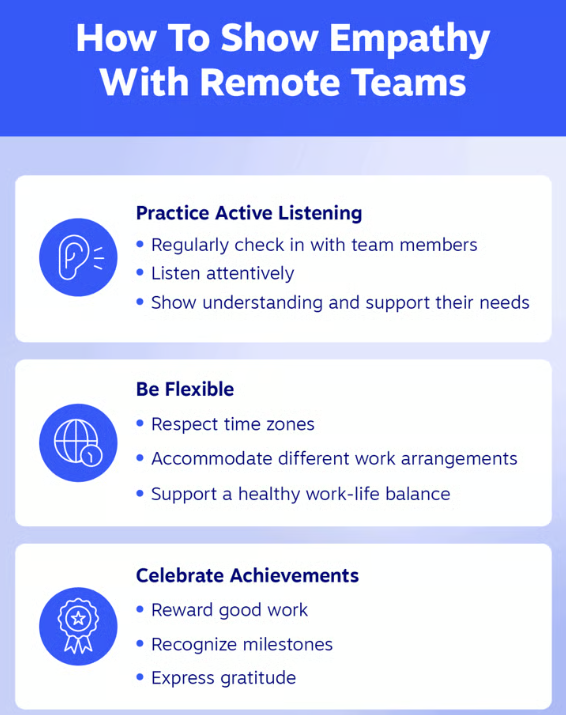
Why Are Shared Experiences Important for Remote Team Culture?
A remote team culture is shaped by conducting repeated moments of connection.
Here’s why shared experiences matter:
- They build trust faster. Shared participation reduces perceived distance.
- They improve team communication. People collaborate better when they’ve laughed together.
- They boost engagement. The feeling of belonging increases motivation and performance.
- They reduce the feeling of loneliness and burnout.
- They increase retention. Employees stay where they feel valued.
If your startup team interacts only during deadlines, they associate with each other under pressure. But if they also share light and meaningful moments, they associate each other with positivity.
That shift changes everything. Culture isn’t what you say in the document under the values section. It’s what people experience together.
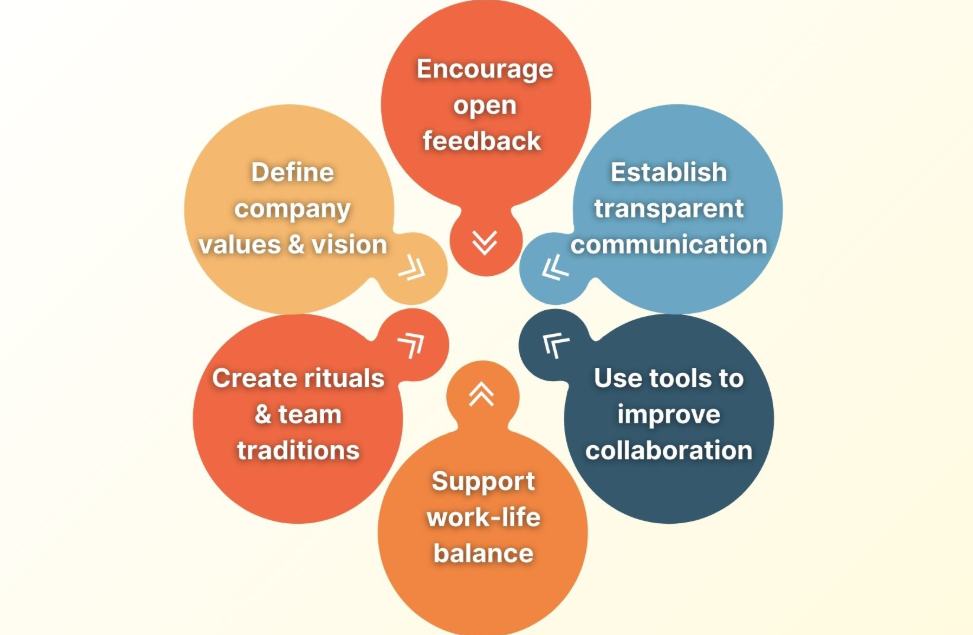
How to Create Shared Experiences for Remote Teams
You don’t need a massive budget or a full-time event planner. You just need the will to do it.
Here are a few practical ways to make it happen.
1. Host Interactive Virtual Team-Building Events
Passive webinars won’t create a connection. Participation does.
Consider events like live trivia, virtual escape rooms, cooking classes, or mixology sessions. When people engage together, they create shared reference points.
A structured virtual event also levels the playing field. Not everyone feels comfortable speaking in large meetings. But in a game format, the energy shifts. Some teams also strengthen engagement by using interactive workshop tools that allow participants to vote, brainstorm, and contribute in real time, making remote sessions feel more inclusive and dynamic. For example, collaborative creative activities using tools like Renderforest ai image generator can turn a simple brainstorming session into a visual, hands-on experience where everyone contributes ideas in real time.
If you want to scale this without adding workload for HR, consider professional platforms that specialize in live-hosted team-building activities.
The key is interaction rather than observation.
2. Celebrate Milestones Together (Big and Small)
Remote teams often skip celebrations because they feel “non-essential.” They’re not.
- Celebrate project launches.
- Recognize work anniversaries.
- Highlight small wins.
- Ask fun morning meeting questions before diving into metrics.
These moments ensure that your employees feel a sense of appreciation and belonging.
You don’t need elaborate plans. A 20-minute virtual celebration can leave a lasting impact.
The question isn’t “Do we have time?” Rather, it’s “Can we afford to skip it?”
This mirrors what we practice in our SEO and content team at Appetiser Apps, an app development company,” Krisette Lim, Content Marketing Specialist, emphasizes this and elaborates more.
“Every month, we hold a sprint kick-off to highlight milestones, appreciate cross-department contributions from developers and paid specialists supporting organic efforts, and align on the month's priorities. Collaborating closely with experienced mobile development companies also allows us to streamline feature releases and maintain consistent product quality. It’s become a ritual that helps us close one chapter and energize for the next..”
Before we move forward, let’s address something many remote leaders think about but rarely discuss openly.
When teams go remote, some companies lean heavily on tracking tools. Metrics, dashboards, and even remote employee activity monitoring become a part of the conversation. Leaders want visibility. They want accountability. That’s understandable.
But here’s the nuance.
Employee activity monitoring can provide useful data about productivity patterns and workflows. It helps leaders understand how work gets done and where support may be needed.
However, when monitoring becomes the main foundation of workplace culture, it can unintentionally create a sense of distance. Teams may start feeling observed rather than trusted, and that shifts the emotional tone of the workplace.
Shared experiences take a different approach. They build trust before problems arise. It helps leaders create connections through participation. When people feel seen, valued, and connected to their team, accountability strengthens on its own because they genuinely care about the work and the people they work with.
3. Create Rituals That Repeat
One-off events are great, and rituals are better. Consistency helps in building culture.
You can conduct a monthly themed event. Or maybe a team challenge on every month’s first Friday. Or maybe every new hire gets a welcome spotlight during remote onboarding.
Rituals give teams a memorable experience. They also create shared language. Think about families where traditions shape identity. The same applies to remote teams.
Start small, keep it repeatable, and let it evolve.
4. Encourage Cross-Team Experiences
Silos grow faster in remote environments.
Marketing rarely talks to Engineering. Sales rarely connect with Product, unless a deadline forces it. Shared cross-team activities reduce frictions before they happen.
Try randomized virtual coffee chats. Pair different departments for a light team challenge. Host cross-functional game sessions. When people get to understand each other better, collaboration becomes smoother.
Innovation improves when a connection exists beyond hierarchy. Ask yourself: When was the last time two unrelated teams connected for fun?
If you can’t remember, that’s your opportunity.
5. Make Participation Easy and Inclusive
Nothing kills culture faster than forced fun.
- Consider time zones.
- Offer multiple session times.
- Keep activities accessible.
- Make space for introverts and extroverts alike.
Keep the option of participating in activities on employees’ own will. Optional participation often works better than mandatory attendance.
And remember, shared experiences can be reflective workshops, storytelling sessions via workplace communication tools, or low-pressure creative activities.
Inclusion builds trust and trust builds culture.
From Connection to Culture: Turn Moments Into Momentum
Shared experiences are not distractions from work. They fuel it.
They improve team communication. They strengthen trust. They create positive emotional memories in distributed teams.
You don’t need to overhaul your strategy overnight. Start with one recurring ritual. Add one interactive experience per quarter and make celebrations intentional.
Remote culture isn’t built through monitoring dashboards but through meaningful moments.
If you’re ready to create connections that last, explore Confetti. It is a virtual team-building activity platform. Discover and book hundreds of live-hosted team-building experiences designed to improve your company culture.
Because at the end of the day, culture isn’t about where people work. It’s about what they experience together.