





You’ve likely been there before. A meeting that has been going on for about 45 minutes with no end in sight, another one scheduled right after this ends, dozens of slides projected, and several members zoning out repeatedly.
They either zone out because their brains are already oversaturated or are distracted by something that seems more interesting than the ongoing meeting.
Microsoft tried to see why this happened frequently and used EEG headsets on real employees during real back-to-back meetings. The study showed stress built up rapidly when there were no in-meeting breaks.
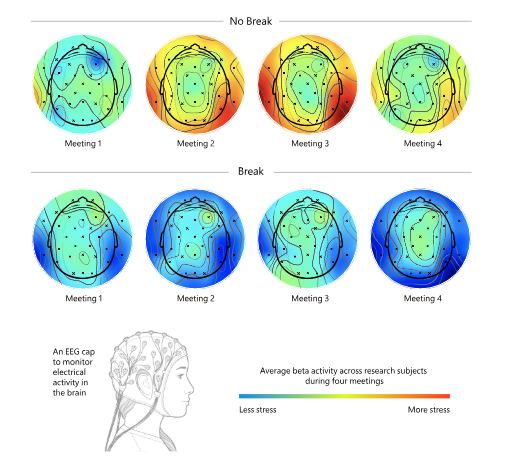
But when people got even a short pause, especially through a meeting energizing game or a quick recession from the meeting, that buildup resolved.
In this article, we’ll discuss why meeting energizers work and how to use them.
What Is a Meeting Energizer?
Meeting energizers are short activities that encourage active participation from your team members, help them snap out of passive listening mode, and ensure they are mentally prepared for the rest of the meeting.
This could be a stretch, a ridiculous question, a quick game, or even a creative prompt.
Andrew Bates, COO of Bates Electric, a licensed electrical contractor working across 18 US cities with over 50,000 completed projects, says these microbreak activities are essential to reduce burnout, minimize errors, and keep productivity high.
"In construction and electrical work, you learn quickly that a tired team makes errors a fresh team wouldn't. We don’t want to wait for those errors to happen first before taking action. That’s why we built in short reset moments before briefings, during meetings, and before shift handoffs.”
“Some minutes of non-corporate activities or even off-time before and during a critical conversation resets the stress buildup and ensures your members are at the top of their capacity to engage and remain productive even afterward," Andrew says.
Other than increasing productivity, meeting energizers help with team bonding and build engaged employees. Engagement drives retention, alongside other factors like fair pay, and reduces your talent acquisition cost.
Types of Meeting Energizers You Can Use
Let’s explore the different types of energizers and which one works best for your team.
If you want ready-made options to get started, you can explore our free toolkit that has sample meeting energizers to use right away.
1. Physical Meeting Energizers
This is best if your organization runs in-office operations, but remote and hybrid teams can also benefit from them. Examples include:
Stretch and breathe
Everyone stands if they're able, rolls their shoulders back three times, and then takes four slow breaths:
- Inhale for 4 seconds while raising your arms overhead
- Exhale for 4 seconds while lowering your arms
- Repeat four times
- Finish with a gentle neck stretch, holding each side for a few seconds
Only takes about 90 seconds.
Deskercise
Stay seated and march your feet for 20 seconds. Then do 10 ankle circles in each direction, followed by a few gentle wrist rolls. Squeeze your shoulder blades together for 10 seconds, then relax. Finish with a few slow eye movements. Cameras can stay off, which makes it easier for people who feel awkward joining in to actually participate.
Clap and stomp
Clap-clap-stomp, clap-stomp-clap. You should lead the rhythm and ask your group to mirror it. Speed up each round. Mics may be off on video if you’re doing it over the call, for hybrid and remote teams, unless you want cheerful chaos, which is also a valid outcome.
2. Mental Energizers
Examples include brain teasers, word association, and two truths. The good thing is, you can easily try these out whether your team is remote, in-office, or hybrid.
Brain teasers
You pose one riddle, give 30 to 45 seconds to think, and ask them to drop answers in the chat, write them on paper, or speak up if they want. A few worth knowing:
- What comes once in a minute, twice in a moment, and never in a thousand years?
- Light as a feather, but the strongest person can't hold it for more than a minute. What is it?
- The more there is, the less you see. What is it?
- Forward I'm heavy, backward I'm not. What am I?
Word association
Start with one random word, and each person says whatever comes to mind first. Two seconds per person is sufficient to keep it sharp and fun. This will break the ice faster and keep everyone engaged within a minute.
Two truths and a lie
Three statements, two real, one invented. Everyone guesses in the chat. Takes about two minutes for a small group, and you always learn something about a colleague that never would have come up any other way.
3. Creative Energizers
Samuel Charmetant, Founder of ArtMajeur, the world's largest online art gallery platform connecting over 200,000 artists with collectors globally, sees the value of short creative prompts firsthand in how his team stays sharp during heavy work cycles.
“Creative energizers leverage each person’s ability to imagine and design something on the spot. The first benefit is its ice-breaking effect, especially when you run a sprint-type of operations. Second, which is most important, is that these activities hone your members’ capacity to produce creative solutions to problems at work, thus enhancing their productivity.”
Doodle challenge
Give one prompt and ask them to complete it in a minute. Examples include:
- Draw your current mood as a weather forecast
- Sketch what your brain feels like right now. Share or don't
The point is to use a different part of the brain for 60 seconds, not produce anything worth keeping.
Story chain
Start with a sentence of a made-up story. Each person adds one more, one-minute cap. For instance:
- You say, “It all started when the CEO requested a monthly report…”
- The next person might say, “That should have been the job of the finance and records team; why is he asking us to?”
Within a short time, the story is likely to fall apart, and that's exactly what makes them work. The shared absurdity carries into the rest of the call.
Emoji showdown
One emoji in the chat capturing how you're showing up to this meeting. Or a prompt: "Pick an emoji for the biggest thing we shipped last month." Takes 90 seconds and includes people who wouldn't speak first in a verbal round.
How to Make Meeting Energizers Stick
Some things that help meeting energizers become a habit rather than a one-off include:
- Write it into the agenda with a specific time. "2:05 energizer" removes the awkwardness of springing it on people
- Let different people lead it. When it rotates, it stops feeling like something being done to the group
- Keep participation genuinely optional. Camera-off choices and low-pressure formats mean more people actually join rather than sitting with their mic muted waiting for it to end
- Ask what landed afterward. Thirty seconds of feedback tells you what to repeat
Wrapping Up
Meeting energizers function like ice-breakers and ensure your team doesn’t end up zoning out throughout an entire meeting. Besides, they help build teams as well.
Start by picking one category that fits your work best, put it on the agenda for your next meeting, and run it. Collect feedback and measure how positively it impacted your meetings. Introduce other categories in the meantime to make things more dynamic.