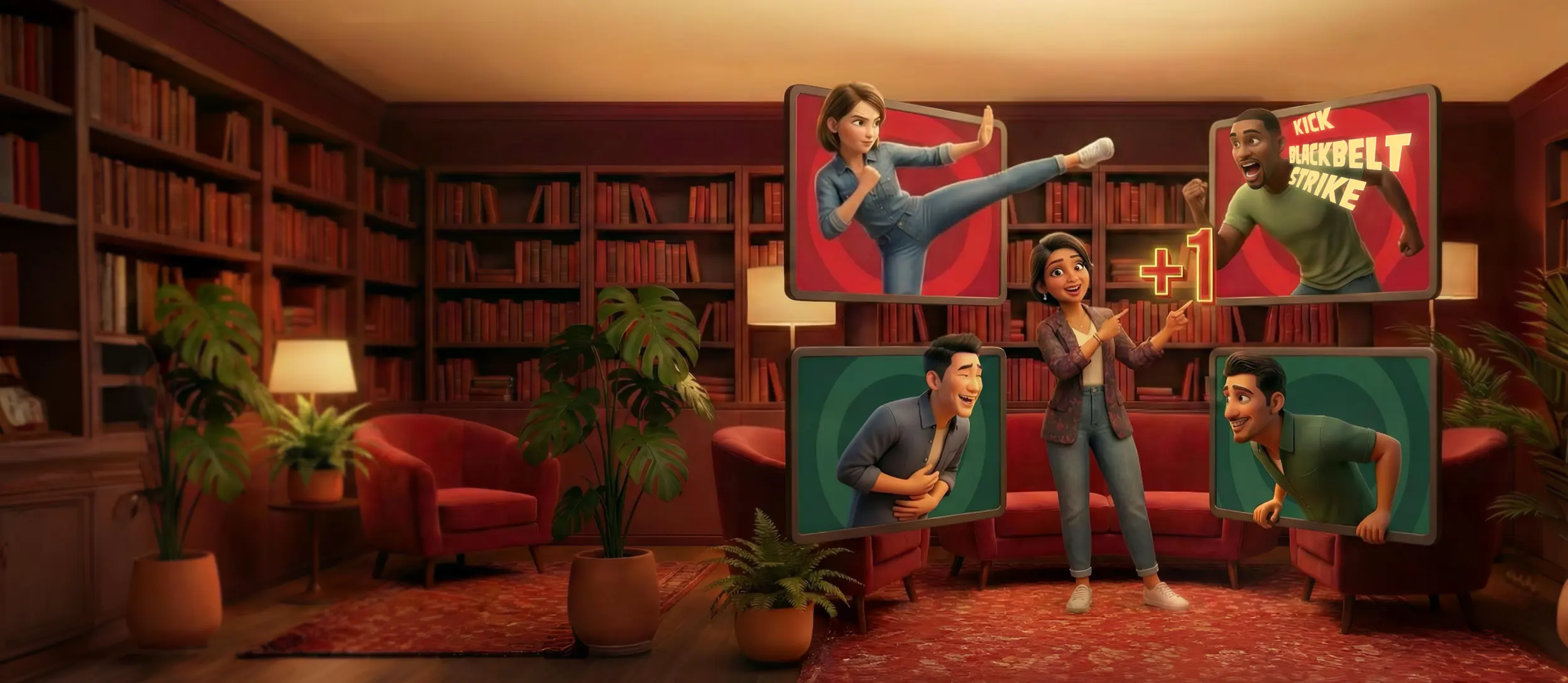


Your team has discussed deadlines, deliverables, and the Q4 forecast. Now someone is silently trying to communicate “a squirrel hiding an acorn.”
Honestly, a welcome change of pace.
DIY charades is an easy way to bring a little play into the workday. You can run it in a conference room, over a video call, or with a hybrid team using a timer and a prepared word list. Add a fall theme, and you have a seasonal activity that requires very little setup.
Here’s how to organize a game that keeps people involved, plus 60 fall charades words and phrases you can copy into your own prompt deck.
DIY charades at a glance
For this version, plan around these suggested settings:
| Detail | Suggested setup |
|---|---|
| Group size | 4 to 20 people in one game |
| Larger groups | Split into smaller games with a facilitator for each |
| Playing time | 15 to 30 minutes |
| Preparation | About 10 to 15 minutes |
| Teams | Two teams with roughly equal numbers |
| Turn length | 60 seconds |
| Supplies | Prompts, timer, score sheet, and paper slips or private messaging |
| Budget | No additional purchases needed if you already have the supplies and meeting tools |
Use a five-minute version to open a meeting, or give the game its own space during a team social. If you’re planning a longer seasonal gathering, these fall team building ideas can help you build out the agenda.
How to play charades at work
Charades is a guessing game: one person silently acts out a word or phrase while teammates try to identify it before time runs out.
There are plenty of house rules. For a workplace game, keeping yours simple makes it easier for people to join.
Set up your prompt deck
Choose 20 to 30 prompts from the lists below. Start with familiar actions, then mix in a few more challenging phrases.
For in-person play, write each prompt on a separate slip of paper and fold it. For remote play, keep a host-only list and send each prompt privately to the actor. Don’t share the full deck with the people who will be guessing.
Match difficulty across teams.
One team getting “drinking hot chocolate” while the other gets “a squirrel regretting its life choices” is going to raise questions.
Explain the rules before the first turn
Use these rules for the DIY version in this guide:
- Split into two teams and choose which team goes first.
- A volunteer from that team receives one secret prompt.
- Start a 60-second timer when the actor is ready.
- The actor uses gestures and facial expressions. No talking, sound effects, spelling, writing, or showing the prompt.
- Only the actor’s team guesses during that turn.
- A correct answer earns one point and ends the turn.
- If time runs out, reveal the answer and move to the other team.
- Alternate teams and invite a new actor each turn.
Allow one prompt swap before the timer starts, with no explanation needed. Skip steals for your first game; they add another rule to manage.
Play an equal number of turns per team. If the score is tied, celebrate joint winners or give each team one more turn with prompts of similar difficulty.
Demonstrate once
The host should go first with a practice prompt, such as “opening an umbrella.” Show how to indicate the number of words with your fingers and how to signal that someone has guessed correctly.
Then remind everyone that wildly imperfect acting is part of the game. Nobody needs to have a theater minor.
How to play charades remotely
Virtual charades works best when everyone can see the actor clearly and the prompt stays private.
Before the game
- Choose a video platform your team already uses.
- Test whether the host can send a private message to each participant.
- Ask volunteers to check their lighting and camera framing.
- Keep the score visible without displaying the prompt deck.
- Assign a host to manage prompts, turns, and the timer.
Send the actor their prompt privately and wait for a “ready” signal before starting the clock. Invite everyone to pin or enlarge the actor’s video using the options available on your platform. The actor can mute their microphone to avoid accidental verbal clues.
Decide whether guesses will be spoken or typed. Spoken guesses can feel lively, while chat can help people who prefer typing or need more processing time. Choose one method for everyone and explain how the host will identify a correct answer.
For larger groups, create separate games in breakout rooms, each with its own facilitator, private prompt list, and score sheet. Keep teams around four to six people so participants have room to contribute.
Hosted option
Prefer help with the setup and game flow? Confetti’s Virtual Charades includes an online game platform and a game organizer.
How to play charades in person
For office charades, find a comfortable space where everyone can see the actor. A conference room or shared lounge can work well.
Place the folded prompts in a bowl and ask each volunteer to draw one. Keep a timer and score sheet with the host. Seat teams so people can see without having to twist around a meeting table.
Leave enough space for gestures, and make seated acting an equally welcome option. Avoid prompts that require running, jumping, climbing, or touching another participant.
Someone can mime jumping into leaves perfectly well from a chair.
If you’re using a five-minute version before a meeting, skip teams and have the whole group guess together. Choose three easy prompts, invite volunteers, and finish when the scheduled meeting begins.
How to make hybrid charades work
Hybrid charades needs a little extra attention to visibility and sound.
A person at home should be able to follow the game as easily as someone sitting beside the actor.
Use one shared video call. Position the room camera so remote participants can see the actor’s face and gestures, and test whether they can hear guesses from the room.
If coworkers join from individual laptops in the same room, use one room audio source and disconnect audio on the other devices to prevent feedback.
Mix remote and in-person coworkers across teams, then alternate where actors are located. Keep one shared scoreboard and give everyone the same prompt difficulty and turn length.
If the room setup makes remote participation frustrating, divide into smaller games that everyone joins from individual devices with suitable audio arrangements.
60 fall charades words and phrases
Use these lists as a starting deck. The first categories are useful throughout the fall; Halloween prompts are separate so you can include or skip them.
Each numbered item is one prompt. For physical cards, copy each onto its own slip. For remote play, send only the selected item to the actor.
Easy fall charades prompts
Start here for a practice round or a group that’s new to charades.
- Raking leaves
- Picking an apple
- Putting on a sweater
- Opening an umbrella
- Drinking hot chocolate
- Carrying a pumpkin
- Wrapping up in a blanket
- Pulling on rain boots
- Watching leaves fall
- Warming your hands by a fire
Fall food and drink prompts
Miming the preparation usually makes these easier to guess.
- Rolling out pie dough
- Stirring a pot of soup
- Pouring apple cider
- Roasting marshmallows
- Taking a bite of a caramel apple
- Blowing on a hot drink
- Sprinkling cinnamon
- Kneading bread dough
- Peeling an apple
- Taking a pie out of the oven
Outdoor fall activity prompts
These offer a little more storytelling. All movement can be mimed while seated.
- Getting lost in a corn maze
- Riding on a hay wagon
- Trying to catch a falling leaf
- Carrying a pumpkin that is too heavy
- Taking a photo of colorful trees
- Watching birds fly south
- Pitching a tent
- Gathering firewood
- Walking through a muddy field
- A squirrel burying an acorn
Cozy fall prompts
Good for a slower round, with familiar scenes that don’t depend on a particular holiday.
- Reading under a blanket
- Knitting a scarf
- Trying on an oversized sweater
- Lighting a candle
- Putting on fuzzy socks
- Falling asleep during a movie
- Warming up beside a heater
- Getting tangled in a scarf
- Listening to rain at the window
- Carrying a stack of blankets
Funny fall charades prompts
Save these longer phrases for a challenge round. Give both teams 90 seconds per turn if you use this category.
- An umbrella turning inside out
- A squirrel stealing your snack
- A pile of leaves blowing away after you rake it
- Trying to carry five pumpkins at once
- A sweater getting stuck over your head
- A scarf caught in a door
- Burning your tongue on hot cider
- Slipping out of a muddy boot
- Trying to toast a marshmallow without burning it
- Sneaking the last slice of pie
Optional Halloween charades prompts
Keep this category playful and offer a different prompt to anyone who prefers to skip it.
- Carving a pumpkin
- Walking like a zombie
- Flying on a broomstick
- Wrapping up like a mummy
- Stirring a bubbling cauldron
- Putting on a costume
- Ringing a doorbell while trick-or-treating
- Getting tangled in a fake spiderweb
- A ghost trying to be scary
- A skeleton dancing
For a separate themed event, explore Confetti’s charades games, including seasonal versions.
Tips for keeping workplace charades fun
The best game is one people feel comfortable joining. A little planning helps keep the focus on enjoying each other’s company.
Make acting voluntary. Guessing, keeping score, and managing the timer are all useful roles. Invite volunteers instead of surprising someone with a turn.
Choose prompts your group recognizes. Fall looks different across climates and countries. Let people swap unfamiliar references, and ask teammates to suggest seasonal activities from where they live.
Keep the humor in the prompt. Avoid imitating coworkers, accents, disabilities, religious practices, or personal characteristics. “An umbrella turning inside out” gives everyone something to laugh about without singling anyone out.
Adapt for access needs. Share the rules in writing, allow seated gestures, and agree on how spoken or typed guesses will work. If a visual acting game excludes someone, choose a different shared activity.
Accept close answers. “Drinking cocoa” is a reasonable answer to “drinking hot chocolate.” The host can settle these calls quickly so the game keeps moving.
Finish while there’s still energy. A short game that ends with people laughing is a good result. You can always keep unused prompts for next time.
A simple 20 minute fall charades agenda
| Time | Activity |
|---|---|
| 0 to 3 minutes | Welcome, explain rules, and demonstrate one prompt |
| 3 to 5 minutes | Divide teams and invite the first actors |
| 5 to 17 minutes | Play eight alternating turns with time for transitions |
| 17 to 20 minutes | Share scores, celebrate, and close |
For a gentle warmup, open with one question from these fall and Halloween icebreakers. Keep it brief so the game still has room to breathe.
Keep the connection going
Charades gives coworkers a shared experience they can laugh about after the meeting ends.
Sometimes that’s as simple as discovering that three completely different gestures apparently mean “pie.”
Save your favorite prompts and bring back a short round at another team gathering. For more activities you can facilitate yourself, explore Confetti’s self-guided toolkits.
Planning a bigger seasonal celebration? Browse fall team building experiences to find something that fits your group.