





You've got a team event to plan, a budget to spend, and a nagging feeling that none of it will fix what's actually bothering your team.
So you do what most planners do when the invite is due. You rebook the escape room from last spring, drop a trivia link in the channel, or pencil in another Friday happy hour and hope people show up in a good mood.
And honestly, sometimes that's enough. The afternoon goes well, everyone logs off smiling, and the group photo looks great.
But come Monday, the messy handoff between design and engineering is still messy. Your remote teammates still feel like afterthoughts. Whatever was weighing on the team is sitting right where you left it.
That’s what happens when you build the event around the excitement it gives rather than the problem your team is living with right now.
In this article, we'll walk you through how to fix that and plan problem-solving team-building ideas that actually move your company forward.
What a Problem-Focused Team Event Really Means
A problem-focused team event is built around a real issue your team is dealing with right now, rather than a random activity you booked because it was free that week.
For instance, let’s say your designers and engineers keep clashing over handoffs. You could book a trivia night and hope the tension fades on its own. Or you could run a short working session where both teams map out exactly where the handoff breaks and agree on how to fix it.
Both cost you the same afternoon, but only the second changes how Monday actually feels.
You still get the laughs and the shared lunch. You just get a real result on top of them.
Why Generic Team Events Tend to Fall Flat
Here's the trouble with the grab-bag approach. When an event has no connection to what your team is going through, it reads as a nice gesture. And people notice.
After the second or third activity that has nothing to do with their week, a few things start to happen:
- Attendance slips. Once the invite feels disconnected from the work, people will treat it as optional and find a reason to skip
- The budget goes to waste. You spent real money and planning hours on goodwill that fades by the following Tuesday
- The friction stays put. Whatever was slowing the team down is still there on Monday, now with a leftover event sitting next to it
Google's Project Aristotle study examined what makes some teams click while others stall, and two of the five factors it identified were meaning and impact. A random event gives people neither of those.
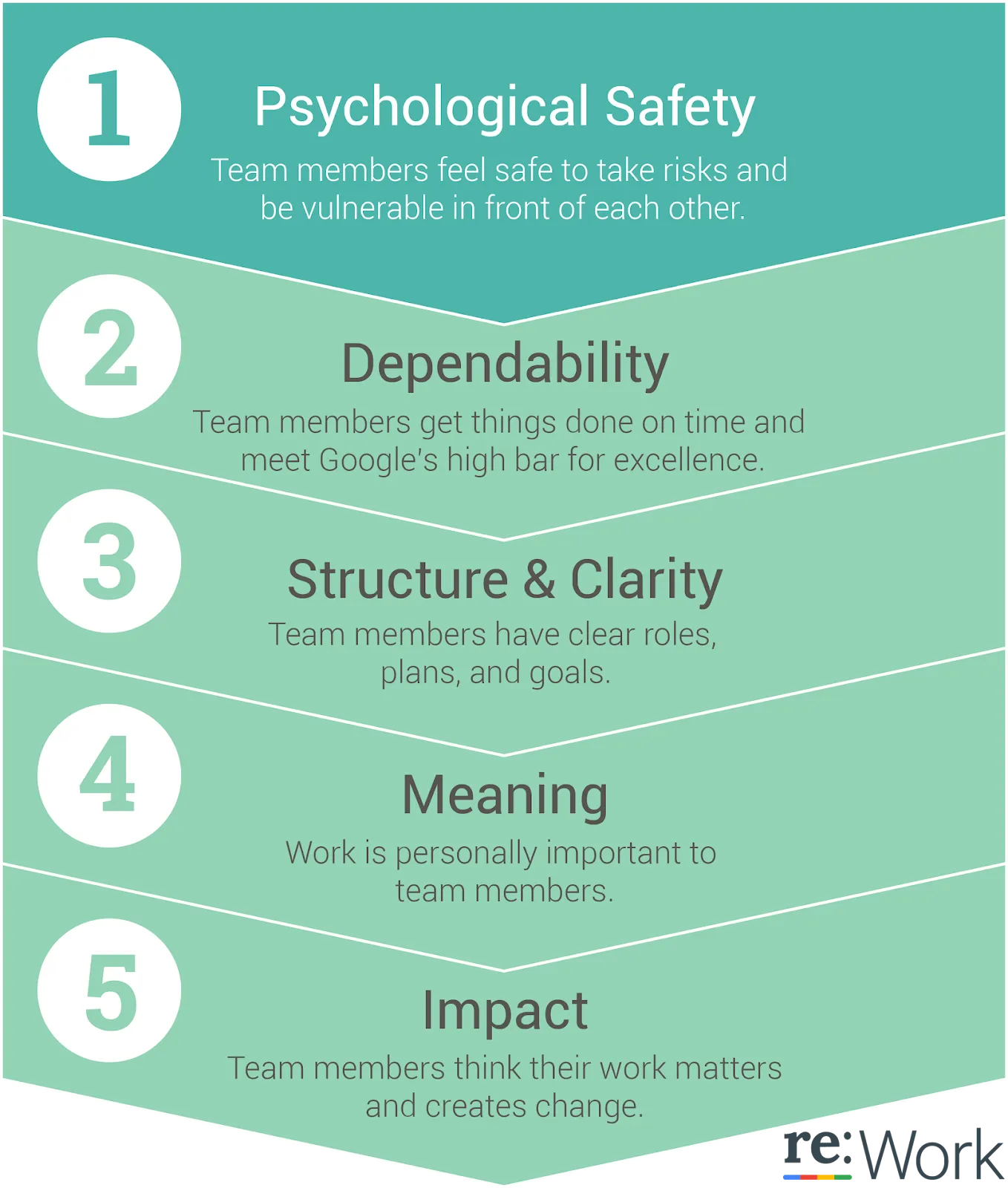
But when the event is built around a real problem, they can see why they're in the room and what got better by the time they leave, and that's where meaning and impact come from.
So before you book anything, work out what's actually wrong.
How to Plan a Team Event Around What's Actually Broken
To plan an effective event, identify the real problem, align the event with it, build the day around real work, and check what changed afterward. Let’s break them down.
1. Start by Finding Out What Your Team Is Really Struggling With
One survey won't give you the full picture, so come at it from a few angles.
- Start with a short anonymous pulse survey to spot patterns across the whole team
- Then sit down for a handful of one-on-ones to hear the story behind those patterns
- Finally, hold a quick open session where people can react to what you've heard and tell you what matters most
How you ask the questions also matters, Kashif Ali, a Growth Specialist at PsychologySchoolGuide, a resource hub for people studying and working in psychology, says.
"Ask people what they would change about one specific process rather than how they feel about work in general. For instance, they are likely to answer ‘Where do handoffs stall?’ or ‘Which meetings waste the most time?’ better than ‘What's wrong with our culture?’’
“Narrowing the question lowers the stakes and gives them permission to be honest about something small instead of grading the whole company. Then follow up every answer with a single why. The first thing they tell you is usually the symptom, and the why underneath it is the real problem worth building your event around."
2. Match the Event to the Problem You Found
Once you know what you're dealing with, the event almost picks itself. You don't have to build every format from scratch, either, since there are plenty of ready-made team-building activities you can shape around what you found.
Here's how some common struggles match up that you can reference:
- When communication is breaking down. Run a workshop on listening and feedback, but use your team's real material, like a recent sprint retro or a design review, so the practice sticks to something familiar
- When trust took a hit. Build a cross-functional challenge around your current roadmap, so people rebuild faith in each other through work that genuinely matters
- When your leads need development. Set up scenario sessions where managers and rising leaders work through tough conversations and real trade-offs they face every week
- When a process keeps breaking. Hold a short fix-it day where every snag maps to one small experiment, and the goal is to ship one working improvement before everyone logs off
- When remote teammates feel cut off. Pair a light icebreaker with a working session on team norms, like response times, meeting etiquette, and where documents actually live
- When energy and morale are low. Plan a reset that gives people real recovery time instead of another packed agenda dressed up as a break
That last one trips up the most planners, Ryan Beattie, Director of Business Development at UK SARMs, a UK supplement company focused on performance and recovery, shares.
"When people are drained, the gut reaction is to pile on more activities to lift the mood, and that usually backfires. What helps is real recovery. Build a proper break into the calendar after any intense stretch, and protect it as you would a deadline. Then say out loud that stepping back is part of the job, because if recovery feels like slacking off, nobody will take it, and you'll be right back where you started within a month."
A break you plan on purpose does more for morale than any surprise pizza ever will.
3. Build the Day Around Real Work
Made-up scenarios feel safe to plan, but they rarely carry back to the job.
So, pull from real stuff instead. Use your current sprint backlog, a live decision sitting on the table, or the documents people are already arguing over.
Open by setting the context, spend the middle doing hands-on work, and close by writing down clear next steps that someone owns by name.
4. Check What Actually Changed After the Event
An event isn't done when everyone logs off. You need to check whether it did anything.
- Send a short pre- and post-survey that asks the same few questions about trust, clarity, and communication, and you'll see the movement
- Back that up with signals you can already see, like fewer late-night Slack messages, shorter meetings, or quicker handoffs between teams
5. Keep the Loop Running All Year
One good event moves things forward. But you can't fix a team with a single afternoon and then forget about it until next quarter.
That's why you need a calendar of events that connect to one another throughout the year.
- Split it by quarter or by month, then give each slot an event from a different category
- Month one could be something creative, like a group cooking class
- Month two could be a day out or an offsite
- Month three could be all about recognition, like a peer shoutout lunch or a small awards moment
You keep rotating so nothing ever feels stale.
In between each event, send a quick two-question pulse. Ask what people got out of the last one and what they want next. Then use those answers to shape the following event, so every slot on the calendar earns its place, and everyone walks away with something real.
Atlassian Turned This Idea Into a Company-Wide Habit
Every quarter, Atlassian runs a 24-hour event called ShipIt where people drop their normal work, team up with colleagues they don't usually sit beside, and build a fix for a real problem they care about. It started back in 2005 as a scrappy hackathon among 14 developers in a Sydney office, and it has grown into a global tradition with thousands of people taking part.
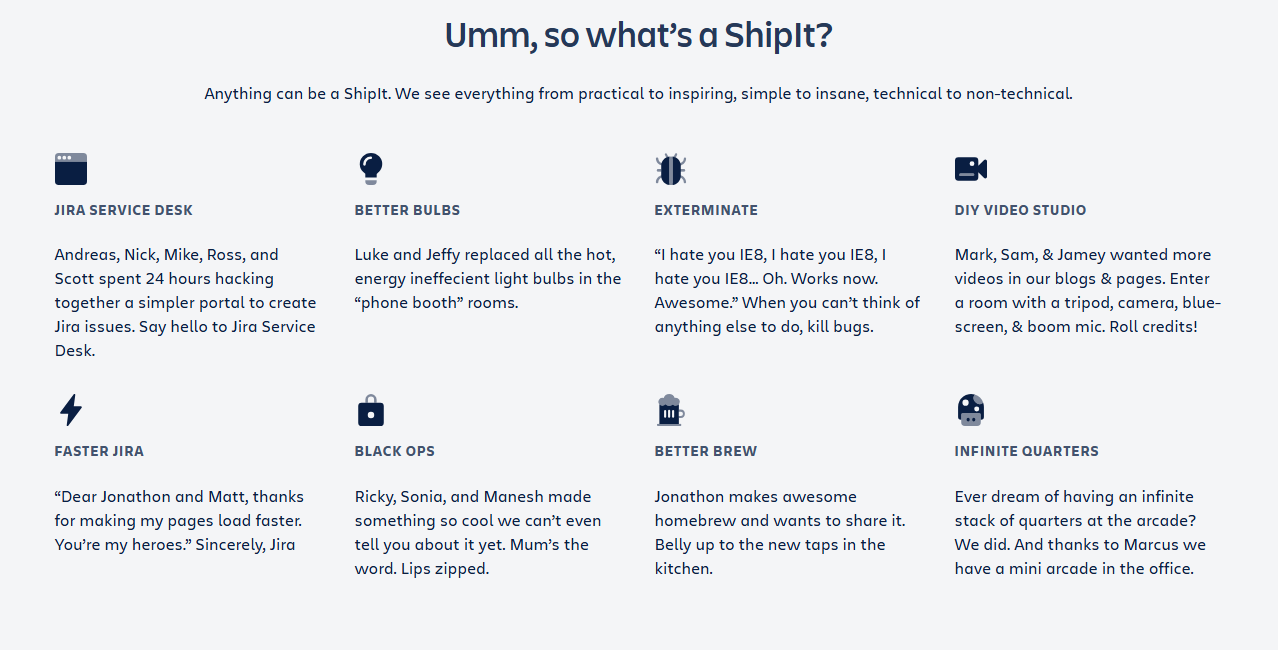
What makes it work is the mix of real problems and a hard deadline. Each team picks something that genuinely annoys them, builds a working version within 24 hours, and shows it off in a short pitch at the end. One of those weekends led to the creation of Jira Service Desk, which later became a full Atlassian product.
You can run a smaller version of this with any team. Once your people can pick the problem that bugs them and get the time and space to fix it, they show up differently, and the result sticks around long after the event ends.
Wrapping Up
The best team event answers a question your team is already asking. Start this week with a five-minute pulse survey, find the friction that comes up most, and build your next event around solving it.
After each event, run another pulse survey to determine whether the last event solved the attached problem, and use the results to refine subsequent events.


