


.png)


Remote talent in 2026 has choices. In fact, skilled people compare companies the way you compare flights: side by side, tab by tab, looking for the one that fits their life best.
Robert Half found that 46% of professionals are already looking or plan to look for a new role in the second half of 2026.
That's a lot of talented people in motion. 👈
Yet, the encouraging part is simple. You can win those people without outspending anyone.
Clear signals beat big budgets nearly every time, and remote talent rewards employers who make the working experience easy to picture from the outside. 🎯
These eight tips below walk through the moments candidates judge first, plus the small changes that turn a maybe into a yes.
Remote Talent Compares You Against the Whole Market
Your next great hire probably has three other tabs open. One of those tabs belongs to a company two time zones away that pays in their currency, ships a laptop within 48 hours, and describes its meeting culture in plain language on the careers page.
That's the market you're recruiting in now. Location stopped being your moat, so the experience you offer became the moat instead.
Strong remote candidates read between the lines fast. They look at how your job post is written, how quickly you reply, and how your current employees talk about the company on LinkedIn. Every one of those touchpoints tells them something.
The companies pulling ahead treat all of it as a product they design on purpose.
Vague Flexibility Promises Cost You Great Candidates
Ask a remote candidate what pushed them away from a hiring process and you'll hear the same theme: fuzzy answers.
"Flexible hours" with no definition. "Remote friendly" with no policy. A recruiter who says the team is distributed, then mentions a quarterly office visit in round three.
Research from 2026 shows that around 60% of candidates step away from an interview process when a company's remote work policy stays unclear. Clarity, then, becomes one of the cheapest hiring upgrades available to you.
The fix costs nothing beyond a decision. Write down how your team works, publish it, and let candidates self-select. The ones who stay will arrive already excited about the exact setup you described.
8 Tips to Win Over Remote Talent Faster
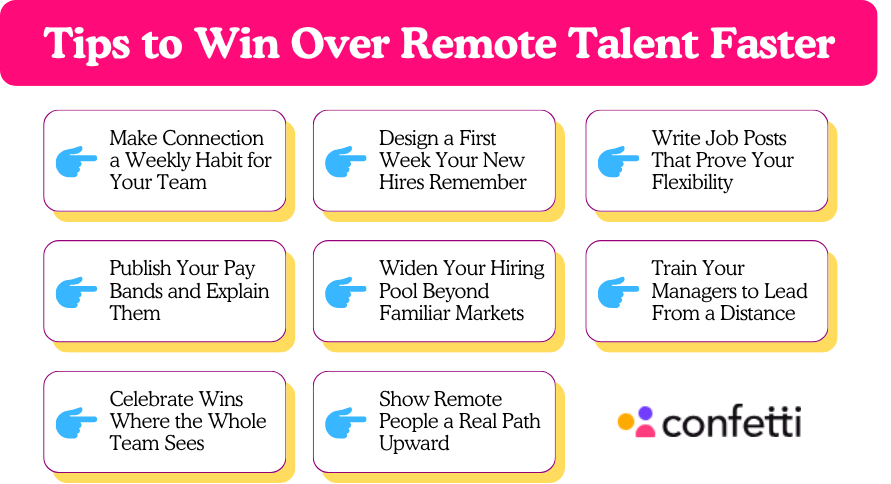
Everything above points to one conclusion: remote talent picks the company that feels most considered. The eight tips below turn that idea into a checklist you can work through with your team.
Each one stands on its own, so start wherever your gap feels widest. Some take an afternoon, like publishing your core hours. Others build over a quarter, like a recognition rhythm your people count on.
Read them in order the first time. Then come back, pick two, and assign an owner with a date attached. Progress here compounds faster than most people expect, and your team will feel it.
1. Make Connection a Weekly Habit for Your Team🎉
Remote employees stay where they feel known. Gallup reports that 25% of fully remote employees feel lonely, compared with 16% of people working exclusively on-site. That gap shows up in exit interviews long before it shows up in performance reviews.
Put connection on the calendar the way you put revenue reviews on the calendar. Confetti makes this part easy, since you can book a hosted experience in minutes and let a professional run the room.
A rhythm that works for most teams:
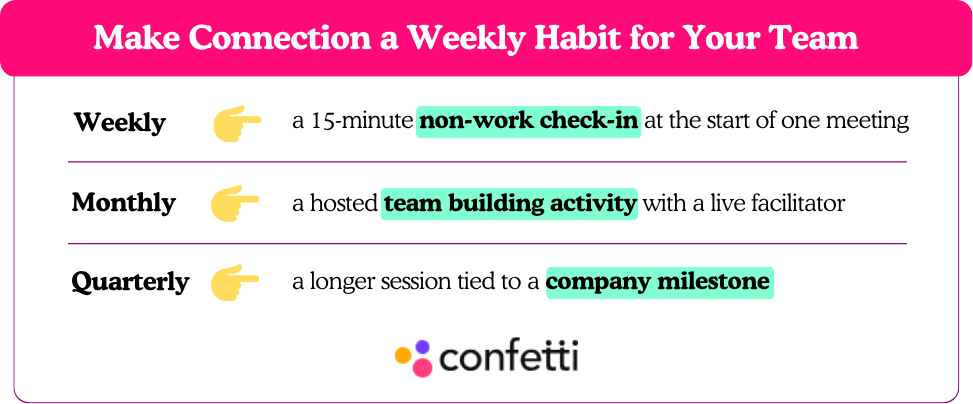
- Weekly: a 15-minute non-work check-in at the start of one recurring meeting
- Monthly: a hosted team building activity with a live facilitator
- Quarterly: a longer session tied to a company milestone
Consistency beats scale here. A small ritual that happens every month builds more trust than one big annual offsite.
2. Design a First Week Your New Hires Remember📬
First impressions travel fast in remote teams. A new hire who spends day one waiting on laptop access tells their friends about it, and so does the one who opens a welcome box before the kickoff call.
Treat week one as a designed onboarding experience rather than a paperwork queue. Confetti helps you anchor it with a live hosted session, so your new teammate meets real people instead of a wall of Slack avatars.
Build the rest around that anchor:
- Send hardware and a small welcome kit before the start date
- Assign a buddy outside the new hire's direct team
- Schedule three short intro calls across different departments
- Share a written 30-day plan so expectations stay clear
Do this consistently with the help of an employee onboarding software and your onboarding becomes a story candidates hear about long before they apply.
3. Write Job Posts That Prove Your Flexibility✍️
Your job post is the first product demo of your culture. Many remote candidates decide within the first few lines.
So what does a strong one look like? It answers the questions candidates would otherwise ask in round two: core hours, meeting load, time zones covered, travel expectations, and the salary band.
Swap vague phrases for specifics:
- Replace "flexible schedule" with "core hours 10am to 2pm ET, the rest is yours"
- Replace "occasional travel" with "two company gatherings a year, flights covered"
- Replace "great culture" with "monthly hosted team events and a written culture handbook"
Add a line about how decisions happen when people are offline. Candidates reward that openness by applying with real enthusiasm, and you filter out mismatches early, which shortens your hiring cycle.
4. Publish Your Pay Bands and Explain Them💰
Salary secrecy costs you strong applicants who refuse to spend three interviews guessing. Publishing a band signals confidence, and it sets the tone for every conversation that follows.
Explain the logic behind the number too. Remote candidates in different countries want to know how location affects pay before they invest their time.
Benchmark the band against published data for the markets you hire from, and cite the source in the posting. For companies recruiting in Canada, resources such as the 2026 Canadian Tech Salary Guide show current ranges by role and region, which makes the logic behind your number easy to defend when a candidate asks.
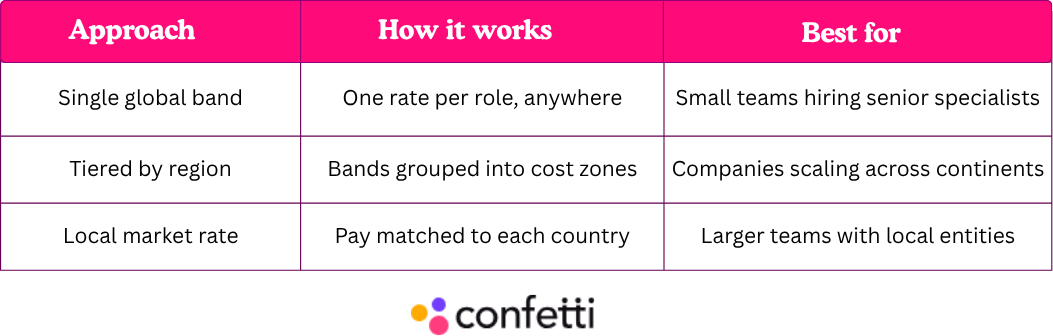
Pick one, write it down, and apply it the same way every time. Consistency here builds the kind of trust that keeps people from browsing job boards on a Sunday night.
5. Widen Your Hiring Pool Beyond Familiar Markets 🌍
Remote hiring gives you access to skilled people your competitors overlook. Teams that recruit across regions report faster fills and stronger candidate slates, since they stop competing for the same short list of resumes in one metro area.
For example, Girl Power Talk works this way on purpose. The social enterprise builds flexible remote teams for growth companies by sourcing talent across dozens of countries, backing every hire with a culture of learning and mentorship. The result is a bench most local recruiters would never assemble.
You can apply the same thinking at any size. Define the skills you need rather than the city, set up compliant payroll through an employer of record (compare EORs in a platform like Employ Borderless), and build interview panels that include people from more than one region.
Your candidate quality climbs the moment your map gets bigger.
6. Train Your Managers to Lead From a Distance🧭
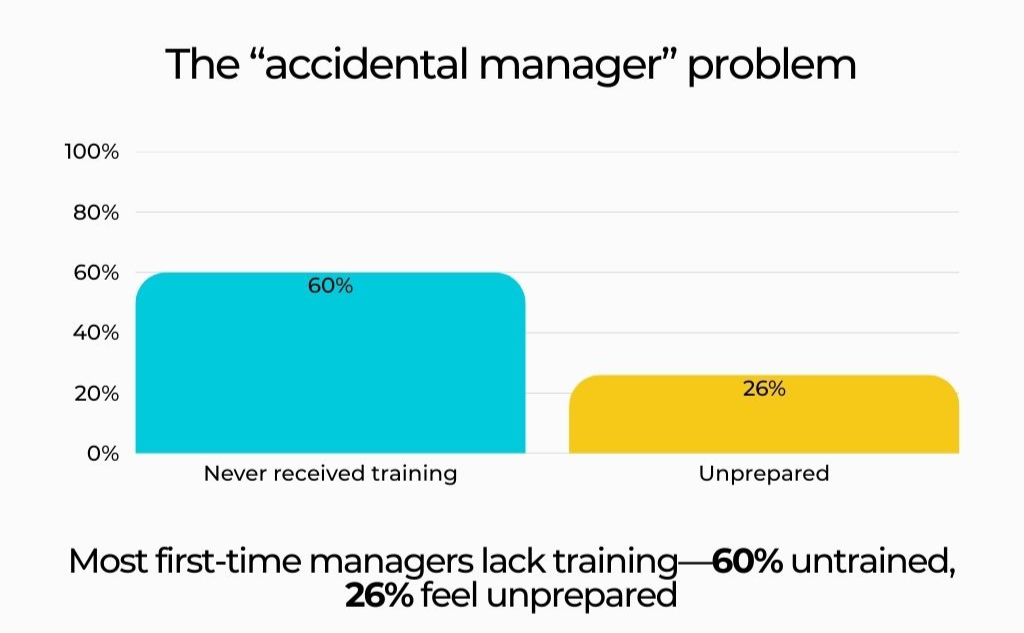
Source: HIGH5
Your managers set the tone every single week. A brilliant one turns a scattered group into a tight unit, and the skills involved differ from the ones that work in a shared office.
Give yours a short playbook. Weekly one-on-ones with a fixed agenda and written follow-ups. Async updates so people in every time zone receive the same information. Visible recognition posted in a shared channel rather than a private DM.
Then measure it. Ask your team twice a year how supported they feel, and share what you learn with everyone.
Most of the friction around managing remote employees comes down to habits rather than tools. Tools still cost you, though, especially once each region quietly buys its own version of the same thing.
Consolidate the overlap, optimize your global software costs through smart spend management, and your managers lead from one shared stack instead of five competing ones.
Fix the habits and your retention numbers follow within a couple of quarters. Your best managers will thank you for the clarity.
7. Celebrate Wins Where the Whole Team Sees🏆
Source: Nectar
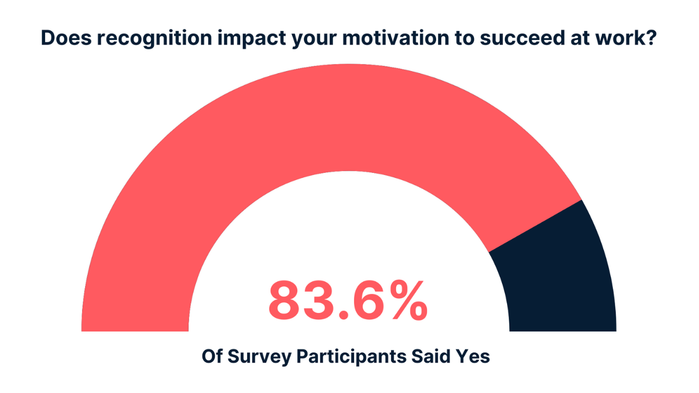
Recognition travels poorly over distance unless you build a channel for it. In an office, applause happens by accident. Remotely, you schedule it.
Start with a dedicated wins channel and a simple rule: anyone can post, and every post gets a reaction from a leader within 24 hours. That tiny commitment changes how visible good work feels.
Then add moments with weight. Work anniversaries, project launches, and personal milestones deserve more than a thumbs-up. A hosted trivia round or a virtual cooking class through Confetti gives your team a shared memory attached to the win.
Ask yourself: when did your team last cheer together? People stay where their effort gets noticed. Strong community building turns individual praise into something the whole company feels.
8. Show Remote People a Real Path Upward 🚀
The biggest worry a remote candidate carries is an invisible ceiling. They wonder if promotions land with the people who share a hallway with leadership.
Answer that worry before they raise it. Publish your levels and criteria, name recent remote employees who moved up, and give every person a written development plan they revisit each quarter.
Learning budgets help too. An annual stipend for courses, conferences, or coaching signals that you plan to keep this person for years.
Then protect the path with structure. Rotate who leads meetings, who presents to executives, and who represents the team on cross-functional projects. Visibility comes from those assignments far more than from proximity.
Remote people grow when growth gets designed rather than assumed. Say it plainly on your careers page.
Your Remote Culture Becomes Your Best Recruiting Tool
Remote talent in 2026 rewards companies that show their work. Clear policies, published pay, thoughtful onboarding, visible recognition, and a real growth path all say the same thing: we thought about you before you arrived.
Pick two tips from this list and start this month. Write your flexibility policy, then book one hosted team event and watch how your people respond.
The rest builds from there. Every ritual you add makes your next job post easier to write, because you'll have real stories to tell instead of adjectives.
Your culture already exists inside your team. Give it structure, share it openly, and the right people will come find you.