


.png)



According to Gallup’s report analyzing remote-capable U.S. employees, 26% work remotely and 52% have a hybrid working model.
And a company offsite is one of the few times your remote team gets to share the same room. That makes every decision, from the agenda to the location, matter a little more.
First-time planners may pack the schedule with activities instead of creating space for productive conversations and genuine connection. To avoid such simple mistakes, we’re sharing how to plan your first offsite without overlooking the details that matter.
5 Key Steps to plan your first company offsite for a remote team
Here are the steps to plan an offsite that brings your remote team together:
1. Set clear goals before planning
The biggest reason company offsites fall flat is the lack of a clear purpose. When no one understands why the team is meeting in person, every activity feels equally important, making it difficult to prioritize time, budget, and attention.
Before booking flights or shortlisting destinations, define what success looks like. Your goals should be specific enough that you can evaluate whether the offsite achieved them. Here are some examples-
- Build community in distributed teams
- Solve a business challenge collaboratively
- Align everyone on quarterly priorities
- Welcome new hires into the company and support employee onboarding
- Celebrate milestones or recent achievements
Clear objectives simplify your planning decisions. The sessions you schedule, the people you invite, the length of the offsite, and even the venue should support those outcomes.
For example, as Buffer grew, so did their goals for their offsite. Here’s what their founder, Joel Gascoigne, had to say in an interview with Inc-
“When we were a team of less than 30 people, the retreats felt like they could be a productive day-to-day work time for us, a shift towards working together, but continuing with the projects we happened to be working on… Today our retreats serve less of a purpose of immediate productivity and are more geared towards long-term productivity and meaningful connectedness of the team.”
Teams that start with shared goals are likelier to leave the event with shared direction, instead of a collection of disconnected memories.
2. Get the logistics right
You may overlook certain simple aspects while planning your first company offsite. So, remember to-
- Choose a destination that’s easy to reach for most attendees
- Avoid dates that clash with holidays or peak travel seasons
- Finalize your budget before confirming bookings
- Share itineraries, accommodation details, and emergency contacts early
Even small logistical decisions affect employees’ experience. A long layover, unclear arrival instructions, or back-to-back travel and work sessions can leave people tired before the offsite has even begun.
Build breathing room into the itinerary, communicate updates through a single shared document, and assign one point of contact - think of it as an internal call center for travel-related questions. When attendees don’t have to worry about the details, they’re free to focus on the conversations, activities, and relationships that make the trip worthwhile.
Did you know that employers save roughly $11,000 per year for each remote employee? So, you can spend a small percentage of it on making them feel valued.
So, when planning your offsite, you can give a small welcome gift that can also make their experience feel more thoughtful. One way to do this is to use Printful or Printify to create branded merchandise that your team can keep and use long after the event ends.
For example, you could give each team member a custom embroidered hoodie with your company logo or a motivational quote that reflects your team's values. It creates a shared sense of belonging, gives everyone a common memory of the offsite, and helps remote employees feel more connected to the company and to one another, even after they've returned home.
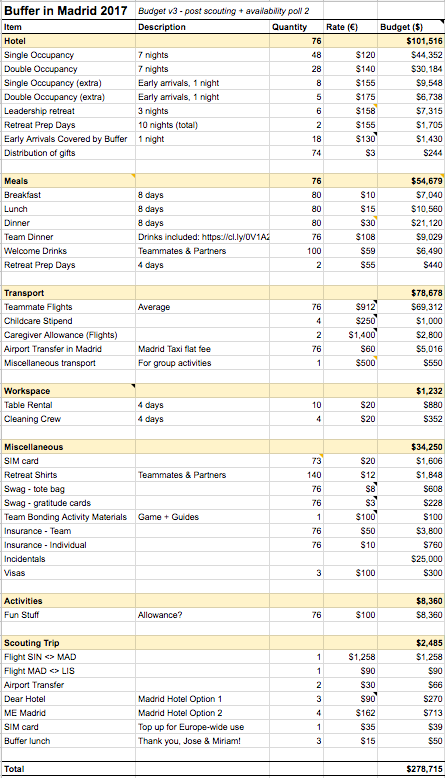
Remember to include this cost in your overall budget. Take a cue from Buffer’s retreat budget-
3. Build an agenda people enjoy
Employees can tell when an agenda has been filled simply because the company paid for the venue. Adding 6-8 straight hours of a workshop or seminar presentation rarely creates memorable offsites. At the same time, leaving everyone to “network” all day often feels awkward, especially for distributed teams that don’t know each other well.
So, aim for a steady pace instead of a packed calendar. Alternate between collaborative work, social activities, meals, and breaks so people have time to recharge. If a discussion runs longer than expected, a flexible schedule also gives you room to adjust without disrupting the entire day. For example, apart from having work-related activities, Zapier also did the following-

A balanced agenda includes these 5 things-
- Strategy workshops
- Team-building activities
- Shared meals
- Optional evening plans
- Free time between sessions
More importantly, split into smaller groups from time to time to get departmental alignment and host niche-specific activities.
4. Prepare attendees before the trip
Before anyone packs a suitcase, make sure everyone has access to-
- Travel itinerary
- Accommodation details
- Packing checklist
- Emergency contacts
- Session schedule
- Local transportation information
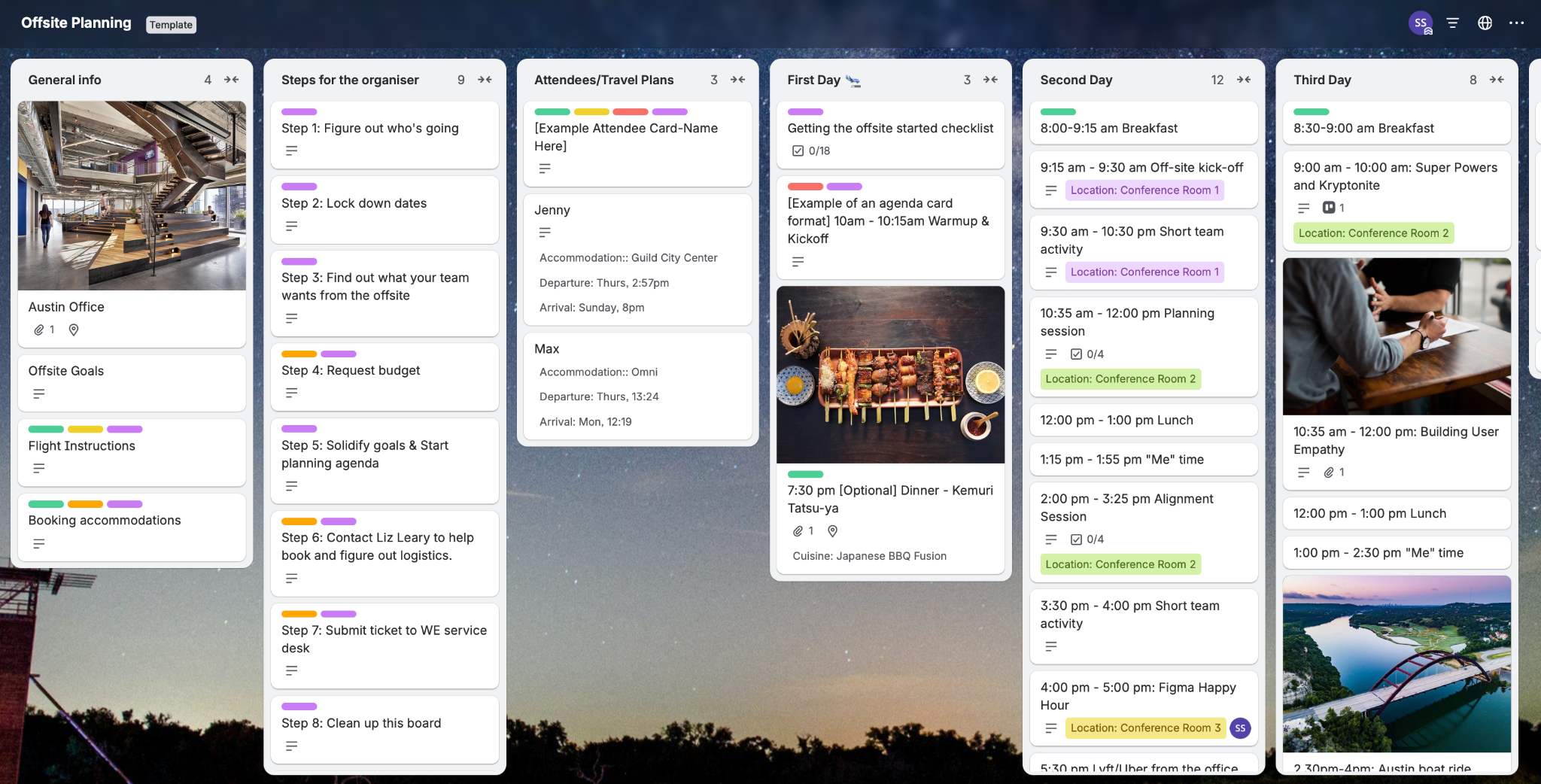
Avoid scattering information across emails and chat threads because employees may inevitably miss something important. A single Notion document or Slack channel can keep updates organized and reduce last-minute questions. It also gives attendees confidence that they know what to expect before they leave home. Another way to organize your offsite plan is on a Trello board. Here’s one template from them-
Remember, preparation isn’t limited to logistics. You need to explain why the offsite is happening, what employees should prepare beforehand, and what they could look forward to. Arriving at the offsite with context helps them contribute from the first session instead of spending the morning figuring out the agenda.
5. Gather feedback after returning
The offsite may be over, but your job isn’t.
The days immediately after everyone returns are the best time to understand what worked, what fell short, and what deserves another chance next year. Memories are still fresh, and employees will share specific observations and not vague impressions.
Review the feedback alongside the goals you set before the event. If the objective was improving workplace collaboration, look for signs that new conversations continued after the offsite or that teams felt more aligned. If the focus was strategic planning for the next quarter, ask whether attendees left with greater clarity. These insights reveal whether the event delivered on its purpose.
This activity becomes all the more important because of these data points-
- There’s a 26% increase in productivity after company retreats
- Employee turnover reduction by a whopping 73%
- Improvement in team communication by up to 40%
- 34% of employees feel at their creative best during these outings because it offers a break from monotonous routines
Keep a simple record of lessons learned, including budget notes, vendor experiences, scheduling decisions, and attendee feedback. You’ll spend far less time planning the next offsite and avoid repeating the same mistakes.
Final Thoughts
Your first company offsite is only the beginning.
Take note of what resonated with your team, gather feedback, and carry those insights into future events. Small improvements can add up and make every next offsite more engaging and valuable than the last.
Ready to plan your next gathering? Confetti offers team-building experiences and planning support designed for distributed teams.