





Many companies in the same industry offer the same salaries, benefits, and career opportunities. However, employees can still describe them differently. Some organizations are energetic, relaxed, and collaborative, while others are mostly seen as transactional, cold, and “too corporate.”
Oftentimes, leadership, policies, and culture are the contributing factors. However, there’s another element that also plays a part — workplace branding. The most obvious example of your workplace branding is your company logo, which people immediately see on your glass doors or above the reception desk. However, it goes beyond that.
Workplace branding is also experienced through your office environment, onboarding materials, company communications, internal presentations and documents, and branded merchandise. Believe it or not, these things do affect how your employees see you as an employer, work with their colleagues, and connect with the company’s mission.
Understanding the psychology behind workplace branding helps you cultivate your ideal environment that reinforces trust, purpose, and belonging.
What Is Workplace Branding?
Unlike employer branding, which centers on external reputation to attract job seekers, workplace branding focuses inwards. It’s what employees will start to live with once they’ve joined your company — the visual, physical, and cultural elements that will affect their experiences while working with you day to day.
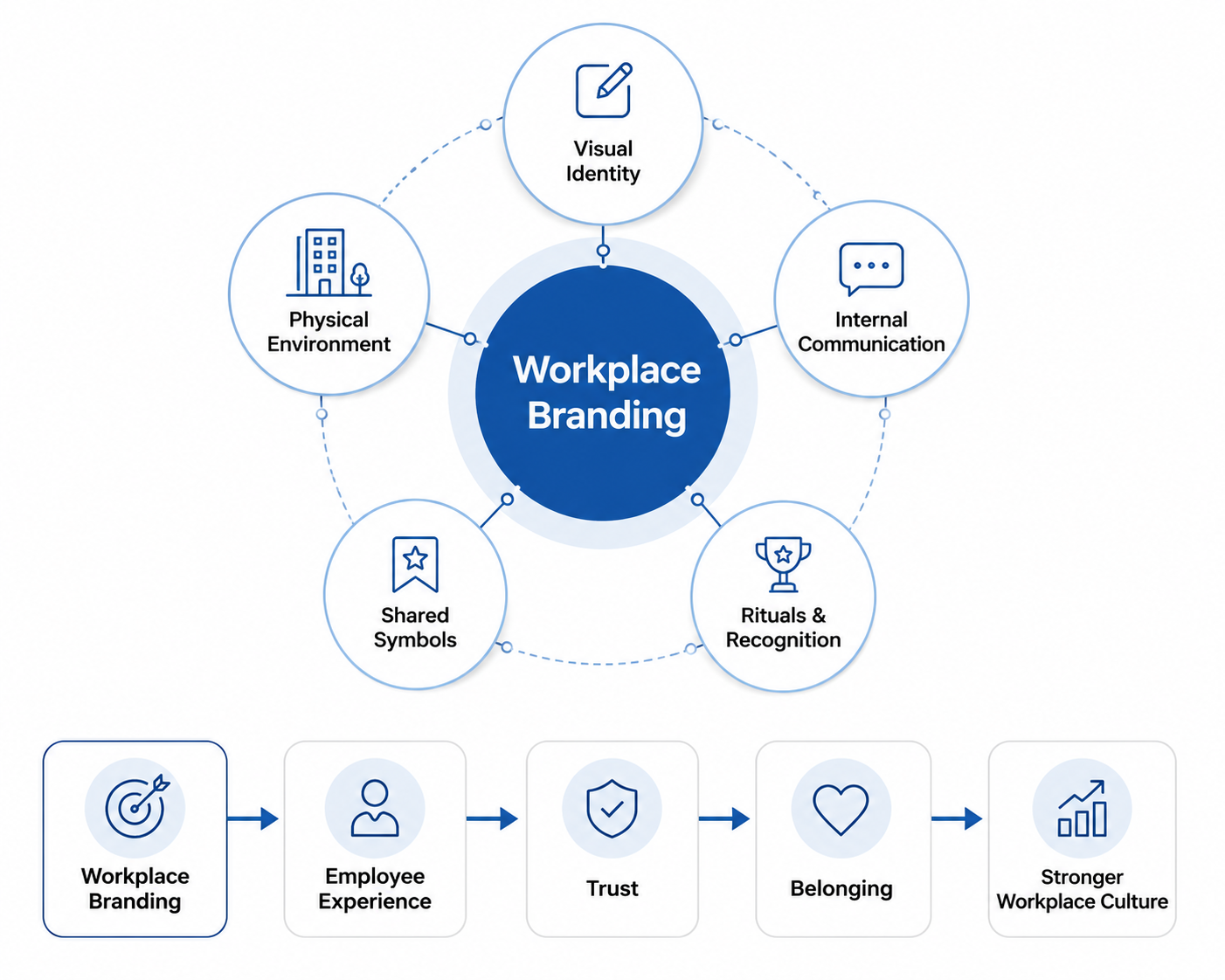
Here are the five interconnected components that make up a strong workplace brand:
- Visual identity – logos, colors, typography, and design systems
- Physical environment – office layout, signage, décor, and workspace design
- Internal communication – emails, presentations, policies, and collaboration tools
- Shared symbols – branded merchandise, icons, traditions, and visual cues
- Rituals and recognition – onboarding experiences, celebrations, awards, and team traditions
[Image 1: Workplace Branding Ecosystem]
Sample image:
Why Humans Respond to Brands at Work
Workplace branding affects how employees process information, form relationships, and interpret their surroundings within the company. Here are some well-documented psychological principles that explain why branding has a huge influence on attitude and behavior.
Social Identity Theory: Belonging Shapes Behavior
According to Henri Tajfel and John Turner’s social identity theory, people define part of their identity through the groups they belong to. In the workplace, if employees are proud of the company they’re part of, they can eventually adopt the organization’s identity as their own.
You can reinforce this sense of membership through a strong, consistent visual identity and shared experiences, as they give employees something tangible to identify with. When employees strongly identify with their organization, they tend to be more engaged, cooperative, and committed to shared goals.
Cognitive Fluency: Consistency Builds Trust
Cognitive fluency refers to how people process information more easily when presented consistently. So, when you use the same colors, typography, signage, and presentation styles within the company, employees spend less time trying to figure you out. Instead, they can focus on more important matters, as they can easily see that you’re organized, professional, reliable, and trustworthy.
Environmental Psychology: Spaces Influence Performance
A workspace should represent the company’s values to cultivate the behavior it wants to encourage. Studies in environmental psychology have shown that a person’s physical and digital surroundings can shape their mood and behavior in different ways. Using natural colors, a well-executed visual hierarchy, intentionally designed collaborative spaces, and well-branded meeting rooms has proved to influence concentration and teamwork.
Symbolic Meaning: Brands Represent Shared Values
Over time, the company’s visual identity becomes meaningful symbols to employees. Branded merchandise with the company logo, like hoodies, mugs, pens, and stickers, often evokes a certain emotional attachment. They become symbols of the company values, collective purpose, and shared experiences and milestones that solidify employees’ connection with the organization.
The Five Workplace Branding Elements That Shape Employee Experience
Employees’ overall experience with a workplace brand doesn’t stop with the company’s logo or slogan. It’s in every small interaction they encounter inside the organization throughout their workday. Ensuring that these touchpoints are consistent cements your company’s identity and makes their experience more cohesive.
1. Logo and Visual Identity
A company logo only makes sense if it's applied consistently. It should appear on your onboarding materials, presentation decks, office signage, or even digital workspaces. This way, your employees become familiar with your logo and your organizational identity.
Tools like Design.com’s logo maker can help create and apply logos consistently across various print and digital channels. A recognizable logo is more valuable than a complex, attractive one. You want your employees to have a consistent visual anchor that they can easily associate with your company’s mission, values, and culture.

2. Color Psychology
Color psychology has created a universal set of rules on how brands should use colors to influence people’s perceptions. For instance, blue shows trust and stability, and green evokes growth and sustainability. Meanwhile, neutral colors — like black and white — are associated with professionalism and clarity. However, context still matters more — companies should still choose colors that will reflect their culture and desired environment rather than rely heavily on color psychology.
In addition, you should commit to these colors and use them consistently on your physical office, online platforms, and internal materials and communications. This will reinforce brand recognition among your employees while also helping them navigate their workplace environment with less mental effort.
3. Typography
Just like with colors, typography can also influence perception. It communicates a brand’s tone and personality. Typically, traditional typefaces convey tradition and credibility, while modern fonts make brands appear approachable and friendly.
Oftentimes, typography is overlooked, especially inside the company. As a result, employees are greeted with presentation decks, company documents, and internal tools that use inconsistent fonts, which are confusing and distracting. Being intentional with your font choices creates a more polished experience among employees and shows how much attention you pay to every detail.
4. Workspace Design
You don’t need to have a workspace that’s straight out of a magazine. Instead, your office should also reflect your company’s values and culture. For instance, a traditional office setup with private, closed-door offices creates a more formal environment and reinforces individual authority. On the other hand, an open-plan office signals to your employees that you encourage collaboration, communication, and teamwork.
Neither workspace design is inherently better. Some employees may prefer an open-plan office, while others still find the traditional office setup more conducive for working. Regardless of your chosen workspace design, what’s important is that it can communicate how you expect people to behave.
5. Internal Communication
Aside from what employees see when they enter your office, they also experience the company’s branding when they open emails, receive Slack messages, or sit in meeting rooms. Hence, it’s important to use consistent templates, visual standards, and tone of voice on all your internal communications.
Employees notice inconsistencies even if they can't pinpoint them. They may be small, but this can affect their level of trust in your organization. It signals to them that if you can’t stay consistent on the small things, there are also inconsistencies on bigger matters.
How Strong Workplace Branding Improves Employee Outcomes
Employees can feel it when the workplace branding is done right. They notice it in their day-to-day experience within the company — and they respond to it. Here are the areas that greatly benefit from a consistent workplace branding.
Better Onboarding
When you have strong workplace branding, even new hires can easily get a sense of what your company is like. They see it through your office signage, welcome kits, and onboarding materials. It gives them an idea of how your company communicates, works together, and makes important decisions.
Higher Engagement
According to Gallup, employees are more likely to engage at work if they can connect with the company’s identity and purpose. This results in higher productivity and better retention. Last year, it was reported that the employee engagement rate went down to 20% — the lowest level since 2020. Believe it or not, this doesn’t only affect company performance. It also contributes to the global economy.
Greater Consistency
When branding is applied consistently in visuals and tone, it sets clear standards of how the company wants to present itself. This gives employees a better understanding of how to represent your organization to clients and communicate professionally within the company. This reduces the disconnect between your values and daily reality.
Stronger Employer Reputation
Employees who have positive daily experiences because of strong workplace branding become unofficial ambassadors for their organizations. Every time they recommend your company to their peers and social media platforms, they’re strengthening your reputation. This makes it easy for you to attract and retain more employees.
Image: How Workplace Branding Supports the Employee Journey
Sample image:

Common Workplace Branding Mistakes
Sometimes, regardless of how meticulously you build your brand, lapses can happen. Here are the common mistakes that you should avoid to ensure that your company’s branding really does support your culture.
Branding Only Customer-Facing Materials
Most companies focus on marketing externally, overlooking the materials their employees use every day. It’s important to have consistent branding on your internal documents, onboarding kit, office spaces, and online platforms.
Creating Visuals Without Defining Values
Having polished visual assets doesn’t equate to having a strong workplace branding. Your visual identity should effectively reflect your culture and values. Hence, companies should decide on the culture they want to cultivate first before creating their visuals.
Inconsistent Brand Assets
Having different versions of your logo on slide decks and internal documents can create some confusion among your employees. Platforms like BrandCrowd can help you create branded assets with a consistent logo design in just minutes.
Copying Workplace Trends
In recent years, workplaces with fancy murals, colorful beanbags, and themed meeting rooms have been trending, attracting potential employees. However, if these design choices don’t reflect your company culture, employees will feel the disconnect one way or the other.
Forgetting Remote Employees
Since 2020, the number of remote employees has increased drastically. The workplace is no longer just the physical office — it’s also online. Hence, branding should extend to Zoom backgrounds, Slack channels, email signatures, online presentations, and other digital touchpoints so your remote staff can still experience your culture.
Building a Workplace Brand Employees Actually Believe
The most effective workplace branding starts with a clear understanding of what the company stands for and how employees should experience that culture daily. Here are ways to do that effectively.
1. Start with purpose
Before you jump into building your visual identity, confirm the company’s mission, values, and the culture you want employees to experience first. This helps you create solid branding based on the organization’s principles.
2. Define behaviors
After you confirm the company’s purpose, determine the concrete behaviors that will help fulfill that purpose. This includes communication styles, workplace norms, and day-to-day actions your employees will adopt after joining your company.
3. Build a visual identity
Once you have set the purpose and behavior, it’s time to design the logo. Choose icons, colors, and fonts that will reflect your company’s personality. This way, your visual identity will be more than just a decoration but a clear representation of what your organization wants to be
4. Apply it consistently
Use the same visual identity on all your branded assets — from your office lobby to your internal memos. Consistent application of your logo, colors, and fonts reinforces your credibility, reliability, and trustworthiness.
5. Reinforce it daily
Ensure you uphold the company’s values through everyday interactions, recognition programs, and company events. These can help support the brand you have decided to build, keeping it from being forgotten by everyone in the company because of busy workdays.
6. Review regularly
Keep a close eye on your workplace branding every day, especially as your company grows. Ensure that the current workplace still reinforces the set values and experience you want employees to have.
Conclusion
Workplace branding is not just a mere decoration. It’s a series of intentional design choices to reinforce trust, belonging, confidence, and collaboration within the organization. Your employees see and experience your brand more often than your clients.
Having a visual identity that perfectly aligns with your values gives them a clear understanding of what kind of company you are and how they can work to help you succeed. When your glass doors, meeting rooms, digital workspace, onboarding documents, and presentation decks communicate what you really value, workspace branding is no longer just something everyone sees — it becomes a part of your company culture.