


.png)



Workplace culture cracks may first show up in conversations. The way people ask questions, share updates, or avoid speaking up altogether speaks volumes.
The bigger problem, though, is that most teams aren’t struggling to communicate; they are struggling to be clear. Expectations are loosely defined, context gets lost, and people fill in gaps on their own.
That is where misalignment begins. From there, it starts affecting performance and morale.
Gallup reports that only 21% of employees globally felt engaged at work in 2024, pointing to a deeper disconnect. Let’s take a look at how we can fix it.
Communication and Culture: 7 Tips for a Stronger Workplace
1. Define what good communication actually looks like
Most teams assume everyone is “on the same page.” They’re probably not.
What feels obvious to you could be unclear to another, especially across roles, time zones, or seniority levels. To fix it, define what that actually means in your team.
- Set response time expectations
- Clarify channels for each use
- Avoid making every task sound urgent
- Lay down expectations for meeting participation
- Decide what needs documentation
Be specific. What goes on Slack vs email? What needs a meeting vs a quick update? How should requests handled by an AI receptionist, for example, be routed, and what is considered urgent?
What needs a meeting vs a quick update?
If email is a primary channel for your team or clients, ensuring high email deliverability is a technical necessity to prevent important updates from landing in the spam folder. Including a simple spam test in your process can help ensure your messages are usually delivered to the right inboxes.
This matters even more for globally dispersed teams. It becomes easier to manage schedules with employee scheduling tools like Homebase.
2. Reduce noise before adding more tools
These days, decision makers are quick to add another tool as a quick fix. That usually makes things worse. Most teams already have too many channels, loads of notifications, and no clear system for where things belong. The problem is not a lack of tools; it is a lack of structure.
Start by auditing what you already use. Look at where conversations actually happen versus where they are supposed to happen. You will usually find overlap, abandoned channels, and important updates buried in the wrong places.
- Audit existing communication stack
- Cut redundant channels
- Merge overlapping conversations
- Archive inactive threads or groups
Fewer, well-defined channels make it easier to follow context and stay focused. Communication becomes faster without feeling overwhelming when people know exactly where to look and where to respond.
3. Document decisions, not just discussions
During quick chats, you may talk through decisions but not document them properly. A week later, no one remembers why something was done a certain way, and the same conversations start again. It slows you down and creates avoidable confusion.
So, write the context behind decisions. What changed, why it changed, and who owns it going forward are important to note. Keep it short, but clear enough that someone outside the conversation can understand it without needing a follow-up.
Store this in a place that is easy to search and access. If people have to ask around to find information, the system has already failed.
Plus, documentation can double up as a skills-based learning asset and help your people understand how decisions are made in real scenarios.
4. Create visible culture touchpoints
People follow what they see every day, not what they read once during onboarding. That’s why you must reinforce values through visuals that show up in real workspaces. This could be team principles on walls, decision-making frameworks near meeting areas, or even reminders of how the team collaborates. The goal is to make culture part of the environment, not an abstract idea.
Consistency matters here. When the same messages appear across spaces, it becomes easier for people to internalize what is expected without constant reminders.
For example, look at Spotify’s offices across the globe and how they align with its “Band Manifesto.”

Their office spaces are cohesive with posters spread across to tie the space together while also providing a constant reminder that they’re part of one band.
Similarly, you can use custom posters created via print-on-demand platforms like Printful & Printify to make this tangible. This way, you can turn your values and mission statement into visual cues that people actually notice.
5. Build feedback into everyday workflows
Waiting for quarterly or annual reviews to give feedback is too late. By then, employees have lost context, and the feedback feels disconnected from their current work.
Feedback needs to happen while the work is still fresh. A quick comment after a meeting, a short note on a deliverable, or a 2-minute check-in can fix issues before they fester. It also makes feedback feel normal instead of an anxiety-inducing activity.
Normalize small, frequent loops across the team as part of your feedback culture. Keep it direct and tied to specific work, not personality.
Separate this from performance reviews. Reviews are for evaluation. Every day feedback is for improvement. Mixing the two makes people defensive and less open to input.
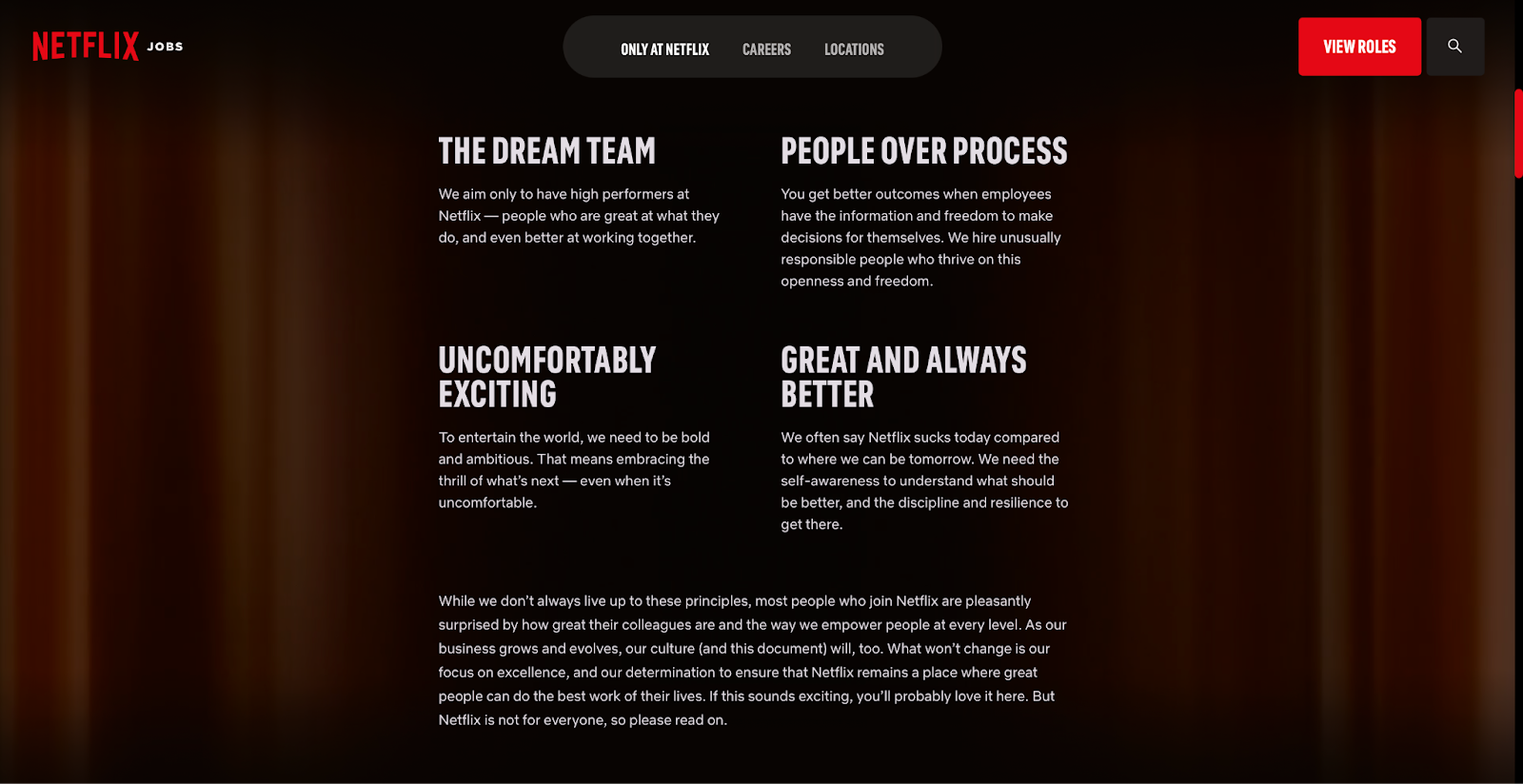
Netflix does a great job of breaking this down on its website and instilling it in its employees as often as possible.
6. Turn employees into culture carriers
Workplace Culture is more than just what leadership says. It also shows itself in what employees share and repeat. The fastest way to make culture real is to let employees tell those stories themselves.
Encourage internal storytelling. This could be sharing wins, lessons from mistakes, or how a team handled a tough situation. These stories carry more weight than any formal message because they come from lived experience.
Take it a step further by amplifying these voices outside of internal communication channels. When employees talk about their work, it builds credibility and attracts the right kind of talent and customers.
You can structure this through employee advocacy programs, where teams are guided on what to share and how to share it, without forcing it
7. Train managers to communicate with intent
Most communication breakdowns do not happen at the company level; they happen in how managers give explanations, delegate work, and respond under pressure.
If your instructions are vague or priorities keep shifting without explanation, your team starts second-guessing instead of moving forward. This can create hesitation and slow down execution. That’s why,
- Coach for clarity and empathy
- Align messaging across leadership
- Set expectations before delegating work
- Explain the context along with instructions
- Address issues early and directly
- Adapt communication to different team members
Because if you don’t communicate effectively, you could be losing somewhere between $9,284 to over $30,000 per employee per year.
Conclusion
Communication and culture are not separate levers. One shapes the other every single day. The way you share updates, give feedback, document decisions, or even handle small moments adds up quickly.
You do not need more policies.
But you do need clearer expectations, better habits, and consistency across teams.
When your communication is intentional, culture becomes a daily experience. That is also where tools can support the experience. With Confetti, you can bring your team together with fun team-building activities.