






For a long time, the advice was simple: keep work and friendship in separate boxes.
Be pleasant. Be professional. Go home and have your real life somewhere else.
That advice is dying, and it deserved to. Most of us spend more waking hours with coworkers than with anyone else in our lives, including the people we married.
Pretending that doesn't create real attachment was always a little absurd. And we finally have the data to back up what people on good teams already knew.
Employees who say they have a best friend at work are more engaged, perform better, and stick around longer than those who don't, and the gap holds across roles and industries, not just in cushy tech jobs where ping-pong tables do the heavy lifting.
That's a pattern stable enough to build a strategy around.
🤝 What Actually Counts as a Workplace Friendship
Not every decent coworker relationship qualifies. You can like someone, work well with them, never have a single conflict, and still not have a friendship.
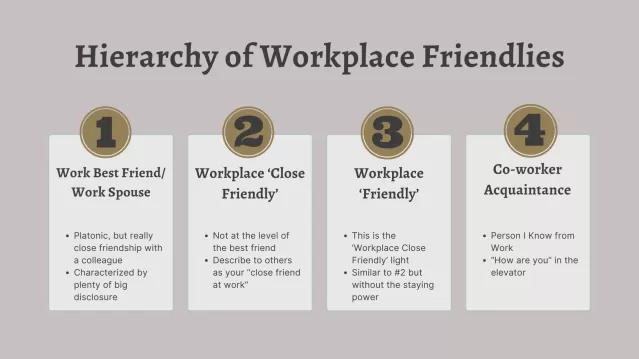
Friendship requires something extra: trust that survives a bad day, honesty that isn't filtered for HR, and enough investment that you'd notice if they were struggling.
A few shapes this tends to take:
- Peer friendships, the most common kind between people doing similar work and hitting similar walls.
- Cross-functional friendships matter more than people give them credit for, because they're often the only bridge between departments that otherwise talk through Slack threads and nothing else.
- Mentor relationships that start as an obligation and turn into something real.
- Friendships built through ERGs or shared interests outside the actual job description.
- And buddy pairings for new hires, the ones that are supposed to be a 90-day formality and sometimes end up lasting a decade.
Daniel Apke, Founder of Land Portal, runs a real estate investment platform that coordinates analysts, advisors, and investors operating across multiple markets and time zones.
He notes, "The friendships that hold up under pressure are usually the ones that crossed a department line at some point. When someone in acquisitions trusts someone in underwriting enough to flag a problem early instead of waiting for a formal review, you avoid mistakes that cost real money.
That kind of trust does not show up on an org chart, but it is the reason some teams catch problems faster than others."
None of these gets manufactured by a wellness committee. They get manufactured by repeated, low-stakes contact. That's the part most leadership teams miss.
📊 The Research Nobody Argues With Anymore
Here's where the skeptics usually push back, and fair enough, "be friends at work" sounds like the kind of thing that belongs on a motivational poster, not a P&L. So look at the actual research instead of the sentiment.
📈 The productivity number that started it
MIT's Alex Pentland spent years studying what separates high-performing teams from the rest, and résumés weren't the answer. Communication patterns were.
His most cited example is almost embarrassingly simple: a call center adjusted its break schedules so that colleagues on the same shift could actually overlap and talk, and productivity rose by more than 20 percent. From letting people talk to each other at the same time, in the same room, on purpose.
🔍 What Google found when it tried to engineer the answer
Google ran into a version of the same finding with Project Aristotle, its multi-year internal study on what makes teams effective.

The single strongest predictor was psychological safety, whether people felt safe enough to take a risk, admit a mistake, or push back on an idea without fear of getting punished for it later.
Friendship isn't the only road to psychological safety. But it's one of the fastest, and it's free.
💸 The retention number leaders don't want to hear
Then there's retention, where the stakes get uncomfortable fast.
McKinsey's research into the Great Attrition found that lack of belonging was one of the top reasons people quit, sometimes ahead of pay, which surprises people until they remember their own exit interviews.
People rarely leave a job over a single bad meeting. They leave because the job stopped feeling like somewhere they belonged.
💡 The cost on the innovation side
Microsoft Research found that remote work was shrinking employee’s weak ties, the loose, cross-team connections that don't show up on an org chart but are exactly where new ideas tend to come from.
Fewer hallway run-ins, fewer cafeteria overlaps, fewer accidental conversations that turn into actual collaboration.
Teams got more efficient inside their own silos and worse at everything that required bumping into someone unexpected.
"Technology has made it easier than ever for teams to communicate, but genuine workplace relationships still depend on consistent, meaningful interaction," says Samantha St Amour, Partnerships Manager at Technobark.
She added, "Organizations that create opportunities for employees to connect across teams often see stronger collaboration because people are more willing to share knowledge, raise concerns early, and work toward common goals."
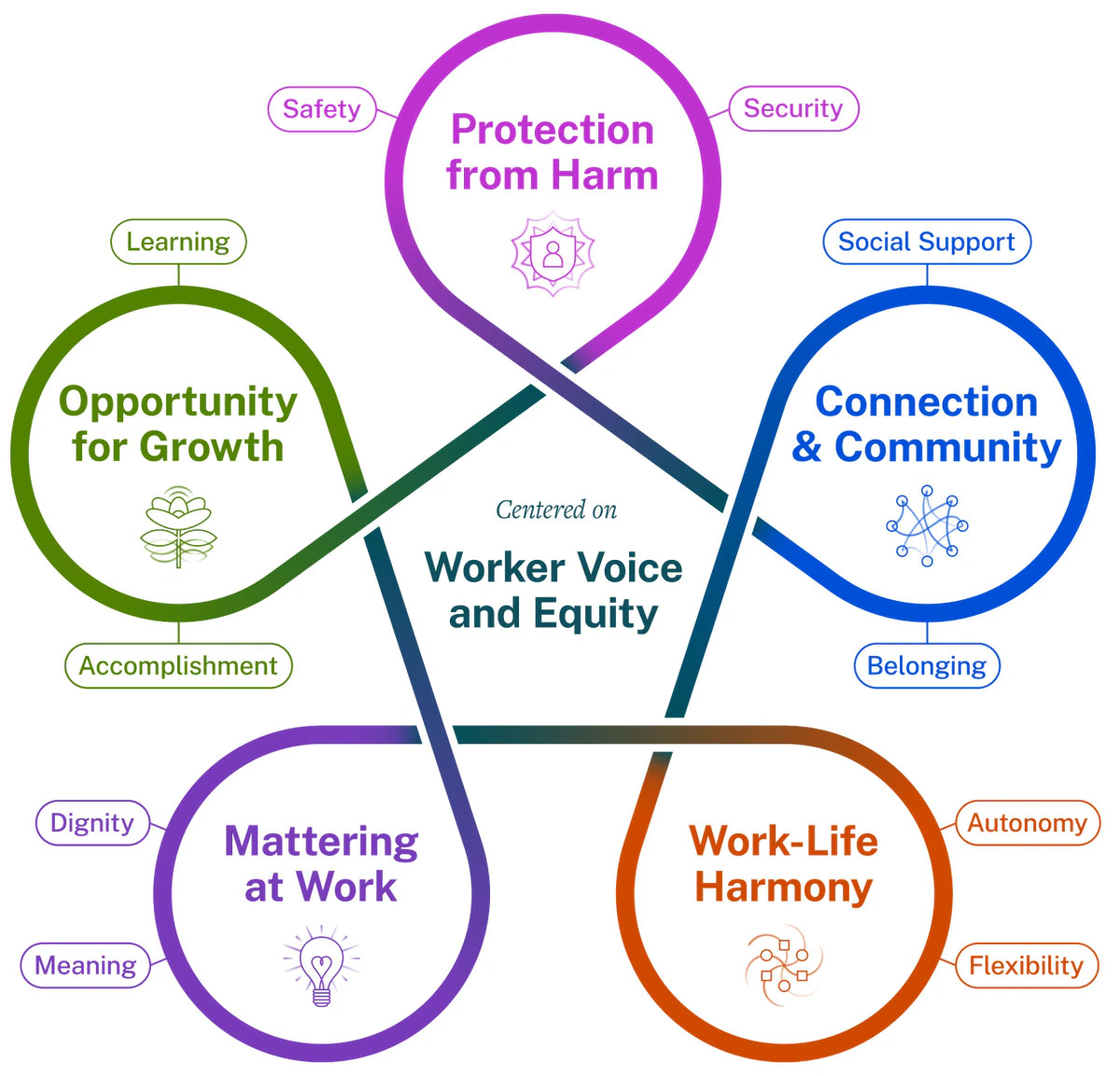
The U.S. Surgeon General put connection and community on the list of pillars for workplace mental health, which says something about how far this has traveled, from optional to a public health framework in under a decade.
⚠️ The Part Everyone Skips: What Goes Wrong
Friendship at work isn't a clean win. It has real failure modes, and pretending otherwise is how you end up blindsided.
Favoritism is the obvious one, real or perceived, it doesn't matter much, because perception alone is what erodes trust on a team. Cliques form. Promotions start looking political even when they aren't.
Managers who are friends with a direct report find performance conversations get harder, not easier, because now there's a relationship to protect on top of a job to do. And groupthink creeps in: when everyone likes everyone, disagreement starts to feel like betrayal instead of due diligence.
The fix isn't banning friendship. It's building systems that don't depend on its absence:
- Transparent criteria for promotions and assignments
- Rotating who gets the high-visibility projects instead of letting it default to whoever's closest to the manager
- Documented feedback instead of hallway impressions
- Conflict-of-interest disclosures normalized as routine, not as an accusation
Inclusivity matters here, too, and it's easy to get wrong by accident.
Tanyaporn Trirotanan, Vice President of Veerasak Gems, a gemstone retailer managing sourcing, sales, and client relationships across a globally distributed team.
She says, "Favoritism becomes a real risk the moment a team is spread across multiple countries, because no one has the full picture of who is actually doing what.
We have learned that the only way to keep trust intact is to make the criteria for advancement and recognition visible to everyone, not just the people sitting closest to a manager's calendar. Clear systems protect relationships instead of straining them."
Not everyone bonds over happy hour. Caregivers, people across time zones, people who don't drink, people who are simply introverted, design social opportunities that don't exclude half the team while congratulating yourself on culture.
🧱 Building the Conditions, Not the Friendships Themselves
You can't mandate a friendship into existence. What you can do is stop getting in its way and then build a few things that make it more likely:
- Buddy programs at onboarding work, but only if the buddy relationship has an actual reason to continue past week two
- Light-touch manager rituals, a regular check-in that isn't about deliverables, a small-group coffee that isn't optional in disguise, do more than most off-sites costing ten times as much
- Cross-functional projects that mix people who'd otherwise never share a calendar invite are one of the best tools available
Cross-functional contact already happens by necessity in industries built around hard deadlines.
Production floors that handle blank apparel orders run on exactly this kind of forced contact: cutting, printing, and fulfillment teams have days, not weeks, to coordinate before a shipment goes out the door, and the ones that know each other well catch problems before they become missed deadlines.
Leadership sets the tone here more than any program does. When a leader shares credit instead of absorbing it, or asks a genuine question instead of a performance-review one, it tells the whole team that relationships aren't a distraction from the job. They're part of it.
🏆 Companies Already Doing This Well
Atlassian built its Team Playbook around exactly this idea, with tools like the Team Health Monitor that get teams talking about how they work together, not just what they're shipping this sprint.
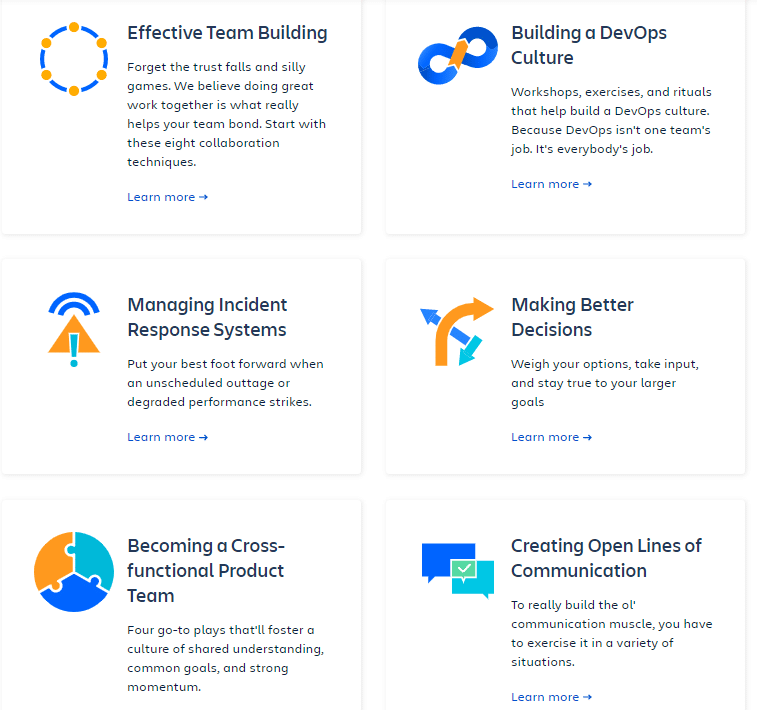
That transparency is a friendship accelerant, even though nobody on the team would describe it that way.
Salesforce went further and built an entire cultural identity, Ohana, around the idea that the company should feel like family, then backed it with paid volunteer time and a 1-1-1 philanthropy model that gives people something to talk about besides quarterly targets.
And that Bank of America call center, the one from Pentland's research, it's worth repeating because it's almost insultingly simple.
They didn't redesign the job. They aligned break schedules so people on the same team could actually be in the room together. Productivity went up more than 20 percent. Stress went down. That's the whole intervention.
🚪Where This Leaves You
If your team is distributed, hybrid, or just busy enough that nobody talks unless a meeting forces it, the gap won't close on its own. It needs a nudge, something low-pressure enough that people actually opt in instead of dreading it.
That's the whole premise behind Confetti's team building and bonding experiences: icebreakers that don't feel like icebreakers, workshops that work across time zones, and formats built for teams that are in-person, hybrid, or fully remote.