


.png)



Even just a decade ago, employee experience simply meant letting employees leave 30 minutes early on a Friday and a ping-pong table in the office.
However, that’s now changing. Everything your employees encounter at work, from onboarding clarity, feedback timing, tool quality, and whether your manager respects their time, influences their experience.
This includes system usability, cultural safety, the little office moments, and even big changes. Keeping a tab on these changes helps you retain your talents and reduces employee acquisition costs.
In this article, we’ll share the signals of change already on the lookout, the systems supporting employee experience, and the cultural shifts that matter to you as an HR or business owner.
What Is the Current Trend for Employee Experience?
Post-COVID-19, most organizations invested in basics such as frequent pulse surveys, improved onboarding, revamped learning portals, manager training, and wellness resources.
Hybrid work has settled into a rhythm in some places, with 52% of employees in the US preferring it over in-office options.
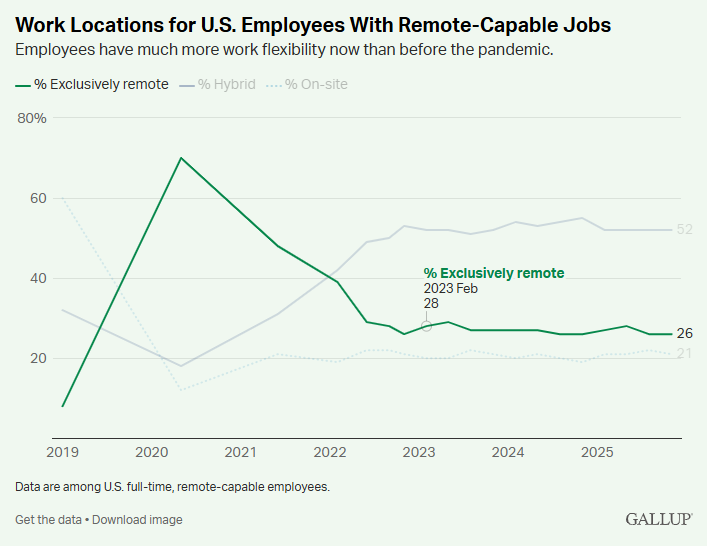
Remote and hybrid work also reshaped work culture and expectations. McKinsey found that 58% of U.S. workers had the option to work from home at least part-time, and they valued it enough to change jobs to keep it.
Employee engagement ticked up in some organizations but remains lukewarm globally. Gallup's 2024 State of the Global Workplace reported that only 31% of employees in the US and 21% globally were engaged. High levels of stress and quiet quitting persist.
In addition, digital transformation accelerated, but left many employees switching between too many systems and losing time to friction. Tab switching costs teams time that could have otherwise been spent on productive tasks.
On the other hand, most teams still treat employee experience as a set of programs rather than a coherent, connected system. This results in highly fragmented employee development according to McKinsey’s 2025 report.
7 Things to Expect About the Future of Employee Experience in 2026
These are some of the signals, systems, and shifts likely to become prominent as regards employee experience in 2026 and beyond.
1. Technological and Skill Advancements
Technology currently handles most heavy, repetitive tasks and has changed how teams and organizations operate.
- Intelligent AI assistants draft performance notes, summarize feedback, and recommend learning paths
- Virtual reality delivers. A PwC study found that VR learners completed soft-skill training 4x faster and reported greater confidence in applying those skills than classroom learners
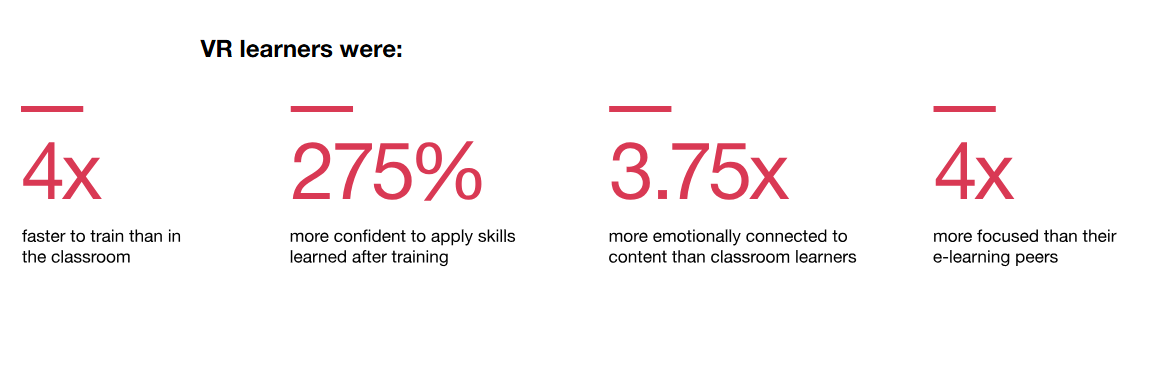
Integrating these tools will help employees automate most repetitive tasks, which often sap productive time and lead to burnout.
Take warehouse employees as an example. Bringing in a vertical lift module that delivers goods directly to the operator eliminates wasted time spent walking, searching, and bending. This allows your team to focus on customer-end services.
There's also a shift toward modern skills. IBM estimates that up to 44% of the global workforce will need reskilling as AI disrupts traditional competencies, tasks, and tools. This reshapes how companies approach development and mobility.
Tips to adapt: Tom Rockwell, CEO at Concrete Tools Direct, suggests “helping your employees stay relevant by providing them with access to essential AI and technology resources. The more they understand about AI, the more productive they become. Also, incorporate automations to handle your organization’s repetitive tasks and enable your employees to focus on core tasks.”
2. Societal and Economic Shifts
Let’s start with the demographics shift.
The UN projects that the number of people aged 65 and over will more than double by 2050, changing not only benefits strategies but also knowledge transfer and flexible career paths. Gen Zs are already reshaping norms around transparency, inclusion, and social impact at the base level.
Secondly, flexibility is still at the center stage. Large-scale trials of the four-day workweek show promising results in countries such as the UK. In fact, over 55% of employees reported an increase in work ability. So, the demand for shorter work days and hybridity is not going away any time soon.
Tips to adapt: If a four-day work week wasn't previously on your roadmap, you might need to start drawing the blueprint for it now, especially if you hire GenZs. In cases where you need extended work time, you can contract the extra hours through a virtual assistant agency
You should also consider cultural nuances, including work ethics that align with your brand principles without infringing on your employees’ autonomy.
3. Integrated Platforms
Right now, many employees spend too much time toggling between apps just to complete basic tasks. According to Eptura’s 2025 workplace index report, more than 50% of organizations use an average of 17 disconnected tools. That results in wasted energy, time, and frustration.
The same report shows integrated platforms are the next big goal businesses are racing to hit. Integration brings learning, internal mobility, well-being resources, and performance into a single, coherent platform. This enables smarter work and higher productivity.
Tips to adopt: Andrew Bates, COO at Bates Electric, where he works with systems that require careful integration, advises, “Integrating all your systems into a single source of truth. Look for platforms that offer everything you need to keep the team running on a single dashboard, or solutions that integrate with other essentials with a single click without bloat. This cuts time lost to tab switching and makes blockers easier to spot and resolve.”
4. Analytics and Feedback Loops
We're gradually moving from annual surveys to continuous listening using short pulses, open-text analysis, and opt-in behavioral data tracking without tracking people in invasive ways.
The goal is to spot burnout before it spikes, identify which teams are thriving, and learn which changes actually work.
Tip to adopt: Create a checklist to help your HR managers and team leaders identify signs of burnout, such as high absenteeism or poor performance. Also, design a simple feedback loop that enables free, uncensored feedback from your employees. You can make it optional and anonymous for employees who do not want their information disclosed.
5. Emphasis on Well-Being
Well-being is moving from a nice-to-have to a core operational priority. Healthy employees are 4.4x as likely to be engaged at work and 73% less likely to experience burnout.
And if you think spending on employee well-being will cost you, the World Health Organization’s report says otherwise. According to the WHO, every $1 invested in employees’ mental health yields a $4 return in better health and productivity.
Tips to adopt: Run a survey to know what health benefits your employees believe will help them. This helps you put money in the right place. Setting up employee assistance programs (EAPs), mental health conferences, and work add-ons such as paid leave should top your list.
Simple appreciation ideas, such as gifting your employees personalized, custom team wear, reusable home mugs, custom event frames during company conferences to recognize their impact, or labelled resources that remind them of their contributions, also work well.
6. Flexibility and Autonomy
Clear outcomes, flexible hours, asynchronous collaboration, and respectful boundaries enable people to design their day for focused work when they're sharpest. That explains why 92% of respondents in a Buffer survey say they will recommend remote work to others.
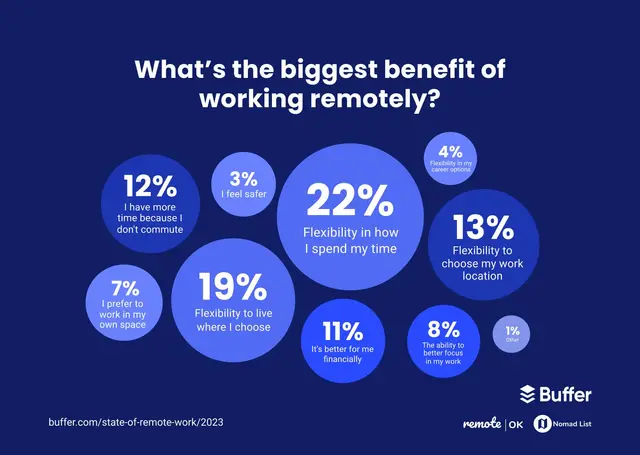
If you’re operating in a hybrid or in-office model, you can still keep things flexible and avoid micromanaging by setting clear outcomes, agreeing on response windows, documenting decisions, and giving teams control over how they deliver work.
Tips to adopt: Experiment with team-level charters, quiet hours, mandatory clock-ins for easy task assignment, weekly coffee times, post-meeting recordings, and monthly deep work days. These cost almost nothing and deliver results in attention and morale.
7. Diversity and Inclusion
McKinsey found that companies in the top quartile for gender diversity on executive teams were 25% more likely to have above-average profitability. The same report showed companies with at least 30% women are likely to perform better than those with fewer.
In 2026, DEI now extends beyond gender into race, health, disability, neurodiversity, and capacity at work. The emphasis is on considering your employees’ uniqueness when making decisions that affect them.
Not doing that can amount to workplace discrimination.
Tips to adopt: Audit your hiring, promotion, and performance systems to accommodate diverse capacities and life constraints. Also, train managers to lead inclusively, create safe feedback channels, and hold leaders accountable for measurable inclusion outcomes.
Conclusion
The future starts here. Employee experience will shift from perks and monthly monetary benefits to more inclusive standards that recognize your employees as a core of the organization.
To avoid being left out, start with one of the trends above, define the outcomes you hope to achieve, and design an employee journey map. Unify all your systems to eliminate friction, pilot practical AI use cases, and document clear rules to ensure consistent execution.
Equip your hiring managers and team leaders with inclusive playbooks, run frequent pulse checks, and act quickly on feedback.
Lastly, build AI literacy across roles, support small experiments, and appoint change champions to sustain progress. Review results regularly and adjust based on evidence, not assumptions.